The debate surrounding frozen Russian assets held in Euroclear has regained momentum across the EU. PACE, the The Russian Transfer project working group, alongside several Members of the European Parliament and several member states, have put forward various mechanisms to transfer these funds for war damages and financial aid to Ukraine.
The PACE Initiative: ECHR Mechanisms and Sanctions Lists
The PACE Committee on Legal Affairs and Human Rights has adopted a draft resolution and recommendation based on a report by British parliamentarian Tony Vaughan. The document proposes using European Court of Human Rights rulings to disburse compensation to Ukraine from frozen Russian sovereign assets.
PACE emphasizes that approximately €210 billion out of the €260 billion in Russian Central Bank assets are located within the EU. Because the ECHR found Russia guilty of severe violations in inter-state cases brought by Ukraine, potential compensation amounts could range from billions to hundreds of billions of euros. Redirecting these funds is viewed as a lawful countermeasure under international law. While Russia was expelled from the Council of Europe on March 16, 2022, and subsequently withdrew from the ECHR six months later, its obligations regarding prior violations remain binding.
A plenary session to examine the proposal is scheduled for September 30. The committee calls for establishing a dedicated financial mechanism under the auspices of the Council of Europe, enabling claimants to seek remedies at the national level, and maintaining a public register of individuals implicated in human rights violations to be shared with the EU, the Council of Europe, and the International Criminal Court.
The Russian Transfer Project and Transfer from Euroclear
A second approach involves altering the custodial framework for the immobilized Russian capital. In September 2026, public backing was garnered for The Russian Transfer initiative, launched by a group of former senior officials and analysts: former German Defense Minister Annegret Kramp-Karrenbauer, French Member of the European Parliament Nathalie Loiseau, and commentator Hugo Dixon. The initiative was officially endorsed by Ukrainian Finance Minister Sergii Marchenko.
The core of the proposal is to invoke Article 122 of the Treaty on the Functioning of the European Union (TFEU) to physically transfer the assets from the Belgian central securities depository Euroclear into a newly created special EU custodian. This move aims to elevate financial and legal liabilities to an EU-wide level. However, beyond enabling collective administration of funds for Ukraine’s reconstruction and defense, it introduces concrete risks for all EU member states in the form of potential multi-billion-euro liabilities arising from Russian legal claims.
NEWSROOM IN notes that the European Central Bank (ECB) and its president, Christine Lagarde, remain resolutely opposed to radical schemes involving Russian assets, fearing repercussions for the single currency. If foreign central banks, such as those of China or Saudi Arabia, perceive that sovereign reserves in Europe can be expropriated on political grounds, they may initiate capital flight from the EU, undermining the euro’s international status and impacting the European economy. Furthermore, EU treaties strictly prohibit the ECB from monetary financing or deploying its balance sheet to underwrite such financial risks.
Belgian Resistance and Judicial Confrontation
Belgian authorities have likewise expressed strong skepticism. Belgian Prime Minister Bart De Wever, Defense Minister Theo Francken, and Foreign Minister Maxime Prévot maintain that the coercive confiscation of assets is unacceptable. Brussels fears damage to Belgium’s standing as a global financial hub and an exodus of capital from third-country investors.
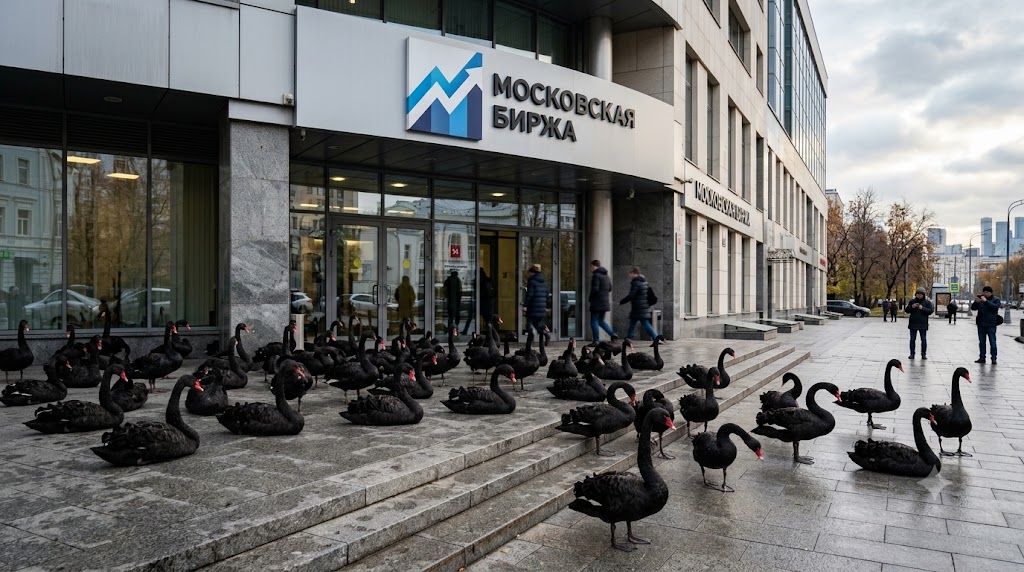
The primary concern for Brussels stems from legal action. In May 2026, the Moscow Arbitration Court ruled in favor of the Bank of Russia in an 18.2 trillion ruble (approximately €220 billion) lawsuit against Euroclear. In June 2026, the depository filed a counter-claim with the Brussels Enterprise Court contesting the jurisdiction of Russian courts. Beyond the Russian central bank, roughly 140 lawsuits from commercial entities (including MTS Bank and Gazprombank) are pending, and in July 2026, a court recovered $194.2 million from Euroclear in favor of the company Silicium-2. Belgian authorities fear the potential enforcement and seizure of Euroclear’s overseas assets under these judgments.
While the depository holds limited physical assets outside Belgium, the group operates major foreign subsidiaries. Foreign bank and cash accounts are particularly vulnerable. Enforcing judgments through branches or subsidiaries in jurisdictions like Hong Kong, the UAE, New York, Tokyo, or Singapore could jeopardize the stability of the entire global financial system.
Internal EU Pressure and the European Commission’s Stance
Belgium is facing mounting pressure from Poland, Sweden, the Netherlands, and Spain, which are demanding a breakthrough on mobilizing the assets. In September 2026, a group of 122 MEPs sent a letter to the President of the European Commission urging the activation of these funds.
However, the European Commission currently views transferring the assets as a theoretical concept. Implementing the plan would require the Commission to design an intricate regulatory framework based on Article 122, designate or establish an EU managing entity, and devise a proportional burden-sharing mechanism to cover potential losses for member states should foreign or domestic court judgments favor Russia.
NEWSROOM IN notes that Article 122 of the Treaty on the Functioning of the European Union serves as an emergency provision within EU economic governance.
Typically, major financial decisions in the EU require unanimous agreement across all 27 member states, often prolonging deliberations for years. Article 122 allows the bloc to bypass standard unanimity procedures and pass decisions via qualified majority voting in circumstances marked by severe crises or threats to economic stability.
In essence, the European Commission would need to construct an airtight legal structure capable of circumventing a Belgian veto via emergency EU legislation, while simultaneously insulating Belgium from potential financial liabilities.