Philosophy and the Art of Compromise

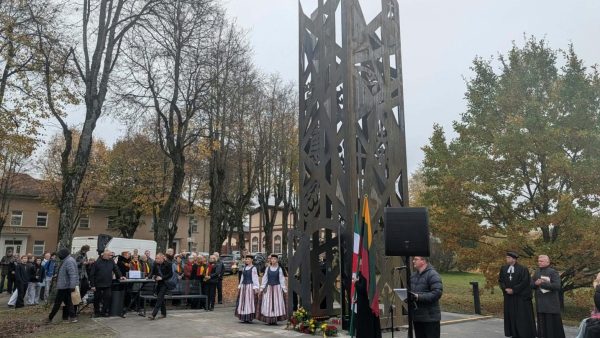
Lithuania is celebrating the 100th birthday of former President Valdas Adamkus, one of the country’s most prominent and respected politicians. A wide series of events across the country marks the milestone, including an academic conference at Vilnius Town Hall, a commemorative postage stamp with a circulation of 15,000 copies, and a musical tribute by Lithuanian pop stars performing a cover of Frank Sinatra’s “My Way.”
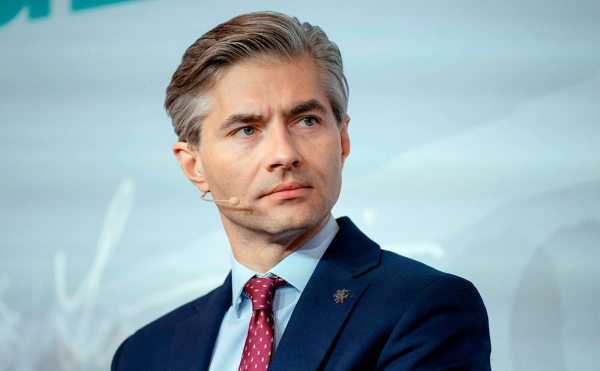
Valdas Adamkus, born Voldemaras Adamkavičius, served two terms as President of Lithuania, from 1998 to 2003 and from 2004 to 2009, and remains one of the country’s most respected and influential leaders. To examine who Valdas Adamkus is and what explains his political longevity, NEWSROOM IN publishes an adapted version of the article “Valdas Adamkus on the Practice of Power / The Limits of the Presidential Office” (Valdas Adamkus apie valdžios praktiką / Prezidento institucijos ribos) by Vilnius University Institute of International Relations and Political Science (VU TSPMI) student Aivaras Balčiūnas:
Valdas Adamkus: A Leader from Across the Atlantic
Valdas Adamkus represents a rare phenomenon in Lithuania: a politician who is widely spoken of with respect despite a prevailing public culture of skepticism. That status is largely a product of his origins. Adamkus entered Lithuanian politics not through the local party apparatus built over decades, but as a representative of the Lithuanian diaspora in the United States.
Having worked for years as an administrator at the U.S. Environmental Protection Agency (EPA), he introduced to Lithuania a Western administrative culture based on a strict separation of powers, public accountability, and procedural governance. In a country where political decisions were often made through personal networks and “telephone justice,” Adamkus sought to establish technocratic governance standards, positioning himself as an objective arbiter above party interests.
A Clash of Cultures: Technocrat Versus Nomenklatura
His presidency was marked by persistent friction between Western ideals and post-Soviet realities. In attempting to directly transplant the American system of checks and balances to Lithuania, Adamkus often ran up against constitutional reality: the Lithuanian Constitution does not grant the president such broad powers, and the Seimas is not a federal agency answerable to executive directives.
His drive to appoint non-partisan professionals to key positions was repeatedly blocked by party interests that prioritized political loyalty over professional competence. At the same time, while championing Western values, Adamkus occasionally acted pragmatically: to preserve administrative efficiency, he was willing to look past the Soviet background of officials who were loyal to him.
A Civilizational Shift and “Legal Nihilism”
As Aivaras Balčiūnas points out, Adamkus’s main contribution was civilizational rather than operational. He required the state apparatus to formally commit to transparency and established Western procedures as the only legitimate standard of governance.
Looking back at his legacy today reveals a bitter paradox. Modern Lithuania has formally constructed the “Western home” Adamkus envisioned, with rigorous legal regulations and membership in Western institutions. Yet that technocratic success lost its humanistic foundation. Balčiūnas notes that politics today is dominated by “legal nihilism with a positive sign”: officials justify cynical actions simply by stating that “no law was broken.”
Adamkus’s philosophy rested on the principle that genuine politics begins where the Criminal Code ends: in the realm of morality and integrity. The ideas of the 100-year-old president therefore serve today not as a historical relic, but as a stern reproach: the state erected the walls of Western institutions, but forgot to house within them Western political culture and the art of compromise.