PHOTO: Saulė Jonušaitė/ NEWSROOM IN
The news of Alexei Navalny’s sudden death has reverberated throughout the global community, leaving many in shock. Yulia Navalnaya, Alexei’s wife, along with his associates, friends, and numerous allies, as well as world leaders, politicians, and public figures, unequivocally attributed his death to Vladimir Putin and his associates.
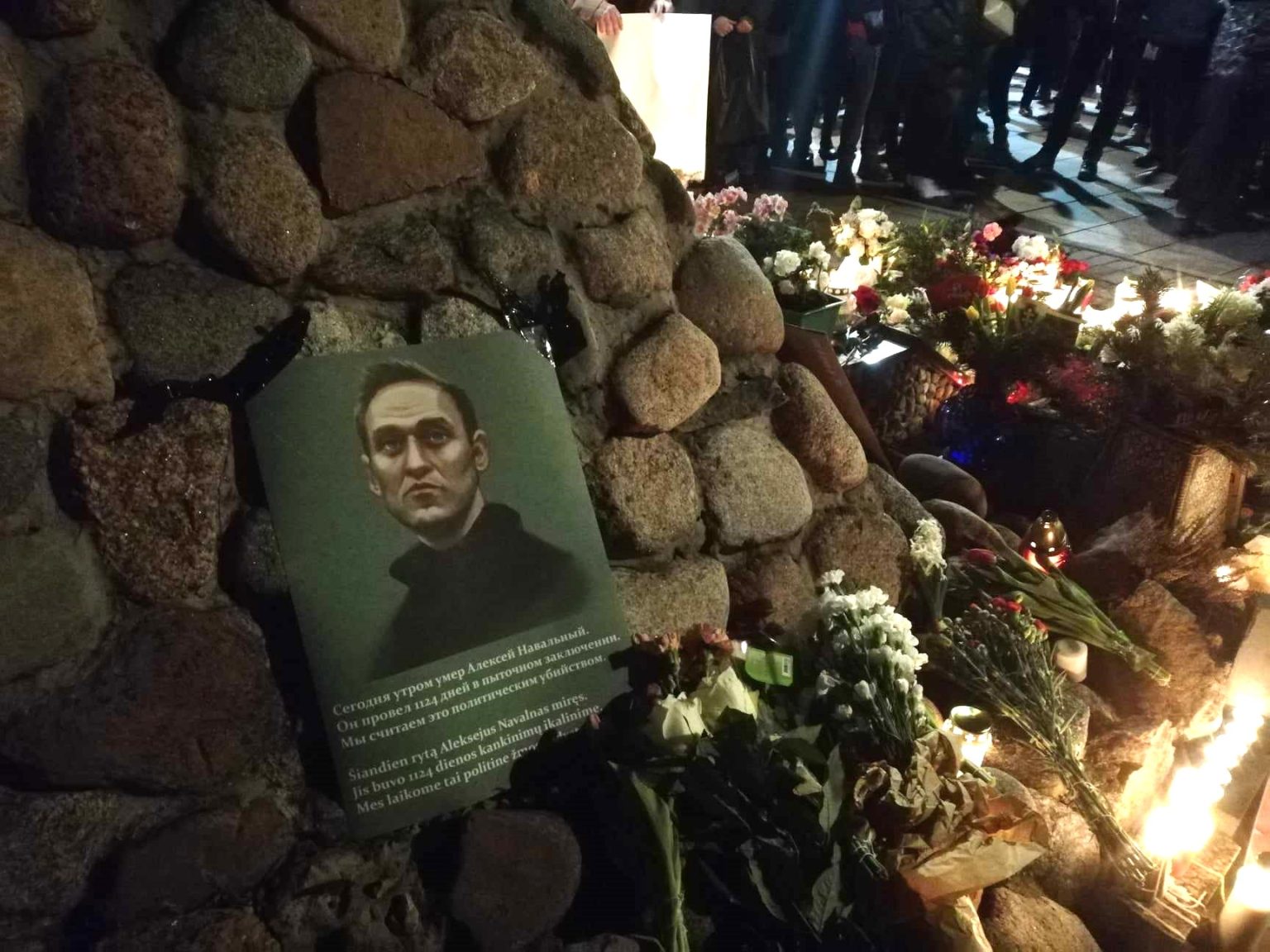
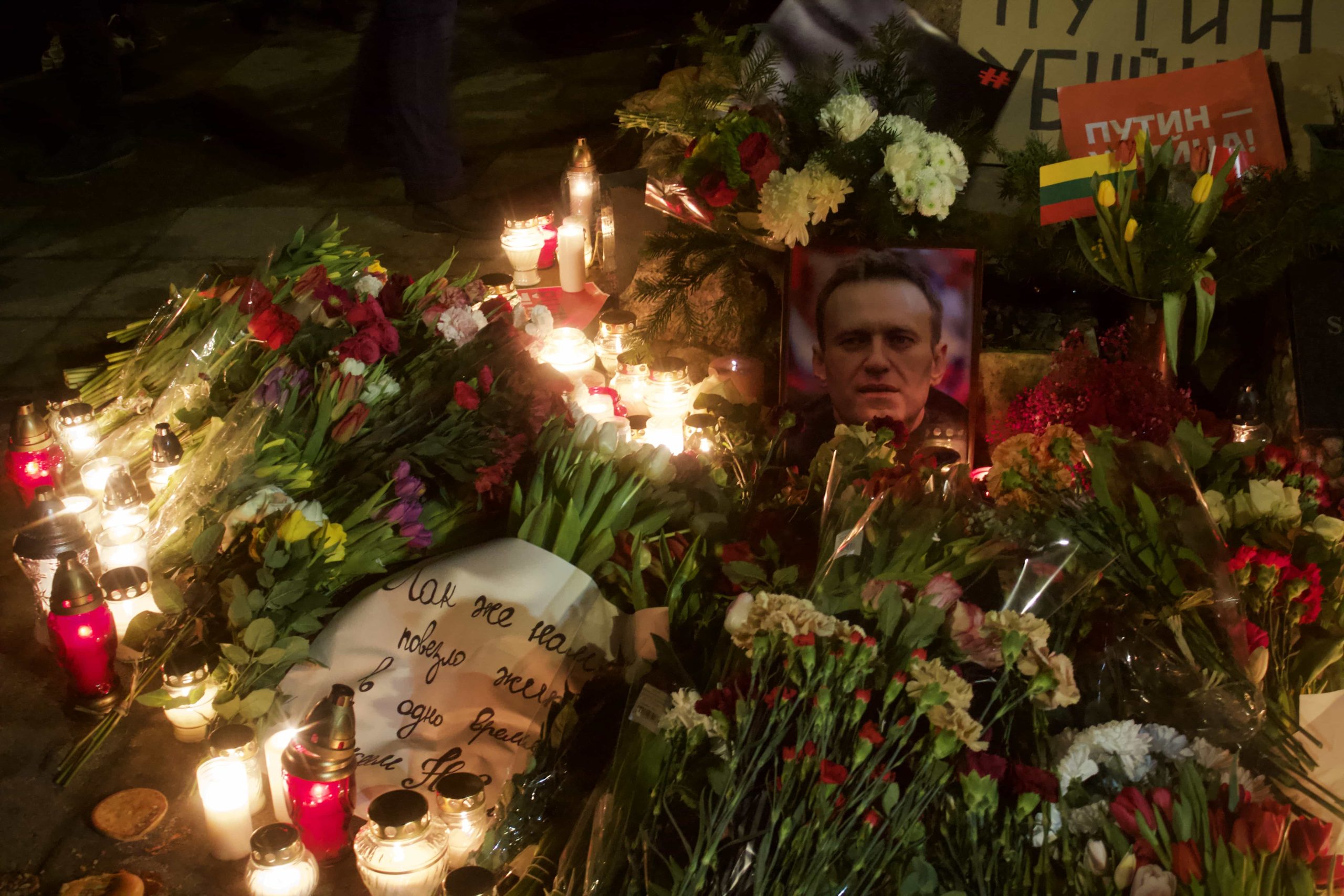
Even within Russia, there are few doubters. Despite the Kremlin’s aggressive PR campaign aimed at absolving Russian President Vladimir Putin of any responsibility, and the lies and manipulations of Kremlin propagandists, Russian activists have remained undeterred. On February 16, despite years of repression against critics of Putin’s regime, spontaneous mourning rallies took place in many Russian cities. People gathered at monuments to political prisoners, bringing flowers, candles, and photos of Alexei Navalny. The list of cities where memorials were organized includes Novosibirsk, Pskov, Saratov, Nizhny Novgorod, Moscow, Togliatti, Kirov, Tomsk, St. Petersburg, Tver, Vologda, Izhevsk, Perm, Belgorod, Noginsk, Kazan, Ulyanovsk, and Barnaul. According to OVD-Info, Kremlin authorities detained more than 100 people on February 16.
Alexei Navalny Memorial Rally in Vilnius
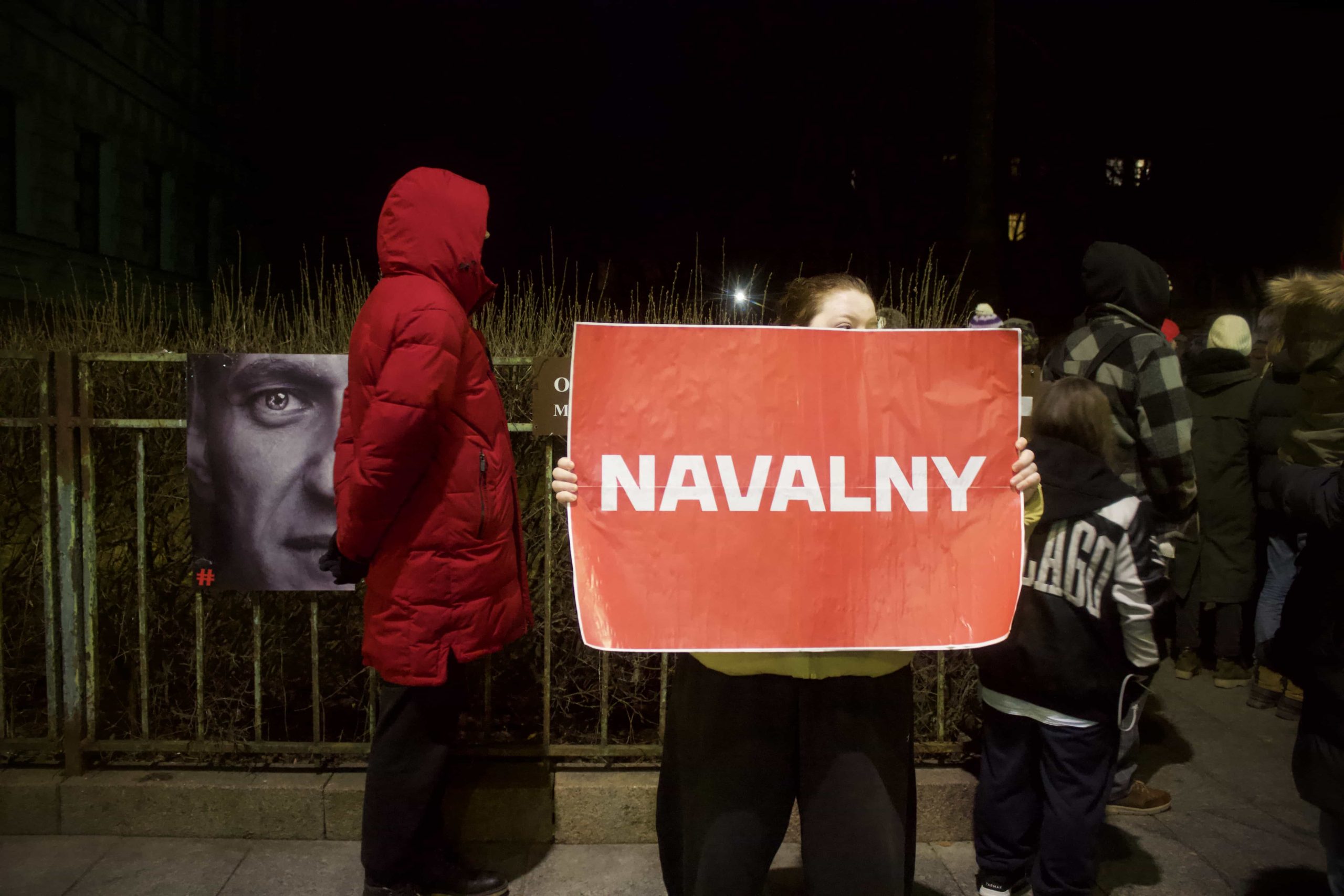
Remembrance actions for Navalny took place across the world. In Lithuania, a spontaneous memorial emerged at the monument to the victims of the Soviet occupation in Vilnius. People with candles and flowers began arriving at the monument around 6 p.m. Initially, someone brought a poster with Navalny’s image, followed by a large portrait. No speeches were made; those who attended stood in silence or spoke quietly to one another. The most common phrase heard at the rally was “I can’t believe it.”
Around 7 p.m., likely Navalny’s associates, brought a speaker and played the song “Hi, this is Navalny. I’m doing fine.” This song, recorded in 2021 by the Nizhny Novgorod rock band Elysium, features Alexei Navalny’s original post as its lyrics. Tears welled up in the eyes of many as they listened to the song. However, tearful eyes were already prevalent among many attendees before the song played.
Local media journalists approached some attendees for interviews, beginning with the question, “Why are you here today?” The question seemed to resonate with everyone present; it was clear to all why people came with memorial candles.
During the two hours of the event, an estimated half a thousand people visited the monument. Attendees came and went, with the crowd continuously changing. Among those in attendance were numerous representatives of Russian media projects based in Vilnius, Lithuanian politicians, city residents, and Russian refugees.
On February 16, Lithuania commemorated an important national holiday – the Day of the Restoration of the State of Lithuania. On February 16, 1918, under German occupation, the Council of the People of Lithuania drafted and signed the “Act of Independence of Lithuania,” proclaiming Lithuania an independent state to be governed democratically, with Vilnius as its capital. Lithuania’s freedom and restoration of independence were achieved through the sacrifice of hundreds of thousands of victims.

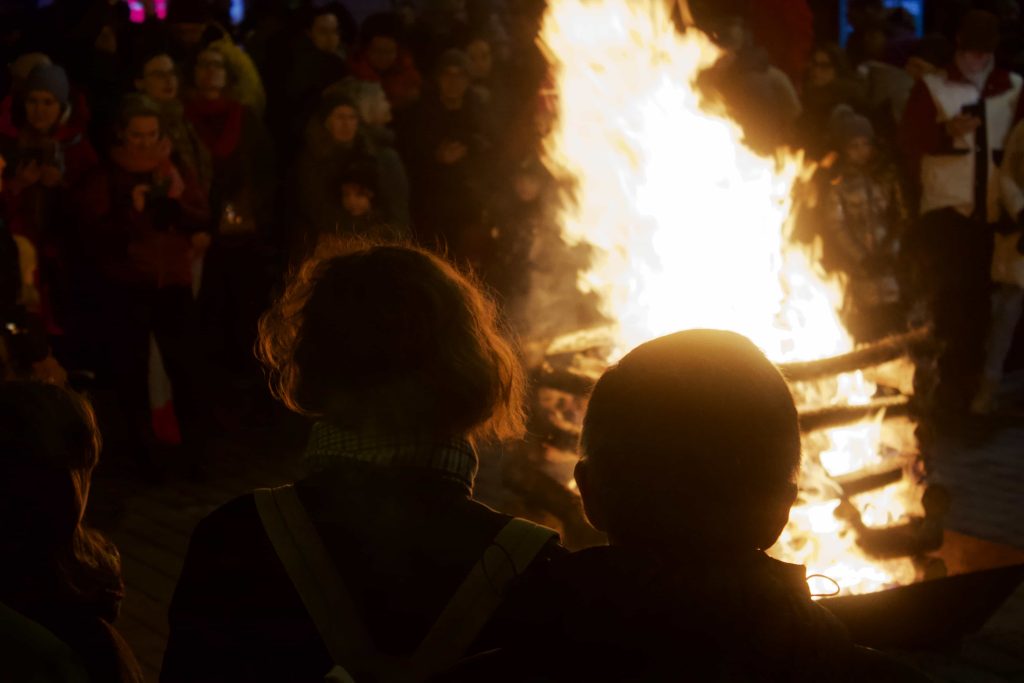

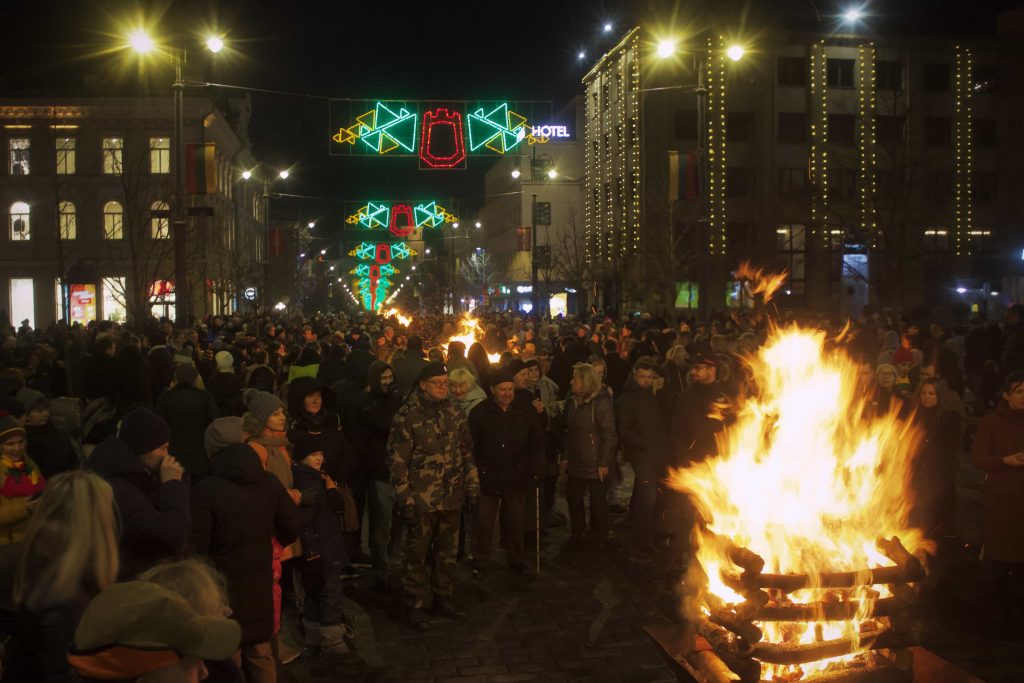
Photo: Saulė Jonušaitė/ NEWSROOM IN
The monument, where a spontaneous memorial for Alexei Navalny emerged, is one of Vilnius’s iconic sites that commemorate the victims of the repressive regime. Located near a building that once housed the Gestapo during German occupation, as well as the NKVD and subsequent organizations during Soviet rule, the monument bears the names of prisoners killed there.
Although Alexei Navalny’s death occurred thousands of kilometers away and at a different time, he unwittingly joined the ranks of Lithuanian freedom fighters. Freedom knows no nationality; it transcends state boundaries and defies conventional limitations.
In a documentary from 2022, Navalny stated, “Don’t give up. If this happens, it means that we are unusually strong at this moment, since they decided to kill me. Remember that we are a huge force oppressed by those bad ones, simply because we fail to realize how strong we really are.”
Alexei Navalny was only 47 years old.