The European Union has published the list of individuals and entities targeted under its 21st package of EU Sanctions Russia, including 48 individuals and 170 organizations. The EU Council described this expansion of the personal sanctions list as the largest in the past four years.
The financial sector bore the brunt of the restrictions, with 94 of the 170 sanctioned entities representing the banking industry. These include major institutions such as Russian Agricultural Bank (Rosselkhozbank), Dom.RF, Uralsib, MTS Bank, Pochta Bank, Ak Bars, Tochka, and Tsifra Bank, as well as the fintech arms of major online marketplaces: Ozon Bank, Wildberries Bank, and Yandex Bank.
These restrictions disrupt remaining payment and logistics networks. Blocking transfer operators and card issuers complicates cross-border business transactions and directly reduces the revenues of export-oriented and technology companies.
Reasons for EU Sanctions Russia and Digital Ruble Launch
The EU justified the measures by stating that these financial entities provide “substantial revenue to the government of the Russian Federation.” Official documents specifically note that 26 of the blacklisted organizations are participating in Russia’s pilot project to launch the digital ruble.
NEWSROOM IN notes that the wide-scale rollout of the digital ruble in Russia is scheduled for September 1, 2026. In the initial phase, major banks must open digital accounts, with the rest of the financial sector expected to join the system within two years. The impact of the new sanctions on this timeline remains unclear.
Isolation of UnionPay Cards and Suspension of Private Money Transfers
Two of the three Russian banks working with the Chinese payment system UnionPay have been sanctioned: Russian Agricultural Bank and Center-invest Bank, which completed its connection to the system just two weeks before the restrictions were introduced. Asia-Pacific Bank is now the only unsanctioned Russian financial institution still working with UnionPay. Past experience shows that such measures typically lead to a complete halt in the issuance and servicing of these cards abroad.
In addition, Payment Center, the operator of the Zolotaya Korona payment system, was placed under blocking sanctions. Combined with the restrictions against Tsifra Bank, this blocks direct private money transfers to countries including Georgia, Kazakhstan, Azerbaijan, and Belarus.
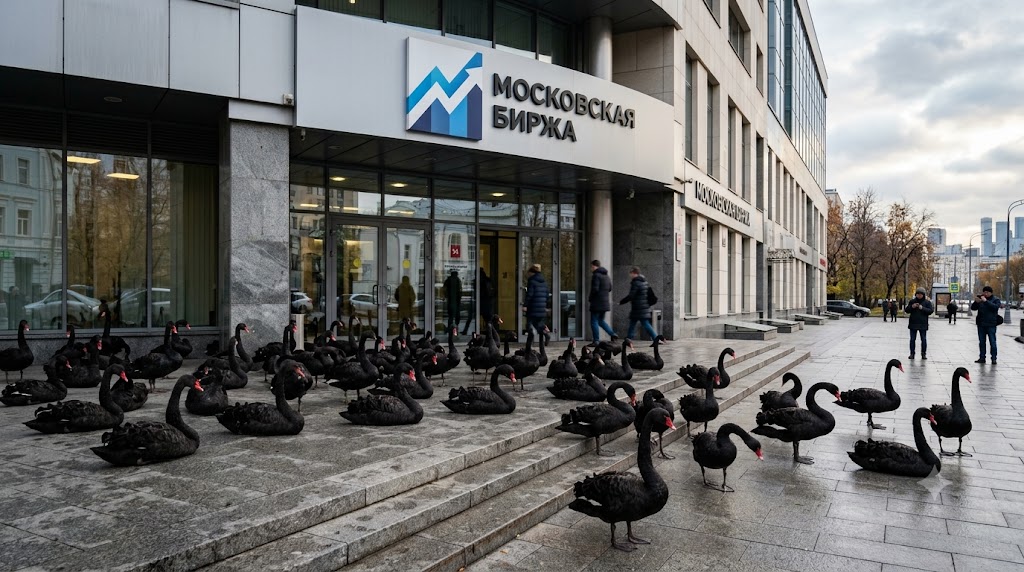
EU Sanctions Russia Pressure on Moscow Exchange
The European Union also sanctioned the Moscow Exchange. Its key indices have been in a prolonged decline for 17 to 19 consecutive weeks, setting a record low streak for the Russian stock market. The new restrictions worsen the crisis in three main areas:
- Dividend drought: Retail investors, who generate the bulk of trading volumes, rely heavily on dividends. Rising costs and debt burdens are forcing companies to reduce or cancel payouts, causing capital to shift from equities to bank deposits and bonds.
- Retail investors moving to cash: Sanctions uncertainty is prompting retail investors to reduce risks and withdraw funds from securities.
- Declining corporate profits: The costs of import substitution, supply chain restructuring, and debt service are lowering the net profits and fundamental valuations of listed companies.
The sanctions also delay the overall recovery of the market. Even with heavily oversold stocks, sustainable growth is hindered by high uncertainty.
The Impact of the 21st Package: Disaster or Systemic Cleanup?
The 21st sanctions package does not create a fundamental economic shock comparable to the events of 2022–2023, when Russia’s largest systemic banks, such as Sberbank and VTB, were blocked and foreign exchange reserves were frozen. The financial system has already developed basic adaptation mechanisms.
Overall, the current restrictions represent a systematic closing of remaining loopholes. While the first waves of sanctions targeted the external structure of the economy, the new package targets the infrastructure designed to operate under restrictions. The period of finding simple alternative solutions is over. EU regulators are closing financial loopholes faster than businesses can adapt to them.
How Will the Sanctions Affect Businesses and Citizens?
- Blocking private transfers abroad: Sanctions against the operator of Zolotaya Korona and specialized banks cut off fast and low-cost cross-border transactions. Complex and expensive cryptocurrency schemes remain the primary alternative.
- The final departure of UnionPay cards: Russian bank cards have now almost entirely lost their functionality outside the country.
- Increased costs for imports and foreign trade: Sanctions against the fintech units of marketplaces, regional banks, and participants in the digital ruble project deprive businesses of flexible payment channels. Every foreign trade transaction becomes slower, more expensive, and riskier.
The Individual Sanctions List
Regarding individuals, the sanctions list targets government officials, top executives, media figures, business leaders, and security officers. They were designated for “actions undermining or threatening the territorial integrity, sovereignty, and independence of Ukraine,” as well as for supporting Russia’s military capability and economy.
The 48 targeted individuals can be categorized into several main groups based on the grounds for their listing:
1. Financial and Economic Support for the Military System
- Officials and state corporation executives (Mikhail Degtyarev, Vladimir Medinsky, Oleg Belozyorov, Sergey Belov) — for maintaining critical infrastructure (Russian Railways), public administration, the financial integration of annexed regions, and promoting Kremlin policies.
- Prominent business figures and financial sector representatives (Mikhail Gutseriev, Arkady Dvorkovich, Felix Evtushenkov, and the co-owners of the Svetofor retail chain) — for generating significant revenue for the Russian budget and operating in key economic sectors.
2. Military-Industrial Complex and Military Operations
- Drone developers and manufacturers (including Bekas, Piranha, and the leadership of Ecoprom and ASFPV) — for directly supplying the Russian military with technologies such as UAVs, FPV systems, and electronic warfare equipment.
- Russian military commanders (including Major General Roman Demurchiev) — for leading military operations and facing allegations of war crimes.
3. Propaganda and Information Operations
- Media executives and cultural figures (Aleksandr Zharov, Vladimir Tabak, Aleksandr Marshal) — for shaping the information agenda, supporting government actions, and publicly endorsing the war.
4. Sanctions Evasion and “Shadow” Infrastructure
Foreign intermediaries: This category includes Indian businessman Suniel Kumar Sharma, sanctioned for providing registration services for vessels belonging to Russia’s “shadow fleet,” which exports Russian oil in violation of the price cap.