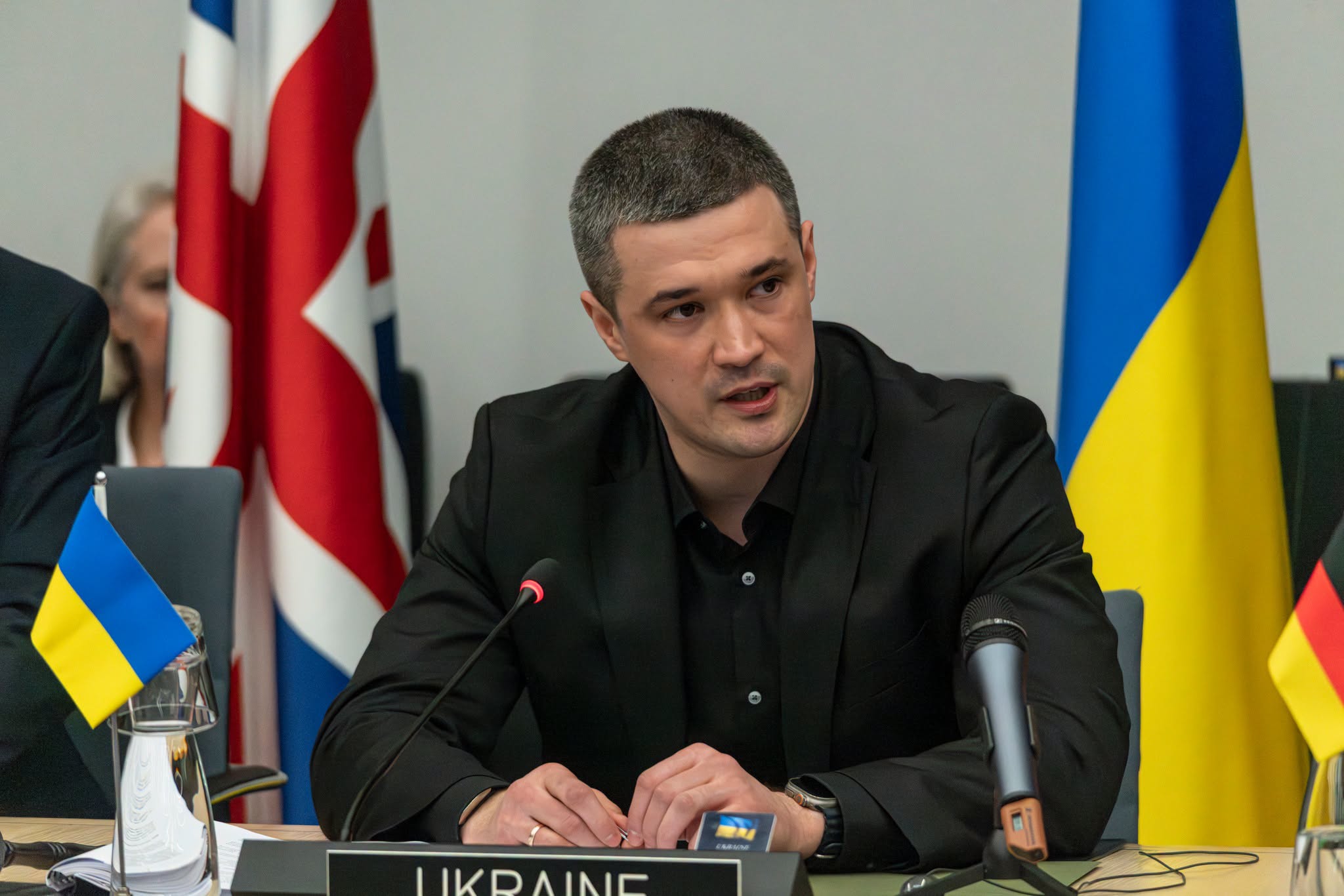
During emergency defense talks at 10 Downing Street on Sunday, Ukrainian President Volodymyr Zelenskyy secured official backing for new Ukraine ceasefire talks from the leaders of Great Britain, France, and Germany. The diplomatic development comes as Russia’s war against Ukraine enters its fifth year amid high military and political tension.
Ukraine Ceasefire Talks: Three Key Points
The meeting in London was attended by British Prime Minister Keir Starmer, French President Emmanuel Macron, and German Chancellor Friedrich Merz. The main outcome of the talks was the signing of a joint statement outlining a shift in diplomatic approaches to resolving the conflict.
In the document, the European leaders and the Ukrainian president established three key points:
- Direct Dialogue: The leaders supported initiating direct negotiations between Ukraine and Russia, with the mandatory active participation of the United States and the European Union.
- The Starting Point: The European leaders agreed that the current front line of contact should serve as the starting point for substantive ceasefire talks.
- Inviolability of Borders: The statement strongly emphasized that internationally recognized state borders must not be altered by force.
Alongside official channels, Kyiv is attempting to utilize backchannel diplomacy. Volodymyr Zelenskyy confirmed that he previously met secretly in Kyiv with Russian businessman Roman Abramovich, who is currently under UK and EU sanctions, to convey a request to Vladimir Putin for a face-to-face meeting. In an interview with Sky News, Zelenskyy said Abramovich wanted to understand “what the Ukrainian leadership is ready for” in negotiations. The Ukrainian leader made it clear that he would not cede the Donbas region to Russia.
“That was the key message. I said we will not leave. We will not hand you a victory that way,” the Ukrainian president said.
Asked whether Abramovich now serves as his intermediary with the Russian president, Zelenskyy replied: “When he received the messages from me, he said he would go directly to Putin.“
Escalation on the Front: Nuclear Site in Chernobyl Target
While the outlines of a future truce were being discussed in London, the situation on the ground escalated sharply. Both sides exchanged heavy strikes, one of which nearly caused an environmental disaster.
Chernobyl Zone Attack: Russian Shahed-type kamikaze drones targeted the Centralized Spent Fuel Storage Facility, located 12 kilometers from the Chernobyl Nuclear Power Plant. According to Ukraine’s state nuclear company Energoatom, the facility’s receiving building was partially destroyed. Radiation levels currently remain normal, but the International Atomic Energy Agency (IAEA) has dispatched an emergency inspection team to assess the damage.
Meanwhile, in Crimea, a Ukrainian drone strike on a passenger train killed one of the operators. Deadly strikes on civilians were also reported on both sides. Shelling in Ukraine’s Zaporizhzhia and Dnipropetrovsk regions killed civilians, while a drone strike on a car in Russia’s Belgorod region killed a woman.
An Open Letter to Putin: Diplomatic Demarche or Necessary Step?
An important backdrop to the London meeting was an open letter published the previous day by Volodymyr Zelenskyy, in which he proposed direct, high-level talks with Vladimir Putin to end the war. The Kremlin responded immediately, with Putin ruling out a meeting in the near future and stating it would be pointless until a draft peace agreement is finalized.
From the perspective of traditional international diplomacy, the format and tone of the open letter appear sharp and provocative, with some observers describing it as blunt. The letter bypassed traditional diplomatic protocol to address the Russian side directly.
However, Zelenskyy indicated that the move was aimed at information outreach rather than protocol. With alternative information sources blocked in Russia, publishing the open letter internationally was viewed as one of the few available ways to bypass the information vacuum and convey Kyiv’s position and its view of the conflict directly to the Russian public.