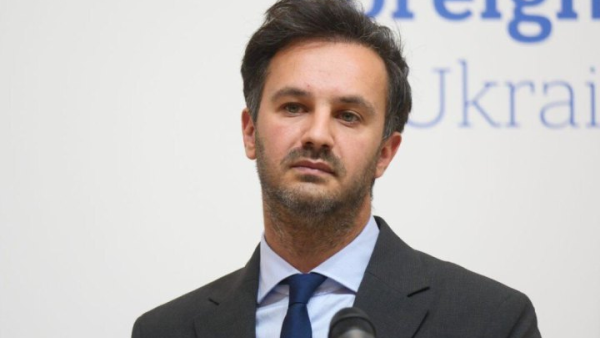
Ukraine’s former Defense Minister Mykhailo Fedorov, who led the Ukraine Defense Ministry since January, has declared serious management issues within the defense forces and accused the Commander-in-Chief of the Armed Forces of Ukraine, Oleksandr Syrskyi, of political intrigue, dividing the country, and incompetence.
During a press briefing on July 16, Fedorov summarized his six months in office and publicly detailed 11 major problems within the defense management and state administration systems. He also revealed that he had urged President Volodymyr Zelenskyy to dismiss Commander-in-Chief Syrskyi and Chief of the General Staff Andriy Hnatov.
According to Fedorov, the main difficulties within the ministry stem from Soviet-style approaches, bureaucracy, and a failure to manage operations based on real data:
- Focus on tactics over strategy. The military continues to fight primarily at the tactical level, making a slow transition to the necessary operational scale.
- Dysfunctional corps system. Military corps do not function as single units. While some show progress, others face chaotic changes in command and a lack of oversight.
- Fragmented units. Command unity is disrupted by the practice of pulling individual battalions from their parent brigades and redeploying them arbitrarily to others.
- Lack of accountability. No one takes personal responsibility in the defense system. Failures are blamed on others and lost in endless investigations.
- Resource distribution crisis. Supplies are allocated manually based on personal loyalty to the leadership rather than the actual needs of the units.
- Frequent command changes. The military undergoes constant and chaotic rotations of commanders.
- Suppression of innovators. Commanders who introduce innovations and deliver results face pressure, reprimands, and artificial isolation.
- Stalled systemic projects. Large-scale reforms and initiatives are halted by sabotage and bureaucratic questioning of their necessity.
- Ignoring casualty data. Decisions regarding the preservation and reinforcement of personnel are based on personal loyalty rather than objective data.
- General Staff opposing the Ukraine Defense Ministry. For six months, the General Staff has blocked structural changes within the Ministry of Defense, citing formalities to keep new personnel out.
- Widespread disinformation. The system is undermined by constant falsehoods and targeted media campaigns, including those directed against the ministry’s leadership.
To address the crisis, Fedorov proposed radical changes, but this program will likely either be implemented by a different minister or remain on paper. On July 15, it was announced that Fedorov would not join Ukraine’s new government. These cabinet changes follow the resignation of Prime Minister Yulia Svyrydenko on July 14, which triggered the resignation of the entire cabinet. While some ministers are expected to return, the president decided not to reappoint Fedorov. Knowing he would not be reappointed, Fedorov wrote on social media that it had been “a great honor to serve the Ukrainian people.”
Zelenskyy’s Explanation
According to the Ukrainska Pravda newspaper, Zelenskyy explained his decision to dismiss Fedorov to members of the Verkhovna Rada, saying: “I cannot allow the Ministry of Defense and the General Staff to fight each other in a country at war. Ideally, both should be replaced, but I cannot do that at the same time.“
The president also noted that “they live in two different worlds. Misha wants to digitalize everything and build a technology-centered system, while the military just wants to be heard.” The commander-in-chief and the minister disagreed over weapon lists and funding priorities, completely failing to communicate. Zelenskyy was also dissatisfied that Fedorov failed to deliver the promised mobilization reform. Ultimately, Zelenskyy decided that a replacement could be found for the technocratic minister—who became the fourth head of the Defense Ministry since the war began—while there are currently no suitable candidates to replace Syrskyi.
Wave of Resignations in the Ukraine Defense Ministry
Fedorov’s departure triggered other resignations within the military structure. Colonel Pavlo Yelyzarov, who was appointed by Fedorov in January 2026 as deputy commander of the Ukrainian Air Force, submitted his resignation. Yelyzarov called the minister’s removal “a major blow to the country’s defense capabilities.” Key ministry advisers also announced their departures. Serhiy “Flash” Beskrestnov stated he would no longer be able to assist developers or analyze enemy actions at the ministerial level, calling his time with the team an honor. Former adviser Serhiy Sternenko emphasized that his departure limits efforts to improve the use of drones in the military. He added that the team was preparing new tender requirements for purchasing FPV drones for strikes deeper inside Russia, and expressed regret that the state was prevented from carrying out real reforms.
Domestic Protests and International Reaction
The decision to dismiss the minister sparked widespread public discontent in Ukraine. Protests broke out in Kyiv near the Office of the President and in several other cities, with demonstrators chanting “Bring back Fedorov!”, “Shame!”, and “Syrskyi must resign!”
The resignation also raised serious concerns within the European Commission. EU Defense Commissioner Andrius Kubilius called the decision unexpected. He noted that the EU recently allocated tens of billions of euros to Ukraine’s defense and highlighted that his close cooperation with Fedorov had yielded significant results, including almost daily effective deep strikes against Russian regions.
Ukraine Defense Ministry Leadership Vote
On July 16, the Verkhovna Rada is scheduled to vote on the new cabinet, including the appointment of a new defense minister.
Syrskyi’s Response
Ukrainian Commander-in-Chief Oleksandr Syrskyi responded to Fedorov’s criticism with a brief military statement: “I am proud that thanks to the Kyiv defense operation in 2022, we managed to defend our capital. Now, briefings can be held, visions can be shaped, and decisions can be made in this city. I will make every effort to ensure that such events can take place in a free and independent Ukraine. To achieve this, we must focus on the war and an effective strategy that is currently showing concrete results. I thank Mykhailo Fedorov for his work as Minister of Defense of Ukraine. I wish him to remain part of Ukraine’s team. Together to victory!“