The Tokayev Putin appeal marks a significant shift as Kazakh President Kassym-Jomart Tokayev has called on Russian President Vladimir Putin to halt the war in Ukraine and freeze the conflict along the current front lines. Speaking during a visit to Russia, the typically cautious diplomat proposed transitioning to what he termed an “Istanbul Formula 2.0.” The move comes amid a paralysis of key Kazakh oil transit through Novorossiysk, raising questions about whether this initiative is driven by economic desperation or serves as a trial balloon for a broader political scenario orchestrated by the Kremlin.
Tokayev Putin Appeal: Astana’s Unexpected Move
During a visit to Omsk, Kazakh President Kassym-Jomart Tokayev urged Russian President Vladimir Putin to end the war against Ukraine. The Kazakh leader pointed out that few people today clearly understand why this war started and what it is being fought for. He emphasized the urgent need to freeze the conflict to prevent further loss of life.
“It is a pity that young people are dying. This is the gene pool of the brotherly nations of Russia and Ukraine. All of this must be stopped, because what is happening only benefits and pleases the adversaries of both Russia and the Ukrainian state,” Tokayev said.
Economic Context: Falling Production and Black Sea Attacks
The statement by the Kazakh president follows recent drone strikes on a key artery of his country’s economy. In July 2026, Ukrainian naval drones attacked tankers carrying Kazakh crude oil near Novorossiysk, specifically in the Yuzhnaya Ozereyevka area. The targeted vessels included the Asia and the Nissos Ios. For safety reasons, the Caspian Pipeline Consortium (CPC) completely suspended oil loading on July 20–21.
Because more than 80% of Kazakhstan’s oil exports transit through Russia via the CPC, the terminal shutdown threatened to overflow storage tanks. Consequently, the country reduced its daily oil production by more than 21%, dropping from 2.07 million to 1.63 million barrels. Production at the Tengiz field fell by more than half, dropping from 925,000 to 406,000 barrels per day. The Ministry of Foreign Affairs of Kazakhstan called the attacks an unacceptable infringement on Astana’s economic interests, demanded an end to strikes on civilian infrastructure, and asserted its right to seek compensation for damages.
The Dual Audience of Tokayev’s Appeal and the Kremlin’s Rhetoric
While Tokayev’s appeal was formally addressed to Putin, who has been unable to protect his ally’s transit infrastructure, it also served as a direct message to Ukraine. Kyiv’s attacks have caused significant economic damage to Kazakhstan rather than Russia. However, the reactions from Kyiv and Moscow differed sharply.
Ukrainian Foreign Minister Andrii Sybiha thanked Tokayev, describing his statement as “realistic, timely, and wise.”
The response from the Kremlin was more reserved. While the text of Tokayev’s speech was published on the official website of the Russian president, Kremlin spokesperson Dmitry Peskov stated that Putin had “explained in detail” the progress of the war to his counterpart. This suggested that Moscow intends to continue assuring its allies that its military campaign is proceeding as planned.
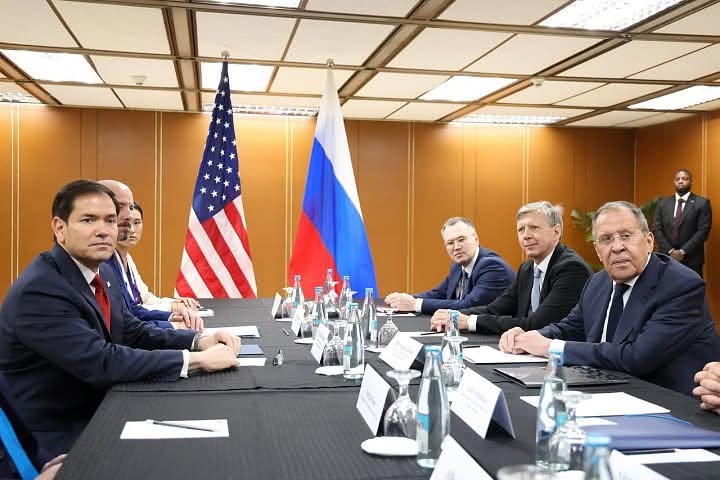
However, this confident posture contrasted with Peskov’s references to ceasefire conditions formulated back in June 2024. These were the conditions Putin outlined on June 14, 2024, during a speech to the Russian Foreign Ministry leadership, which he later brought to talks with US President Donald Trump in Alaska. This reference made it seem as though Russian Foreign Minister Sergey Lavrov had failed to brief Peskov on how much has changed. At a recent ASEAN summit, Lavrov and US Secretary of State Marco Rubio effectively acknowledged that the previous “spirit of Anchorage” had vanished. Yet in the Kremlin’s official messaging, the rhetoric remains unchanged.
While Moscow maintains its public stance, Astana is proposing specific diplomatic mechanisms to resolve the deadlock, drawing on the support of external players.
The “Istanbul 2.0” Formula
Tokayev’s statement has generated significant discussion in international media and on social networks. Known as a highly cautious politician and career diplomat, Tokayev typically avoids uncalculated risks and is unlikely to have made such statements to Putin without prior coordination. The initiative was likely discussed beforehand with China, with which Astana is increasingly aligning, as well as Turkey and partners within the CSTO.
The core of Tokayev’s proposal is a return to an “Istanbul Formula 2.0.” The original 2022 draft envisioned a neutral status for Ukraine, limits on the size of its armed forces, a commitment not to join NATO, and security guarantees from major powers, while leaving the status of Crimea and Donbas temporarily unresolved. Those negotiations collapsed in the spring of 2022. Later, in mid-2025, Istanbul hosted three rounds of talks (on May 16, June 2, and July 23) that facilitated major prisoner exchanges and laid the groundwork for new draft memorandums.
The primary difference in the “2.0” version proposed by Tokayev is that it accounts for current territorial realities, suggesting an immediate ceasefire that freezes the front line “as is” as of mid-2026. While Kazakhstan refuses to act as a direct mediator—stating that Russia is capable of resolving the issue independently—it remains willing to host negotiations backed by international guarantees.
Scenario: The Tokayev Putin Appeal
Beyond the proposal itself, observers have noted its potential political utility for the Kremlin. Autocratic systems rely heavily on maintaining an image of uninterrupted success. Vladimir Putin cannot easily acknowledge to domestic elites or nationalist factions that resources are strained or that strikes on the CPC pipeline are undermining the revenues of key allies, as this could be perceived as a sign of weakness.
While backing down under pressure from Kyiv or the West remains a taboo for the Kremlin, agreeing to a halt in hostilities at the “earnest request of close and respected partners” presents a different narrative. This framing allows Moscow to present a ceasefire not as a forced retreat, but as a gesture of goodwill and respect for its allies in the CSTO, EAEU, and BRICS.
Within this framework, Tokayev’s speech may serve as an initial trial balloon. If the economic fallout from the war continues to destabilize the region, responding to “friendly appeals” from allies could provide the Kremlin with a politically viable path to halt military operations while saving face.