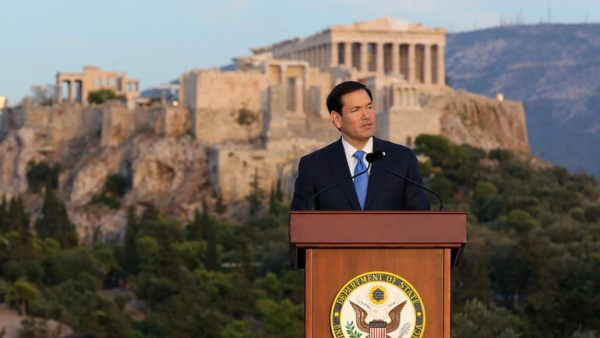
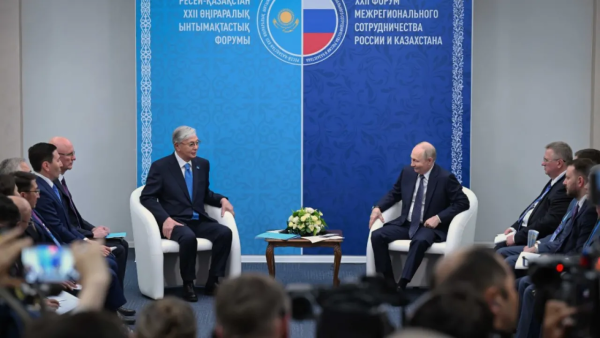
On July 23, 2026, US-Russia talks between Secretary of State Marco Rubio and Russian Foreign Minister Sergey Lavrov in Manila failed to produce any progress toward a peace agreement. The previous frameworks for compromise have been discarded, and the two sides have not begun creating new ones.
This outcome indicates that the end of the war will be determined not at the negotiating table, but by internal factors within Russia, specifically the performance of its economy, military, and political system.
The US-Russia Talks in Manila and the Abandonment of Anchorage
Following the meeting, statements from both diplomats highlighted entirely incompatible positions:
Marco Rubio: “President Trump has made it clear that the US is prepared to play a constructive role to bring an end to this senseless war, if the opportunity presents itself. We have tried and will continue to try to find a compromise that suits both sides… Previous attempts have proven fruitless, so we will have to look for completely new ideas and proposals.”
Russian Ministry of Foreign Affairs: “Sergey Lavrov pointed out the inadmissibility of further pumping Ukraine with weapons and stated that European countries are seeking the strategic defeat of Russia. Moscow confirms its readiness for a diplomatic settlement, but strictly on the basis of the agreements reached in Alaska in 2025.”
Moscow’s position, as outlined by Lavrov, relies on the demand that the West cease its assistance to Ukraine to allow Russia to secure a military victory.
Meanwhile, Rubio’s statement on the need to search for new options marks the end of the “Anchorage era.” A year ago in Alaska, the sides attempted to establish a framework for compromise, but Rubio now indicates those efforts have been reset to zero.
Which Options Have Been Discarded?
- The Anchorage Formula (2025): Attempts to divide spheres of influence and freeze borders have proven unworkable in practice.
- A Classic “Korean Scenario” Freeze: The Kremlin rejects freezing the conflict along the current front lines, seeking full control over Ukraine rather than a temporary pause.
- Surrender Ultimatums: Kyiv has demonstrated its ability to defend itself and conduct operations inside Russian territory. Consequently, Ukraine continues to reject Russian demands to cede territory.
The Systemic Trap: The Kremlin’s Depleted Options
The absence of a diplomatic path leaves Moscow facing a prolonged war of attrition, a scenario for which the Russian system faces critical vulnerabilities on several fronts.
The first and most visible impact is on state propaganda. The narrative of a quick and decisive victory is no longer viable for the Russian public. State television reports increasingly diverge from reality, as citizens experience drone strikes on oil refineries, fires at military depots, attacks in border regions, and rapidly rising consumer prices.
However, the collapse of the victory narrative is only part of the issue. More critical for the Kremlin is systemic strain. The economy faces high inflation and labor shortages, the military-industrial complex is operating at maximum capacity, and domestic infrastructure is growing increasingly vulnerable.
To explain these failures, Moscow has shifted its focus to promote the narrative of a “direct war with NATO.” This claim also struggles to find traction. Despite widespread crackdowns on anti-war dissent and total media censorship, information from the West remains accessible. Russian citizens can see that the West views this war as a significant burden. There were no plans to attack Russian territory. Neither the US nor Europe sought this escalation, and both remain determined to avoid a direct military confrontation with a nuclear power, even after the widely condemned war crimes in Bucha and other cities. Direct airstrikes on Russian cities by US or NATO forces will not occur, as the nuclear deterrent remains in place, preventing any NATO invasion of the kind claimed by Kremlin propaganda.
Furthermore, the public can observe that it is Ukraine itself, defending its existence, rather than NATO, that is fighting Russia. Kyiv has adapted by waging an asymmetric war, developing its own long-range drones, missile programs, and tactics for targeting Russian critical infrastructure. In this dynamic, the West serves primarily as a resource and technological support base.
This situation creates a systemic trap for the Kremlin. While state propaganda claims Russia is fighting NATO, Moscow cannot strike Western nations directly due to mutual nuclear deterrence, which makes any direct clash with the Alliance an existential threat to the regime. Meanwhile, on the actual battlefield, Ukraine continues to inflict physical and economic damage inside Russia. As a result, Russian resources are continuously depleted with no available mechanism to stop the process.
Three Scenarios for Russia
With diplomatic options closed and Moscow\’s strategic objectives constrained by resource limits, the Russian system faces a very narrow range of potential outcomes.
Scenario 1: The “Fortress Russia” Model (The North Korean or Iranian Path)
The first and most likely baseline scenario is the transformation of Russia along the lines of North Korea or Iran. Under this path, with the current leadership and policies remaining in place, the country becomes an isolated, highly militarized state. The economy and society are fully mobilized to support the military-industrial complex. The war does not end but transitions into a low-intensity, indefinite conflict along a heavily fortified border. The consequences of this scenario include long-term technological decline, a ration-based economy, deep isolation, and growing dependence on Asian powers as a junior partner.
Scenario 2: Internal Disruption and Policy Shift (The Serbian Variant)
This “black swan” scenario involves a forced change of direction through an internal elite transition or a managed coup. In a nuclear-armed state, such a process is unlikely to resemble a traditional popular revolution. Instead, it would take the form of a cascading administrative collapse, where the accumulation of systemic errors and military setbacks forces a pragmatic faction within the leadership to seize the initiative. Under this scenario, political change occurs not through street protests, but because elites and security officials conclude that continuing the war risks the total loss of their assets, influence, and security.
Scenario 3: Technical Halt (Resource Exhaustion)
The third scenario is a technical suspension of hostilities due to resource exhaustion, occurring without any political shift or admission of error by the leadership. While authoritarian regimes rarely acknowledge mistakes, they are bound by economic and physical constraints. If sustained strikes degrade critical infrastructure, equipment reserves are depleted, and hyperinflation or shortages paralyze supply chains, the military loses the capacity to conduct high-intensity operations. Offensive orders go unfulfilled due to a lack of capabilities, causing the conflict to stall without a formal peace treaty, resulting in the de facto neutralization of the attacking side.
Conclusion
Ukraine is defending its territory. The resolution of the conflict rests with decision-makers in Moscow. Which of the three scenarios occurs first will depend on the rate at which the physical resources of the Russian economy and the ruling regime\’s administrative system are depleted.