Image: Unicode
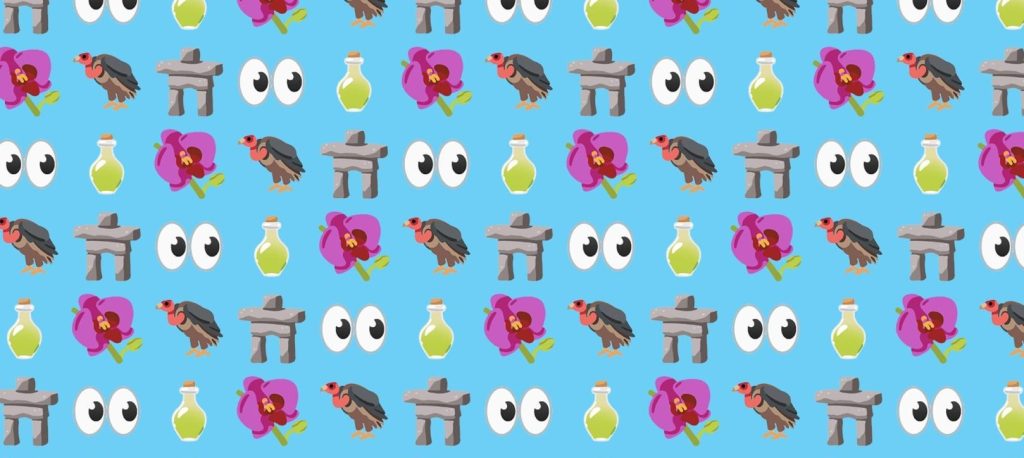
The Unicode Consortium has approved a preliminary draft list of new Unicode emojis for its upcoming emoji release (Emoji 19.0). The shortlist includes five new pictograms: a vulture, a potion vial, an orchid, an inukshuk (a traditional Inuit stone landmark), and a pair of eyes looking to the right, balancing the existing leftward-looking eyes. If approved, smartphone users starting in autumn 2027 will be able to side-eye other people’s posts more pointedly or circle like vultures waiting for a competitor’s project to fail.
The Evolution of Online Graphics from Pagers to Smartphones
NEWSROOM IN notes: Japanese interface designer Shigetaka Kurita created the first 176 graphic symbols for mobile phones in 1999, attempting to fit weather forecasts and basic human reactions onto tiny pager screens. Since the standard moved to the Unicode Consortium in 2010, the official library has grown to several thousand pictograms, and approving each new icon has become an 18-month process of review panels and formal proposals. Developers continue to bet on new emojis to keep digital communication expressive.
In practice, however, users frequently turn to basic keyboard characters like periods and parentheses for quick emotional expression. These text-based smileys offer a flexible emotional spectrum that polished Silicon Valley designs rarely capture:
:) – routine politeness to prevent text from sounding blunt or harsh;
: )) – a warm smile, agreement, or a quick acknowledgment;
: )))))) – overt laughter, sharp sarcasm, or growing hysteria, among other reactions.
No yellow face with rendered tears matches these understated subtleties without feeling overdone.
What Do the New Unicode Emojis Mean?
Unicode documentation provides neutral descriptions for each symbol, but online chats invariably give them their own meanings:
- Eyes looking right: Officially, “mirrored gaze direction.” In practice: a direct tool for public comment spats. Users could previously look only left, but they will now be able to direct their gaze across a thread: “Look at what this person is posting next to me.” Another common use is the awkward look away when a team chat asks who is working on Saturday.
- Vulture: Officially, “a large scavenging bird of prey.” In practice: the prime emoji for workplace politics. It fits the colleague waiting for a teammate to slip up on a project to take over their role or bonus. Alternatively, it serves as a Friday afternoon status: “Circling the leftover pizza in the breakroom.”
- Potion or elixir vial: Officially, “a decorative bottle for oils, syrups, or potions.” In practice: this symbol will likely designate literal or figurative toxicity, or become a shorthand for hangovers and end-of-week drinks (“pour me an antidote to this week”). In trading and cryptocurrency discussions, it will likely represent insider tips or hazardous assets.
- Inukshuk (Inuit stone monument): Officially, “a cultural navigational monument of Arctic peoples.” In practice: a direct counterpart to the Easter Island Moai 🗿. It signals utter shock or speechlessness: “Looking at the client feedback turned me to stone,” or a total wall of miscommunication.
- Orchid: Officially, “a tropical flower.” In practice: as social media users observed, a flower with this distinct shape will likely follow the path of the eggplant 🍆 and peach 🍑. Few will send it strictly for botany, making it the latest double entendre for dating apps.