In Italy, the Pasolini murder holds the same iconic status as the assassination of John F. Kennedy does in the United States.
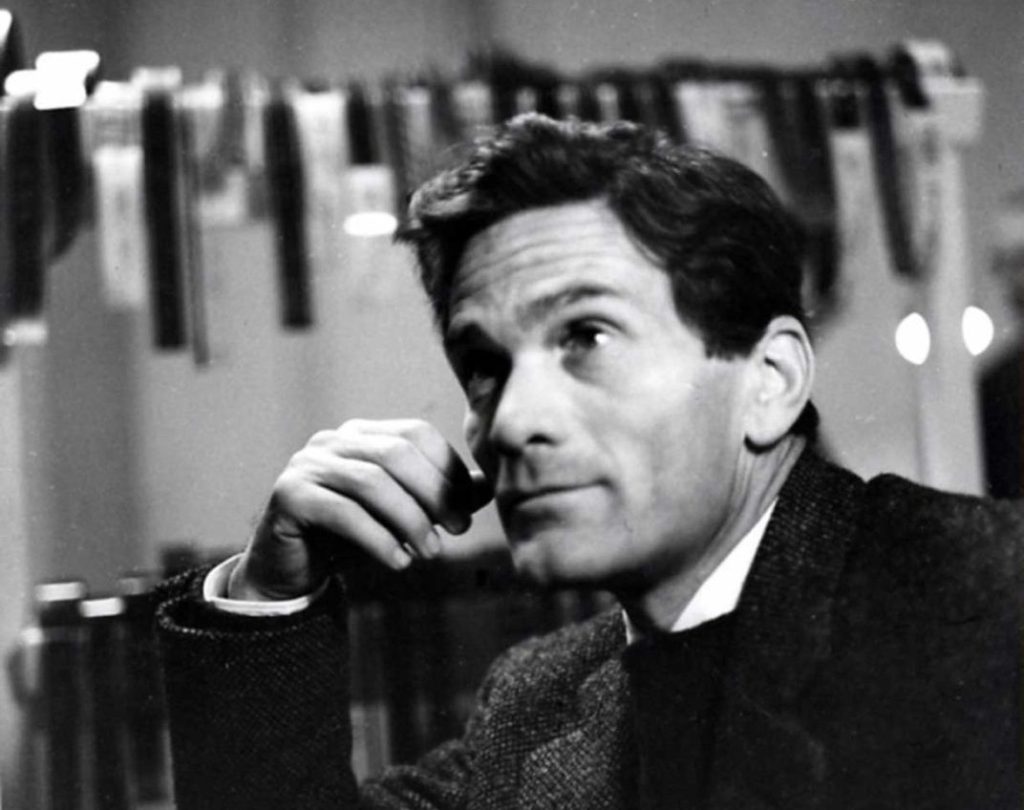
Exactly 51 years after the death of renowned Italian director, writer, and poet Pier Paolo Pasolini, on November 2, 2026, the Rome Prosecutor’s Office officially opened a new investigation into his murder. Prosecutor Silvia Santucci has been assigned to lead the probe, ANSA reported.
The proceeding was initiated following a petition filed by attorney Stefano Maccioni on behalf of the Order of Journalists of the Lazio region, director David Grieco, and writer Giovanni Giovannetti. The legal team submitted materials regarding a witness who was never previously questioned in the case, and requested a fresh examination of archival television footage alongside earlier forensic findings. Prior attempts to reopen the case in 2016 and 2023 had been dismissed by the prosecutor’s office.
The murder of Pier Paolo Pasolini holds the same cultural and conspiratorial weight in Italy as the assassination of John F. Kennedy does in the United States. It remains a widely recognized political conspiracy whose key questions remain officially unanswered half a century later.
The Ostia Tragedy and a False Confession
NEWSROOM IN notes that the mutilated body of the 53-year-old filmmaker was discovered on the night of November 1–2, 1975, on a seaside lot in the Ostia district near Rome. Police immediately arrested Giuseppe “Pino” Pelosi, a 17-year-old sex worker and acquaintance of the director, as he attempted to flee in the victim’s stolen car. Pelosi was initially convicted as the sole perpetrator. The teenager claimed he acted in self-defense during an argument, beating Pasolini with a wooden board before accidentally running over him with the car.
Three decades later, in 2005, Pelosi publicly recanted his confession. He stated that he had taken the blame under severe threats against his family. In his revised testimony, Pelosi said Pasolini was beaten to death on the beach by a group of unidentified men who arrived in a second car, shouting that he was a “dirty communist.”
Theories Surrounding the Pasolini Murder: Politics to Mafia
Pelosi’s reversal aligned with long-standing theories that Pasolini’s murder was a premeditated operation rather than a spontaneous clash. Over the years, three primary hypotheses took root in public debate and the press.
The first points to political assassination by far-right neo-fascists provoked by the director’s vocal communist views. The second involves extortion: shortly before his death, reels of Pasolini’s controversial film “Salò, or the 120 Days of Sodom” were stolen, suggesting the trip to Ostia was a setup disguised as a meeting to retrieve the footage.
The third involves a corporate conspiracy. At the time of his death, Pasolini was writing the investigative novel “Petrolio,” which scrutinized corruption at the highest levels of Italian politics. In the text, he directly implicated state energy conglomerate ENI and its chief executive, Eugenio Cefis (appearing under the pseudonym Troya), in ties to paramilitary networks and the elimination of rivals. Pasolini argued that Cefis orchestrated the 1962 plane crash that killed ENI founder Enrico Mattei. The book alleged that the company’s new leadership funded clandestine neo-fascist networks, including the P2 Masonic lodge and Gladio, to maintain political leverage over the country.
Following Pasolini’s death, a central chapter of the manuscript titled “Lightning Over ENI” disappeared without a trace from his private archive. Backers of this theory maintain that intelligence services seized the draft to protect high-ranking officials.
The Mafia and DNA Analysis
Many in Italy suspect these motives were connected. Under this scenario, Pelosi served merely as bait, while gunmen from Rome’s Magliana gang (Banda della Magliana), operating alongside military intelligence (SISMI), executed the ambush. The stolen reels provided the pretext to draw Pasolini to Ostia, while the primary objective remained the suppression of his findings on ENI.
Modern forensic methods previously enabled investigators to extract DNA from three unidentified men from the victim’s clothing. Prosecutors are currently working to cross-reference these profiles with databases of known 1970s neo-fascist militants and members of the Magliana gang. Specifically, investigators are examining genetic markers from relatives of the late Borsellino brothers, neo-fascist figures whom Pelosi later identified as accomplices in the killing.