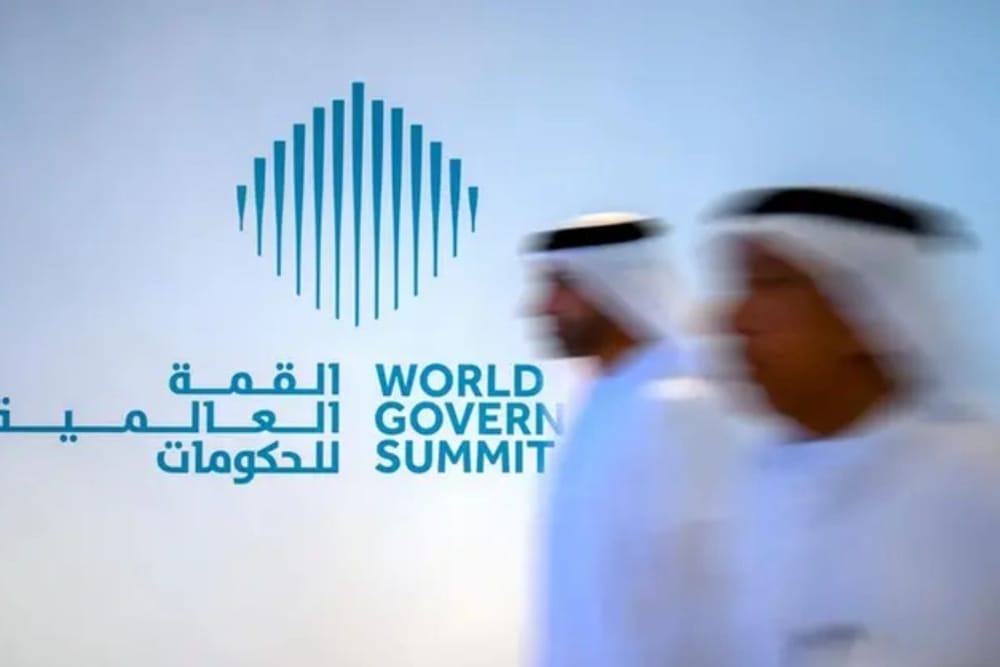
The World Government Summit will transform Dubai into the world’s strategic command center from February 3 to 5, 2026. The event is set to gather 35 heads of state, 150 delegations, and more than 6,000 participants. Under the patronage of Sheikh Mohammed bin Rashid Al Maktoum, world leaders, tech giants, and Nobel laureates will explore how artificial intelligence can eliminate bureaucratic hurdles, turning government operations into an “invisible service.”
WGS 2026 Themes: A New Architecture for the Future
This year’s summit focuses on three critical global challenges:
- Autonomous Governance: Moving beyond simple digital tools toward governments powered by autonomous AI.
- The Decarbonization Economy: Redesigning financial markets to address the ongoing climate crisis.
- Global AI Security: Establishing a “digital code” to ensure technology remains under human oversight.
A major highlight of the event is the report titled “The Algorithmic State.” Its core arguments are futuristic: the total removal of human officials in the distribution of benefits and licenses to eliminate corruption, predictive management that fixes infrastructure before it breaks, and digital citizen twins that automate tasks like social security enrollment without the need for manual applications.
World Government Summit: Dubai as the Planet’s “Neutral Waters”
The choice of Dubai as a venue is more significant than ever in 2026. In an era of deep geopolitical divides, the city remains perhaps the only platform where the West, the East, and the Global South can gather at the same table. It serves as a “neutral harbor” where technological progress can be discussed without the interference of ideological sanctions or trade barriers. This unique positioning is why the summit attracts top representatives from the U.S., the EU, and BRICS nations, alongside heads of the world’s largest tech companies.
The Dark Side of Utopia: Risks of the “Digital Leviathan”
Behind the glossy facade of innovation, summit participants will also address serious concerns regarding the digital future:
- Could an algorithmic state become a tool for total surveillance? If a “digital twin” knows everything about a person, there are no guarantees that the data won’t be used against them.
- Algorithms are code, and code can fail. If an AI denies a citizen insurance or the right to travel, there may be no human official left to petition for a review.
- Can a machine be trusted to make decisions requiring empathy rather than just the cold logic of numbers and regulations?
The hope is that summit participants find a balance between digital code and the spirit of progress, where AI handles routine data and control, while human leaders retain responsibility for strategy, empathy, and ethics.
Lessons from 2025: Setting a High Bar
Interest in the 2026 summit is fueled by the breakthroughs of the previous year. In 2025, digital leaders like the UAE and Singapore demonstrated how neural networks could replace armies of bureaucrats. Previously, obtaining building permits or subsidies took weeks and required interactions with dozens of officials. Now, in these countries, the process takes seconds as AI automatically verifies documents against current laws. This shift has virtually eliminated queues, bribes, and the infamous “come back tomorrow” culture.
Last year also saw the introduction of smart control systems where every government action is fully transparent. Using blockchain, every budget euro or dirham is tagged with a digital code. This prevents funds from being lost or stolen, as the system simply blocks any payment that does not comply with established legal norms.
Furthermore, in 2025, nations agreed to a unified satellite system for climate monitoring. These satellites now track illegal logging and industrial emissions in real-time across the globe.
Reality vs. Innovation
While Dubai builds the future, much of the world is still drowning in paperwork. This gap is highlighted by the Bureaucracy Index, which distinguishes countries ready for change from those stuck in tradition. In Europe, the situation is uneven. Slovakia, Hungary, and Italy remain leaders in bureaucratic burden, where small businesses spend up to 328 hours a year on paperwork. Conversely, digital pioneers like Estonia, Poland, and Cyprus have cut this time nearly in half through automation.
The ultimate goal for WGS 2026 is for governments to adopt these innovations as rapidly as the private sector. In a world where algorithms can save people from hundreds of hours of meaningless reporting, delay is essentially theft of time from the future.