The NATO Summit Ankara has begun, where allies will spend the next two days addressing fundamental questions about the alliance’s future, security threats, and defense spending. The previous meeting in The Hague was widely remembered behind the scenes as the «summit for daddy»—referring to Donald Trump, whom European leaders, led by Secretary General Mark Rutte, desperately tried to appease.
Despite the upbeat social media Reels published by Rutte’s press service to project resolve and confidence, there is a clear consensus: this is the last summit of the Alliance in its current format. Nobody, including Donald Trump, knows how NATO will function under a new model.
Organizers and media outlets are already calling the Ankara meeting “decisive in the history of the alliance” for shaping a new world order. However, nearly every summit’s final communique is branded as historic or worldview-shifting. With the rise of artificial intelligence, public relations language has become even more polished and motivational. Yet, once the summits end, the rhetoric fades, daily realities return, and PR teams are left explaining how to interpret various statements.
Who Will Be the Main Newsmaker?
One certainty is that US President Donald Trump will remain the primary source of news and headlines. The media center has been closely watching the tense relationship between Trump and Italian Prime Prime Minister Giorgia Meloni.
On the eve of the summit, the US leader continued his personal campaign against his Italian counterpart. On July 5, Trump shared an edited photo on his social network showing Meloni looking at him with undisguised admiration, captioned: “Need a restraining order.”

Belgian Defense Minister Theo Francken unexpectedly came to Meloni’s defense. He attempted a careful political balancing act, supporting Meloni without offending Trump. In an interview with Politico, he called her the “queen of the center-right” and Europe’s “alpha,” calling for her to be left alone. However, he pragmatically added that Europe will need five to ten years to build its own military capabilities to replace the US security shield. The Belgian minister concluded that US support remains essential, meaning European allies must be diplomatic and polite. The meme disputes are merely a facade, as the main debates at the summit will center on shifts in power and funding.
Money: The Transatlantic Security Bill and the Ukrainian Plan
Despite last year’s efforts by European leaders to raise defense spending to an ambitious 2.5–3% of GDP—as the previously suggested 5% risked collapsing EU social budgets—the transatlantic rift has only deepened. Unilateral actions by Washington, from Trump’s sudden claims on Greenland to military action in the Middle East without consulting allies, have shattered European illusions. European capitals are now focused on minimizing the damage from a reduced US presence. Just before arriving, Trump called Germany’s military spending “ridiculous,” ensuring that defense funding will be a key flashpoint of the summit.
Kyiv’s strategy fits directly into these financial discussions. Volodymyr Zelenskyy arrived at the summit with a clear plan to secure financial aid through long-term legal frameworks, shielding Ukraine from political shifts in Washington. Kyiv is requesting a €140 billion military aid package (€70 billion for 2026 and another €70 billion for 2027) funded solely by European nations and Canada to compensate for any loss of US funding. Ukraine is also lobbying for internal financing of its defense sector to produce its own air defense systems, alongside a 0.25% “GDP tax” on European NATO members.
This raises a central question: how can long-term legal guarantees for such large sums be secured when key donors are running out of military hardware to provide? On the first day of the summit, Dutch Defense Minister Dilan Yeşilgöz-Zegerius stated that The Hague has “reached the limit of its capabilities.” She noted that Dutch hangars are empty, making it physically impossible to supply more Patriot missiles from their own stocks. The Netherlands is shifting from a direct arms supplier to a financial donor, promoting the Build with Ukraine joint drone production program while urging other alliance members to supply missiles.
The Struggle for Power: A New Game of Thrones Within the Alliance
With the United States signaling its self-sufficiency, a quiet struggle for influence has been underway within NATO for the past year. Initially, the traditional quartet of France, Germany, the United Kingdom, and Italy led this push. However, following Poland’s demands for a seat at any negotiation table regarding the Russia-Ukraine war, Warsaw has effectively joined this group, turning the quartet into a quintet.
Germany (Ambitions to Lead a “New NATO”): Under Chancellor Friedrich Merz, Berlin has declared its intention to become Europe’s leading military power. The German newspaper Sueddeutsche Zeitung wrote that the old alliance is defunct and the US retreat is irreversible, meaning Germany—with its record defense budget of €108 billion—must become the core of the new coalition. At the summit, Berlin is lobbying to produce American Patriot missiles at domestic plants and is coordinating Eastern Flank defenses through a joint tactical headquarters with the Netherlands in the Baltic region.
Turkey (Host and Anatolian Status): Under Recep Tayyip Erdogan, Ankara is pursuing its own distinct strategy, keeping its distance from the European powers. Utilizing its role as summit host, Turkey has criticized the EU for excluding it from joint military programs, demanding access to European defense initiatives, including the €150 billion SAFE program. Erdogan is presenting new AI-powered drones to allies and lobbying Trump to lift sanctions and readmit Turkey to the F-35 fighter jet program. Turkey maintains a unique diplomatic position. The country hosts the annual Antalya Diplomacy Forum, established as a major foreign policy venue. Ankara has positioned itself as an independent power broker, serving as the only NATO member capable of holding direct talks with Washington, Moscow, Kyiv, and Tehran simultaneously.
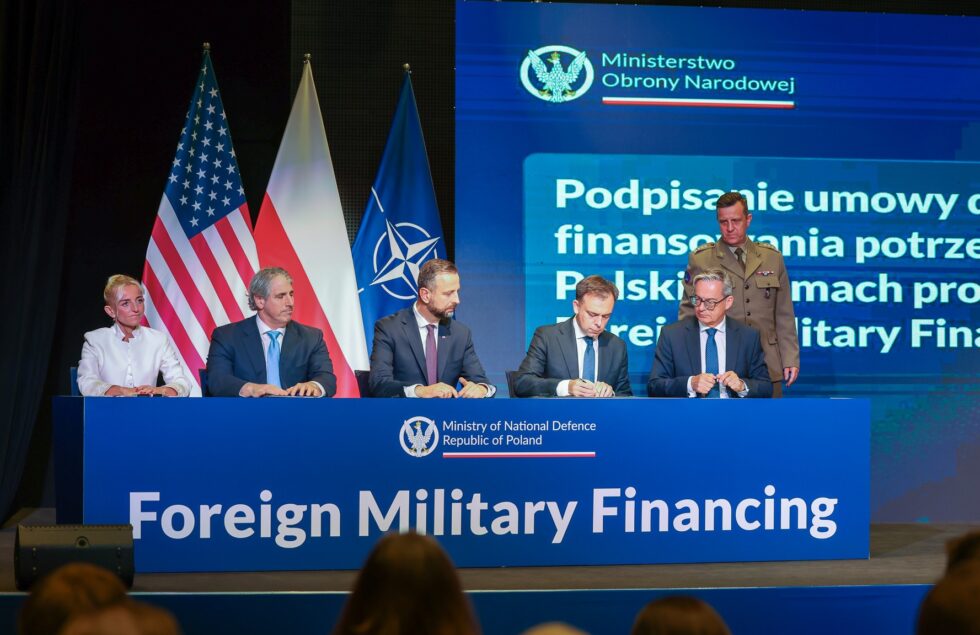
Poland (Pragmatism Over Unconditional Support): Warsaw remains the primary logistics hub via Rzeszow, handling over 80% of military shipments to Ukraine. However, on the eve of the summit, Prime Minister Donald Tusk signaled a shift, prioritizing Polish interests. Tusk indicated that Poland will not take on major new financial commitments, citing ongoing disputes with Kyiv. During the summit, Warsaw disclosed past military aid, with the defense minister confirming the covert transfer of $4.5 billion worth of Patriot missiles. Poland’s position has shifted to: “Our security is on the front line, but goodwill must be mutual.”
The Invisible Foundation: NATO’s Institutional Inertia
While political figures make public declarations, compete for influence, and clash on social media, the institutional inertia of NATO remains a critical factor. The alliance’s bureaucratic and military apparatus continues to operate independently. Integrated command structures, standardized communications, and shared logistics provide stability, ensuring the military framework functions despite political disputes at the leadership level.
Expectations and Hopes: A Stop-Word for Putin
The US and Ukraine hope to establish a clear “stop-word” for Vladimir Putin to halt the offensive against Ukraine and secure a peace agreement. Trump expressed confidence that a resolution is “much closer than people think” and intends to use bilateral talks on the sidelines of the NATO summit in Ankara to address this. While Washington and Kyiv envision different paths to ending the conflict, both currently share this immediate objective.
The Baltic states hope that larger allies will reaffirm their commitment to collective defense through concrete actions rather than rhetoric. However, local social media discussions in these nations indicate growing public skepticism regarding actual military assistance in the event of an attack.
Slovakia and Hungary: Slovak Prime Minister Robert Fico confirmed that Bratislava and Budapest intend to block joint budgets to prevent any of their funds from being used to support ongoing military actions.
Gulf States and Asian Partners (AP4): Qatar, the UAE, Japan, and South Korea aim to use the summit to establish maritime security mechanisms and address the crisis involving Iran. The presence of Indo-Pacific partners highlights a strategic shift: the Pacific theater remains a primary focus for the US. The strategic deterrence of China is a key driver behind Washington’s pressure on Europe to take full responsibility for managing relations with Russia, allowing US resources to be redirected toward Asia.
NATO Secretary General Mark Rutte hopes to secure a signed final declaration that avoids a public fallout with Trump, shows Europe agreeing to higher spending, and satisfies Turkey’s aspirations as the summit host.
Many leaders quietly hope that Trump will not announce a US withdrawal from NATO or publicly dismiss his allies during the live broadcasts.
Waiting for a Reassuring Pill
Citizens of NATO and partner nations hope their leaders will find a reassuring “red or blue pill” to deter global aggressors. There is a growing desire for a proactive strategy of deterrence rather than continuous warnings about imminent threats, such as potential Russian actions or the IRGC closing the Strait of Hormuz.
Taxpayers prefer to fund a peaceful, healthy, and technologically advanced future rather than ongoing tranches for heavy weaponry. On social media, users would rather discuss Christopher Nolan’s next sci-fi odyssey than follow propaganda narratives surrounding global conflict.