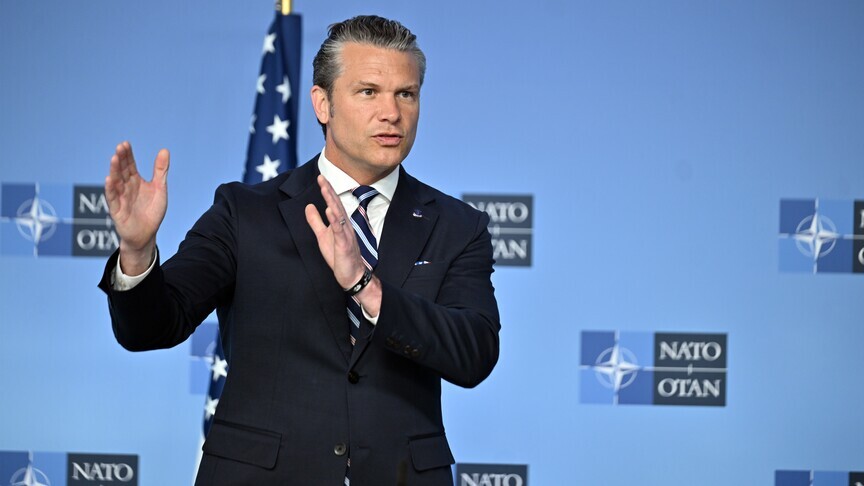
At the Ankara summit, NATO officially approved a new NATO Zero Trust warfare doctrine. The final Declaration formally established the Alliance’s transition to a unified “transatlantic cloud environment” and the widespread deployment of combat artificial intelligence.
Modern warfare has demonstrated that traditional military command networks are highly vulnerable to electronic warfare (EW) and massive internal leaks. To quickly overhaul this architecture, the NATO Communications and Information Agency (NCIA) has signed a €200 million long-term contract with a consortium of IT giants Accenture and Leonardo. Under the Protected Business Network (PBN) program, they will build a secure network from scratch for the 32 alliance nations based on the Zero Trust concept.
What Is NATO Zero Trust?
For years, cybersecurity relied on a medieval-castle approach: strong perimeter walls (firewalls) and absolute trust in everyone inside. Once a user entered the correct password at the gate, the system considered them trusted and allowed them to navigate the entire network.
The Zero Trust concept eliminates this rule. Its core philosophy is: “The enemy is already inside. Trust no one, verify everything.” By default, the system trusts no one—neither a low-level clerk nor a general in a secure bunker. Every device, user, and file request undergoes strict, real-time multi-factor verification.
NEWSROOM IN analyzes how the Alliance is reshaping its IT systems through secure digital protocols and what key threats it is trying to protect against.
Issue 1: In a 32-Nation Coalition, Someone Will Inevitably Fail
The primary threat to NATO data is the structure of the Alliance itself. Any network is only as secure as its weakest link. For years, NATO built its security around the “digital castle” principle: a strong outer wall and complete trust in everyone inside. If hackers breached a regional headquarters on the alliance’s periphery, they gained access to all doors and could access databases across the entire Alliance.
The Solution: Isolation and Zero Trust. NATO now operates on the assumption that the enemy has already penetrated its defenses. The unified “transatlantic cloud” is being split into millions of isolated cells. Italian company Leonardo is implementing a system of smart gateways. If suspicious activity is detected in one nation’s network, that segment is instantly cut off from the shared cloud. The Alliance continues to function while the infected area is quarantined.
Issue 2: Insider Threats
Even when nations are isolated from one another, the human factor remains. High-profile leaks of classified Pentagon documents demonstrated that granting permanent clearances to personnel is a major risk. An employee could access the system at night and download gigabytes of operational plans simply because their position granted them those rights.
The Solution: Just-In-Time Access. The new system eliminates permanent access passes. Access to documents is granted only for specific tasks and for a limited duration. Algorithms continuously analyze context, including who is downloading files, from where, and for what purpose. If the system detects a user suddenly downloading an unusual volume of data, their profile is blocked instantly.
Issue 3: Electronic Warfare Jamming
While headquarters networks can be protected from hackers and spies, this infrastructure can fail in active combat zones due to electronic warfare (EW). If a commander’s tablet or drone relies on commands from a central cloud, jamming can render them useless. Furthermore, if a fallen officer’s tablet falls into enemy hands, the adversary could gain access to real-time operational updates.
The Solution: Tactical Edge Computing. NATO is shifting computing power directly to combat equipment. Lightweight neural networks are embedded into the processors of drones and armored vehicles. Even if communication with central headquarters is lost, a drone can identify targets on its own. To prevent a captured tablet from leaking secrets, the Zero Trust system continuously requires authentication; without the owner’s biometrics and correct GPS coordinates, the device automatically wipes all data and locks down completely.
Issue 4: Hackers Playing the Long Game
After addressing vulnerabilities on the front lines and in headquarters, NATO faced a final threat: delayed decryption, known as “Store Now, Decrypt Later.” Adversary intelligence agencies are currently intercepting large volumes of encrypted Alliance traffic. While they cannot read it today, they store the data, anticipating that quantum computers capable of breaking current encryption methods will emerge within five to seven years.
The Future of NATO Zero Trust
The Solution: Post-Quantum Cryptography. To render terabytes of intercepted data useless, NATO is transitioning its networks to algorithms designed to withstand future quantum decryption.