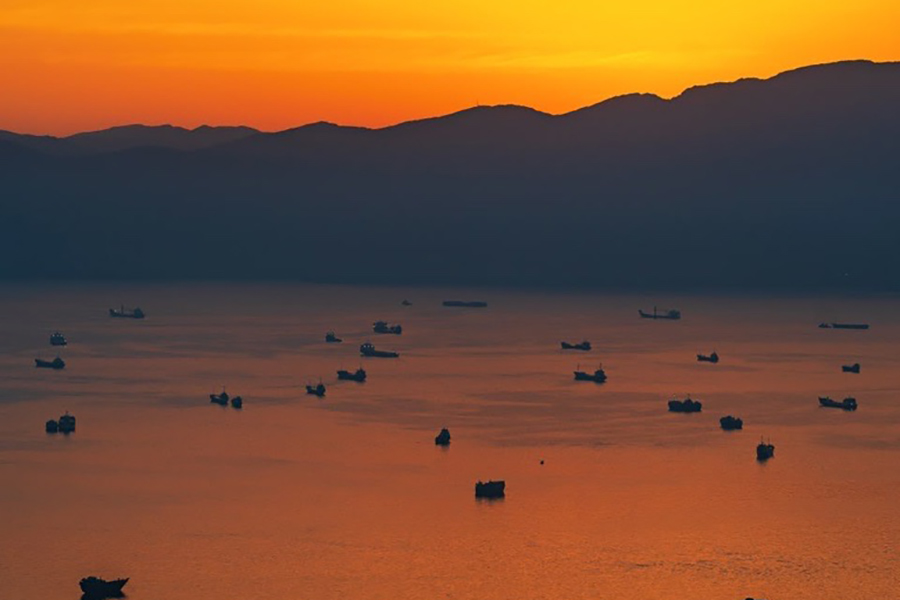
U.S. military forces have executed a massive Iran navy strike, delivering a crushing blow to Tehran’s naval capabilities as part of Operation Epic Fury. U.S. Central Command (CENTCOM) officially confirmed the total destruction of a task force consisting of 11 Iranian warships in the Gulf of Oman. While Washington reports the elimination of the enemy’s combat fleet, the Iranian Revolutionary Guard Corps (IRGC) has launched a hunt for international merchant ships in the Strait of Hormuz, having already struck its fifth commercial tanker.
Iran Navy Strike: The End of Hegemony in the Gulf

The operation to clear the Gulf of Oman was one of the first and most successful phases of the American campaign, which began on February 28. According to CENTCOM, “Two days ago, the Iranian regime had 11 ships in the Gulf of Oman; today they have ZERO.” The command was referring to the naval task force in that specific sector — all 11 combat and auxiliary vessels stationed there have been neutralized.
“For decades, Iran has attacked international shipping in the Persian Gulf and surrounding waters. That era has come to an end,” the U.S. agency summarized, releasing footage of a precision missile strike on one of the vessels.
U.S. President Donald Trump promised that strikes against the remnants of the enemy fleet would continue.
Information Warfare and the Sunken Corvette
Parallel to the kinetic combat, a fierce information war has broken out. Iranian state media attempted to mitigate the impact of their losses by issuing urgent reports of a supposedly successful strike on a U.S. aircraft carrier. CENTCOM categorically denied the report, clarifying that during the engagement in question, only the Iranian warship Shahid Bagheri sustained critical damage.
Tehran’s other confirmed losses include a modern Jamaran-class corvette, which sank directly in the waters of Chah Bahar port. Washington has made it clear: the total destruction of Iran’s naval potential is a fundamental priority of the current operation, on par with the elimination of its nuclear centers and missile silos.
‘Tanker War 2.0’: The IRGC Retaliates
Realizing they cannot withstand the U.S. Navy in open combat, Iran has resorted to tactics of total blockade and terror. The IRGC command officially declared the Strait of Hormuz closed to all maritime traffic.
Moving beyond rhetoric, Iranian forces have begun systematically attacking the commercial fleet, echoing the scenarios of the 1980s “Tanker War.” The latest incident occurred on March 2, when two Iranian kamikaze drones struck the tanker Athen Nova, which was sailing under the flag of Honduras. The strike ignited a massive fire on board. The IRGC was quick to justify the attack, claiming the vessel was acting “in the interests of the United States.”
The attack on the Athen Nova marks the fifth such incident in just a few days of the military operation. Previous targets of Iranian drones and missiles include the tanker Stena Imperative, the tanker MKD Vyom, the tanker Hercules Star, and an unnamed commercial vessel attacked directly in the waters of the major logistics hub at Jebel Ali Port (UAE).
Iran’s actions confirm the worst fears of economists: having lost its combat fleet, the Ayatollah regime is prepared to use its control over the coastline to maximize the destabilization of global oil and liquefied natural gas supplies.