After the Social Democratic Party’s decisive victory in the parliamentary elections, party leader Vilija Blinkevičiūtė has declined the role of prime minister, opting to continue her work in the European Parliament, where she has represented Lithuania since 2009.
Blinkevičiūtė’s decision has sparked a major controversy in Lithuania. Critics accuse her and the Social Democratic Party of deception, arguing that she had promised before the election to leave the European Parliament and take on the role of prime minister.
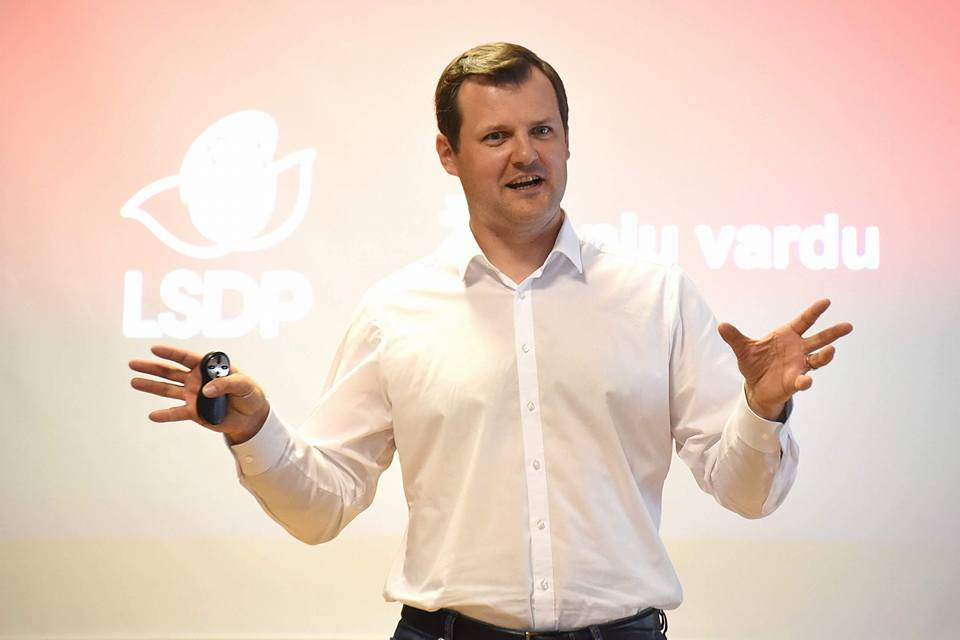
In her place, the Social Democrats have nominated party vice-chairman Gintautas Paluckas for the position.
It’s worth noting that Blinkevičiūtė was the primary face of the Social Democrats’ election campaign. Many voters supported her personally after she announced on August 28 that she would serve as prime minister. Unsurprisingly, her reversal has caused significant public dissatisfaction.
The defeated Conservative Party has seized on this development, commenting actively in the media and on social networks. They label the Social Democrats as dishonest, fostering the perception that the party cannot be trusted. They have also accused President Gitanas Nausėda of being aware of the “deception” but still offering support to the Social Democrats.
Why Did Blinkevičiūtė Change Her Mind?
On the evening of October 30, Blinkevičiūtė explained her decision in a closed party meeting. “I believe that taking on the responsibilities of a nearly 65-year-old prime minister would be challenging. I am a retiree, and during the election period, I fully understood how demanding this role is, both physically and mentally,” she stated.
Considering her age and health, she expressed support for a younger and more energetic leadership within the party, capable of effectively governing. Blinkevičiūtė added that she never sought the position merely for the sake of holding it.
Social Democratic Party Vice-Chairman Vytenis Andriukaitis, also a European Parliament member, provided a more measured response than the Conservatives in an interview with LRT. He revealed that the idea of Blinkevičiūtė taking on the role of prime minister arose as a strategy to counter the growing popularity of the new “Nemuno Aušra” party, which posed a threat by potentially pulling votes away from the Social Democrats.
Andriukaitis explained that at the time, Blinkevičiūtė was genuinely committed to leading the government but later decided against it due to her declining health.
President Nausėda also hinted at potentially leading the government temporarily to mitigate the backlash against the Social Democrats, but ultimately the situation has resolved as it stands now. Whether this decision is beneficial or not remains to be seen. Meanwhile, the Social Democrats are actively negotiating a governing coalition with other parties, including “Nemuno Aušra,” whose leader, Remigijus Žemaitaitis, has faced accusations of anti-Semitism.
Gintautas Paluckas: Looking to the Future
Reflecting on his candidacy for prime minister, Paluckas stated on LRT Radio that Blinkevičiūtė’s explanation resonated deeply with many members of the party’s leadership, including himself. “Vilija shared with me further details about her decision. While I can’t disclose everything due to its emotional weight, we understand her choice because the role of prime minister is among the most demanding in our country,” he said.
Reflecting on his candidacy for prime minister, Paluckas stated on LRT Radio that Blinkevičiūtė’s explanation resonated deeply with many members of the party’s leadership, including himself. “Vilija shared with me further details about her decision. While I can’t disclose everything due to its emotional weight, we understand her choice because the role of prime minister is among the most demanding in our country,” he said.
He concluded, “Emotions are high, and we regret the current situation, but we are looking to the future.”He concluded, “Emotions are high, and we regret the current situation, but we are looking to the future.”