During the Soviet era, the Soviet Union regularly initiated or facilitated numerous conferences, summits, and roundtables within the Non-Aligned Movement. This international association helped Soviet politicians promote ideas of the anti-colonial movement in Asia and Africa, gaining considerable influence in former or still-existing colonies. However, after the USSR collapsed, the Non-Aligned Movement’s activities ceased, and the struggle against colonialism became less popular among third parties.
That lasted about 30 years. However, the successor to the Russian communist regime (Putin’s dictatorship) first built a strong authoritarian regime within Russia and then began aggressively reclaiming influence in Third World countries, particularly in Africa.

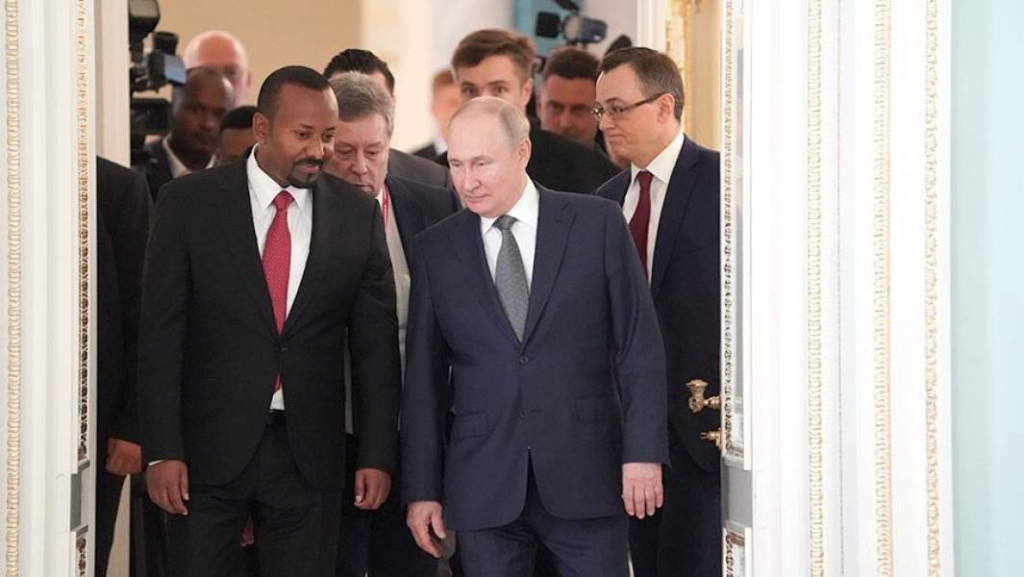
The Kremlin has already organized large-scale Russia-Africa Summits twice (in Sochi in 2019 and St. Petersburg in 2023), with plans to hold them every three years. A regular dialogue called the Russia-Africa Partnership Forum was also established, under which various meetings, roundtables, and business project presentations take place. For instance, the first ministerial conference of the Russia-Africa Partnership Forum is scheduled to be held in Sochi on November 9-10, 2024. The Ministry of Foreign Affairs of the Russian Federation has invited representatives from all 54 African countries and 10 regional and subregional organizations to participate.
Some European states—the successors of former powerful empires—still attempt to maintain their influence in certain African regions. However, Russia and China jointly oppose the interests of these former metropolises and work to sideline them. For example, Russia has made significant gains in pushing France out of the entire Equatorial African region, beginning with its strengthened position in the Central African Republic, a former French colony.
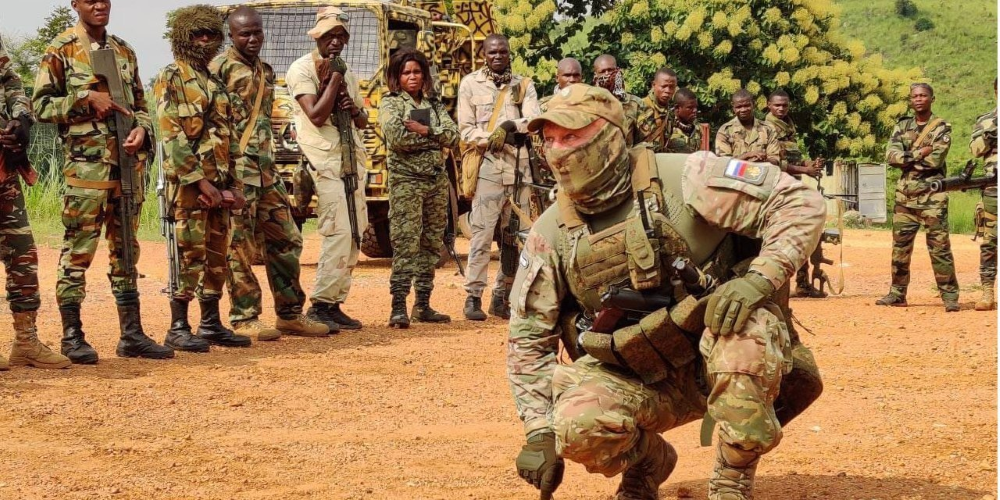
To bolster its standing in Africa, Putin’s Russia has improved bilateral relations with some African states, employing not only political and economic methods but also military means. For instance, at the end of October, Moscow deployed mercenaries from the African Corps to Equatorial Guinea. This paramilitary unit of the Russian Ministry of Defense, established in late 2023, aims to protect Russian economic interests in Africa.
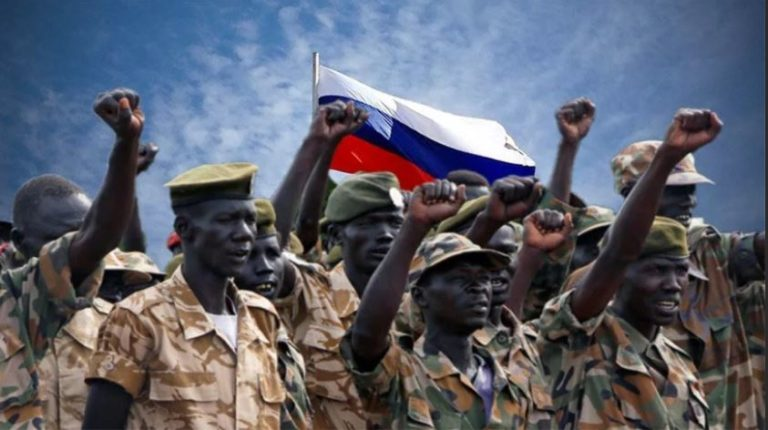
Similar Russian contingents are present in Burkina Faso, Libya, Mali, CAR, and Niger. In some cases, the African Corps serves as a successor to the Wagner Group, which became less reliable for the Kremlin after the high-profile but ultimately unsuccessful rebellion led by Prigozhin in summer 2023. Sometimes, the African Corps cooperates with mercenaries from other Russian private military companies (PMC Shield, Russian Security Systems/RSB-Group, Redut, Patriot, and Sewa Security Services). According to Russian media, these PMCs primarily guard important economic facilities—gold mines, diamond mines, uranium deposits, oil wells, etc.—though not always without conflict.
Since 2016, Russian mercenaries who fought alongside the Libyan National Army led by Khalifa Haftar and the Tobruk-based government in Libya’s civil war have been implicated in acts of torture, vandalism, and brutal killings, including those of women and children. Reports document Russian mercenaries burning people alive in containers, throwing prisoners into mines and wells, and burying people alive, including entire families. Additionally, Russian mercenaries have engaged in looting, robbery, and hostage-taking for ransom. Those unable to pay were subjected to horrific abuse by Russian soldiers, often involving acts of sadistic violence.
In 2018, Russian mercenary activities spread to Sudan, Congo, and CAR; in 2019 to Mozambique and Mali; in 2020 to Somalia, Burundi, Yemen, and beyond. Experts now estimate that Russian PMC mercenaries operate in 19 African countries.
For example, on October 21, 2024, pro-government Sudanese forces mistakenly shot down a large Il-76 cargo plane in North Darfur’s Malha area. The plane was carrying Russian military specialists, weapons, ammunition, and provisions meant for the Sudanese regular army, surrounded by rebel groups in El-Fashir. This incident demonstrated Russia’s involvement in the Sudanese civil war.
Kremlin officials are unlikely to highlight the “heroic” actions of Russian mercenaries on the African continent during the first ministerial conference of the Russia-Africa Partnership Forum. Instead, they will likely focus on political and economic cooperation. Yet this partnership poses risks to African states, their political elites, and their populations.
Russian presence in any African country may offer short-term benefits but is unlikely to be advantageous in the long run. Russia is likely to seek control over local mineral resources. Given Russia’s economic structure—based largely on agriculture and raw materials—Russian involvement in resource extraction may lead to environmental degradation and possibly even ecosystem destruction, as has been observed in Russia itself.
Russian influence on the internal politics of African nations may reduce political standards, fostering corruption and bribery.
The Russian Federation’s investment projects often come with exploitative terms and long-term loans at extremely high-interest rates. In this regard, authoritarian Putin’s Russia and communist China are quite similar. Generally, while China does not engage in African wars or civil conflicts, it employs aggressive economic expansion tactics. Chinese businesses buy up anything of value and invest widely, often making low-profit investments merely to expand influence.
During the Russia-Africa Summits, Putin has provided free food aid to some African countries. However, such gestures by the Russian president are part of a larger strategy of food blackmail. By blocking several transport corridors from Ukraine—a long-time grain producer—Putin attempts to create reliance on his “generosity.” A Kremlin-initiated grain exchange proposed at the BRICS Summit in Kazan (October 22-24) could further enable this approach, allowing Russia to leverage food supplies as a tool for influence.
Furthermore, Putin’s Russia leverages African countries, particularly those on the Mediterranean, to control migration flows, influencing routes, migration intensity, and destination countries to exert pressure on European nations.
Through Russia-Africa conferences, forums, and summits, Moscow also aims to coordinate voting in the UN and other international organizations, seeking support from African nations to ease or lift sanctions or prevent restrictions on its actions, even when these actions involve aggressive measures against democracies.
Putin’s regime cynically exploits various forms of cooperation with Africa to strengthen its influence on the continent. At the moment, he is succeeding. The question remains: will the collective West respond?
☛ Author of the publication: Alexander Sergeevich Yanchuk – Сhairman of the international information and analytical agency in Milan