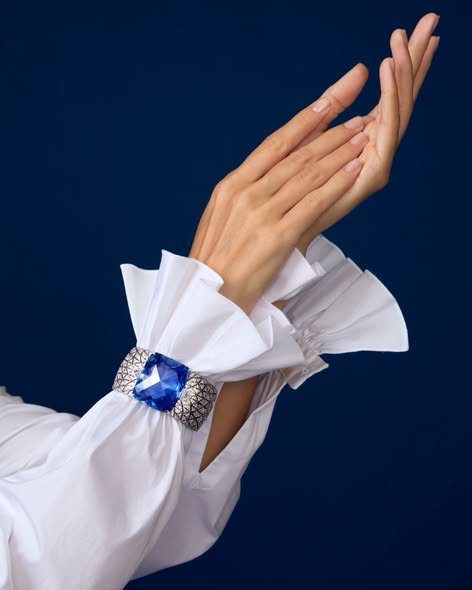
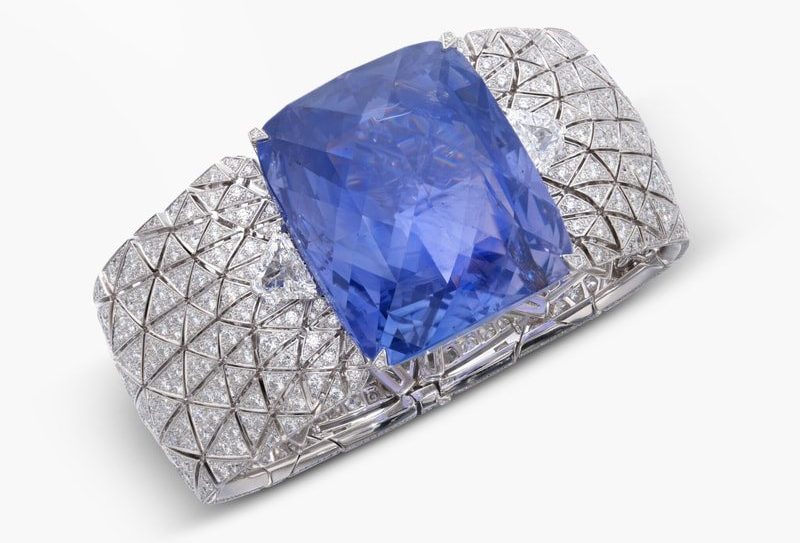
A Cartier bracelet featuring the historic 197.8-carat Romanov Sapphire from Ceylon sold at Sotheby’s in Geneva for a record €4.42 million ($4.9 million, or 4.1 million Swiss francs). With an initial estimate of $1–2 million, the final hammer price more than doubled expectations.
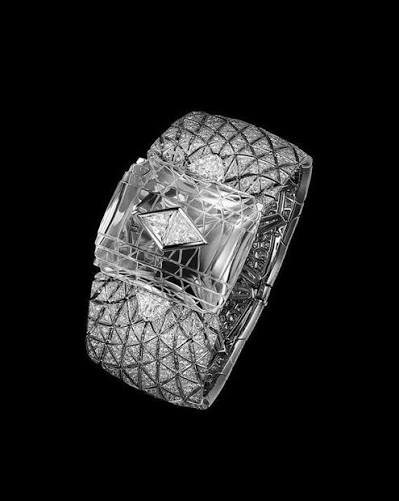
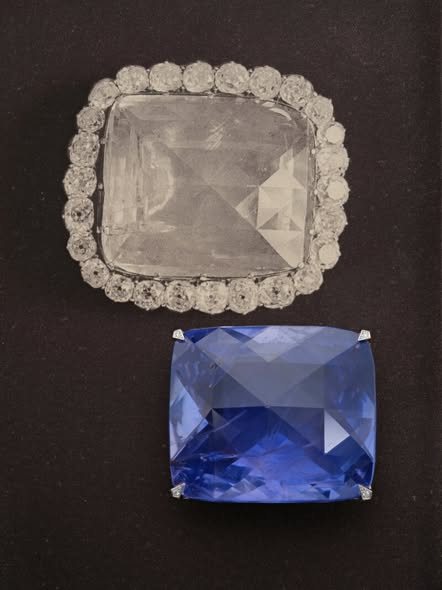
The bracelet comes with a detachable central fitting made of carved rock crystal set with triangular-cut diamonds, allowing the piece to be worn without the historic sapphire.
History of the Romanov Sapphire
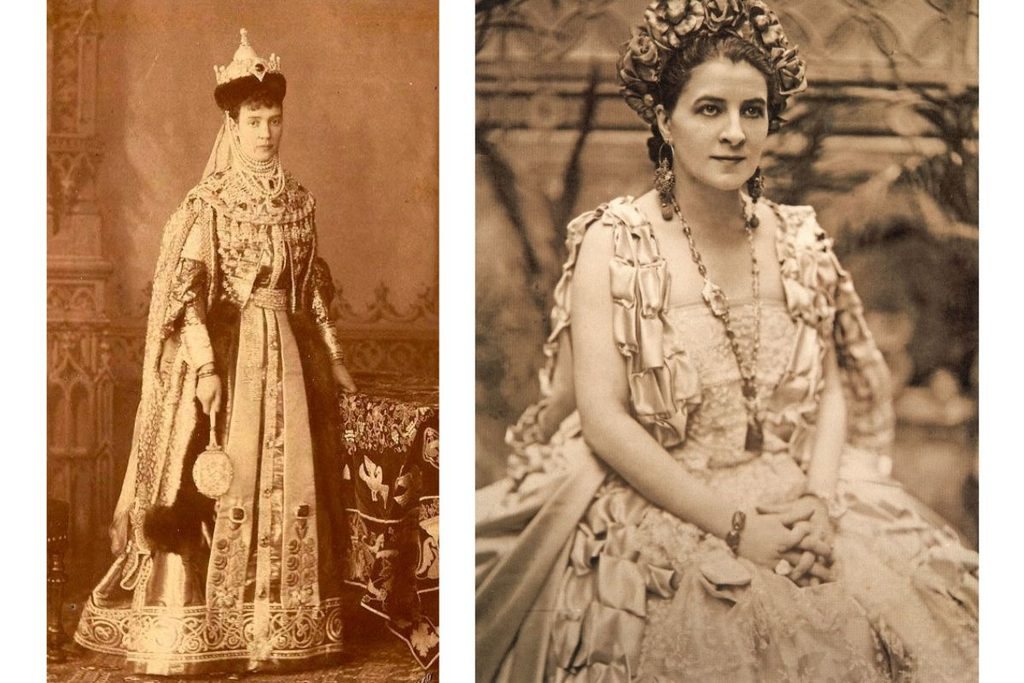
Collage: NEWSROOM IN
Mughal Heritage and the Winter Palace Ball
The exact date the sapphire entered the Russian imperial treasury remains unknown. However, auction house experts note that its distinctive cut indicates origins dating to the height of the Mughal Empire (16th–18th centuries).
In the late 19th century, Fabergé craftsmen mounted the gem on commission from the imperial family. The sapphire originally served as the centerpiece of a diamond brooch-clasp belonging to Empress Maria Feodorovna (wife of Alexander III and mother of Russia’s final emperor, Nicholas II). The empress is known to have worn the brooch to an 1883 costume ball at the Winter Palace, paired with another brooch centered on an even larger 249.25-carat Ceylon sapphire later acquired by jeweler Harry Winston.
The empress was noted for her fondness for sapphires, assembling a collection of rare specimens.
Ganna Walska’s Necklaces and the Setting’s Evolution
Following the 1917 revolution, the Soviet government nationalized and sold off much of the imperial jewelry holdings. In 1927, Polish opera singer Ganna Walska acquired the sapphire and commissioned Cartier to set it into a necklace. Walska later commissioned the jeweler to reset the sapphire at least three times to reflect changing tastes and styles.
In 1971, Walska’s collection was auctioned at Sotheby’s, including a shortened necklace featuring the Romanov Sapphire. In 1992, the gem returned to auction in Geneva as the centerpiece of a substantial necklace.
In 2015, Cartier incorporated the historic stone into an Art Deco-style bracelet. The piece drew inspiration from the 1920s and 1930s, when the house first mounted the Romanov Sapphire for Walska during the period when Art Deco served as Cartier’s signature aesthetic.
Industry reports note that the 197-carat stone sold in Geneva is among the most significant and largest historic sapphires from the Romanov era to remain intact in private collections.