Philosopher Slavoj Žižek warns that the global system is dead, international law has collapsed, and humanity is hurtling toward an abyss unless it fundamentally changes its reality. This was the stark message delivered at the Capitol in Rome during a ceremony commemorating the founding of the European Economic Community. While the European elite expected standard speeches on unity and democracy, Žižek declared that the old world is broken and must be replaced if the species is to survive.
Who is Slavoj Žižek and why does he matter?
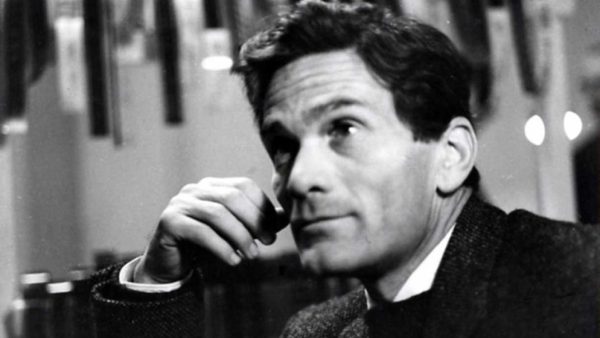
Slavoj Žižek is a prominent and provocative contemporary philosopher, often described by the media as the “Elvis Presley of cultural theory.” The Slovenian thinker blends pop culture, Marxism, psychoanalysis, and biting political critique. He frequently uses Hitchcock films to explain capitalism or Soviet jokes to illustrate the nature of ideology. His Rome address was dense with references; here is a breakdown of his primary arguments.
Part 1: Why the old system has finally failed
“The Treaty of Rome was signed on March 25, 1957, in this very building. Where are we today, 69 years later?” Žižek asked. His assessment was grim: instead of the promised prosperity, the world stands on the brink of catastrophe.
- The “train” is heading for a cliff. The traditional idea of linear progress is leading toward disaster. Žižek argues that the uncontrolled development of technology and market economies is destroying the planet. In this context, revolution is not about moving forward faster, but about pulling the emergency brake to ensure survival.
- Rules no longer exist. Major powers act based on strength rather than law. They operate on the principle that justice is simply the interest of the strongest, cynically framing wars as paths to peace. Because the bureaucracies of the EU and US are paralyzed, there is a rising demand for “predatory” leaders, like Nayib Bukele in El Salvador, who solve problems through brute force while ignoring legal frameworks.
- Modern pacifism is a trap. Žižek rejects the calls for “peace at any cost.” In the context of Ukraine, he argues that the demand to stop resisting is a demand to accept destruction. Those in the West who advocate for peace regardless of the terms are ignoring the reality of aggression. The choice is not between a “bad peace and war,” but between fighting for life and accepting death.
- The war of eroding civilizations. The world is splitting into blocs, but Žižek sees this as something other than a battle between light and darkness. Most superpowers are currently dismantling humanist values. He cites the alignment between Russia and radical Islamist regimes based on a shared hatred of European freedoms.
Part 2: Slavoj Žižek’s vision for a new world
Žižek does not offer comfort. Instead, he provides a blueprint for a society focused on physical survival in the 21st century. While 20th-century utopias promised paradise, Žižek’s vision is a plan to avoid total collapse. It is a world of forced, harsh rationality.
- Global coordination for survival. The free market as we know it must end. The “invisible hand” cannot prevent climate collapse or the risks of AI because it prioritizes short-term profit. The new world requires a system of rigid global coordination. Žižek provocatively calls this “communism,” referring not to Soviet-style shortages but to the mathematically precise, supranational management of the planet’s resources to save the species.
- The “emergency brake” on progress. Instead of an endless race for economic growth and increased consumption, the new world must voluntarily slow down. Society must be willing to consciously reduce its current level of comfort to avoid future extinction. Ecology and security must take precedence over GDP growth.
- The end of “polite tolerance.” The new world must move past hypocritical multiculturalism where traditions that include oppression are ignored under the guise of non-interference. For Žižek, solidarity is not peaceful coexistence but collective struggle. Human rights, freedom of speech, and the rejection of oppression must be universal laws for everyone.
- The death of national egoism and a united Europe. The idea of “my country, my rules” must end, as nationalism leads back to the Stone Age. Europe, squeezed between the US and Russia, remains the only example of countries attempting to unite for social and environmental standards rather than war. Instead of dismantling the EU, a difficult but necessary evolution is required. Just as a snake sheds its skin to grow, society must shed obsolete structures while preserving its core essence.
Reality Check: Is this achievable today?
Žižek’s concept is rational, yet the practical challenges are significant.
Barriers to implementation: The old world will not relinquish power voluntarily. Transnational corporations, fossil fuel lobbyists, and the military-industrial complex control the majority of the world’s wealth and media. For them, global coordination is a direct threat to trillions in capital. Furthermore, creating a supranational decision-making center requires surrendering sovereignty, which few current populist politicians are willing to do.
The case for hope: Hope lies in the instinct for survival. Generation Z is now entering the political arena with an inherent focus on crisis management:
- No illusions: This generation has no memory of “stable and prosperous” times. They matured during pandemics, economic downturns, and global instability. They do not believe the market will solve every problem. For them, global coordination is a necessity, not a theory.
- Willingness to sacrifice: For Zoomers, climate change is a personal threat. They are already demonstrating a willingness to sacrifice immediate comfort—such as rejecting fast fashion and demanding corporate transparency—for long-term survival. This is the rationality older elites lack.
- Immunity to propaganda: Born into a digital world, they are skilled at filtering information. They are less likely to blindly follow traditional authorities, career politicians, or outdated bureaucracies.
- Fluid borders: National borders are less significant to Zoomers than to their parents. They naturally coordinate with peers across the globe to solve problems or launch projects.
A dose of harsh realism
The transition to the world Žižek describes will not be smooth. It will not resemble standard reforms or elections, but rather a painful process of “shedding old skin.”
The older generation and established political elites still control the world’s capital and militaries. Generation Z faces the task of not only creating new rules but potentially taking control from those currently leading the train toward the abyss. Whether this shift happens through peaceful evolution or through direct confrontation with the old system remains the defining question of this century.