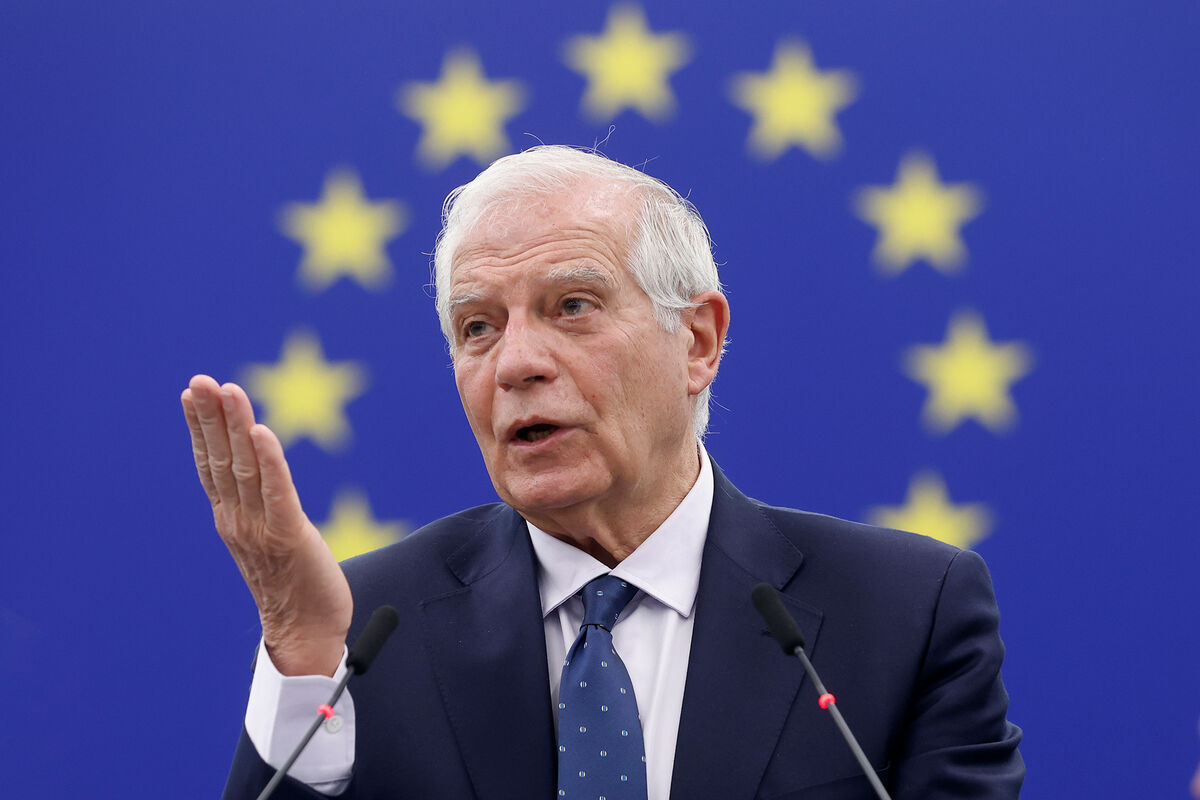
“Would you allow your ex to choose your tattoo?”
This question was asked at one of the European Parliament sessions during the European Youth Week in Brussels.
Two months before the elections, the European Commission is trying to attract the attention of young people to the vote, which will be held in all EU countries from June 6 to 9, 2024.
As the organizers of this major event say, the time has come for young people in Europe to become more involved in public life and to put democracy into action.
European officials have repeatedly said that young people are not interested in the European Parliament elections. They are trying to engage young people in various ways. For example, in January this year, European Commission Vice President Margaritis Schinas asked singer Taylor Swift to help increase the turnout of young voters in European elections. Swift will perform several concerts in Europe in June, on the eve of the EU elections. Schinas believes Swift’s influence on young European fans will help the cause.
And before the international star arrives, the European Commission has invited young people from EU countries to the European Parliament to see for themselves how it works and what goes on there.
NEWSROOM IN CEO Aivaras Goodman was among those invited and tells us what went on at the opening of the Week:
Q: Aivaras, what was the main goal of the event?
A: The main goal of the organizers was to inform young people about the elections to the European Parliament and to interest them and convince them that voting is worth it.
Q: Were young people from any political groups invited to Brussels?
A: No, it seems like it was not organized that way. They invited people from different, but not political groups to Brussels. There were about 500 people there from all the EU countries. I was a member of the Discover EU group. And an acquaintance of mine from Italy – he’s studying to be a surgeon – was delegated by the Italian parliament. The event, as strange as it may sound, was not so political. It was about activism, integrating cultures, elections, about cohesion (favorite EU word).


Q: What form did it take?
A: We were shown how the European Parliament works. We visited several sessions, participated in them, sat in the seats of deputies, pressed the voting buttons. Everyone could choose the session that interested them, we were there from around 7:30 in the morning to six in the evening. In general, it was a complete immersion into the work and fun of the European Parliament.
In addition to the sessions, we visited presentations of many European institutions. They told us about their work in a playful way. There were contests and quizzes. There were even caricaturists who drew everyone that dared to wait in line. They drew me too, but for some reason, I looked like Ursula Von der Leyen.
And we also socialized a lot. I really liked my group. There were people from Greece, Estonia, Lithuania, Romania, Croatia, and everywhere else. I learned as much about these countries as you probably wouldn’t learn in a year. And most importantly, everyone was fun, creative, and super positive.


Q: What issues did you discuss at the sessions of the European Parliament?
A: Myriad. I will tell you about the session that I remember the most. It concerned the question of how to attract young people to the European elections.
We were asked in groups to come up with unusual formats to attract our friends and acquaintances to participate in the elections. The representative of the European Parliament immediately set a cheerful tone by asking us: would we allow our ex or our ex-girlfriend to choose our tattoo? There were different answers, but in general, the consensus was – no, we would not allow it.
Then we started to think of options to attract attention. There were a lot of suggestions. There were also funny and crazy ones, for example, using a giraffe, to call everyone individually and call them to the elections, to distribute travel tickets to the polling stations, making it mandatory by law, etc.
The main thing I got out of this session was that young people should make their own conscious choice of who to vote for and not trust their choice, like with a tattoo, to someone else. The aim of the session – to show that our vote is also very important – was achieved.
Q: Are European Parliament communication campaigns reaching youth audiences? How do you assess their effectiveness?
A: During the event in Brussels, yes. I felt that they wanted to hear me and I heard them. And in general – no, they don’t reach as much as they could. I think the advertising campaign for the European elections could have been more effective. In my opinion, most EU structures aren’t effectively targeting specifically for young people. A lot of money is spent on advertising for the European elections but isn’t allocated to the most modern or the most efficient methods of marketing. I am not saying that it is not effective at all, but a special approach is needed to attract the attention of the youth audience. And I don’t see it.
Q: Are young people interested in European elections at all?
A: Basically, no. They are more interesting to the part of young people who are interested in politics in general. They are mostly older young people, from 24 to 26 years old.
Q: And what is the reason?
A: There are many reasons. But the main one, in my opinion, is that young people don’t really understand this whole European Union structure. It is complex and confusing, and it is not clear how it works. Not everyone is ready to invest their time to understand the complex web of EU institutions. Go to the EU website and try to find something there. I am an advanced user, but even I find it extremely difficult to search: everything is very confusing.

Q: Will you vote yourself after the European Youth Week?
A: Yes, I will. This will be my first European election and I was convinced even more in Brussels that my vote is important.
Q: And for whom?
A: I won’t say.
Q: Will your friends and acquaintances go to the elections?
A: Probably, yes. I will convince my friends and family to go.