The former top diplomat of the European Union, Josep Borrell, has openly accused the European Commission of systematically overstepping its authority in EU foreign policy. Speaking to Politico, Borrell said that overlapping functions between the EU’s executive branch and the European External Action Service (EEAS) are undermining Europe’s unified stance on the global stage. Commenting on the expanding influence of Ursula von der Leyen’s Commission, Borrell was blunt: “The Commission does not speak for the European Union; the Commission only represents itself.” He added that the Commission’s attempts to independently set the EU’s position on global crises constitute unlawful interference in areas reserved for national governments and the European Council.
The US Factor: Why Washington Prefers the European Commission
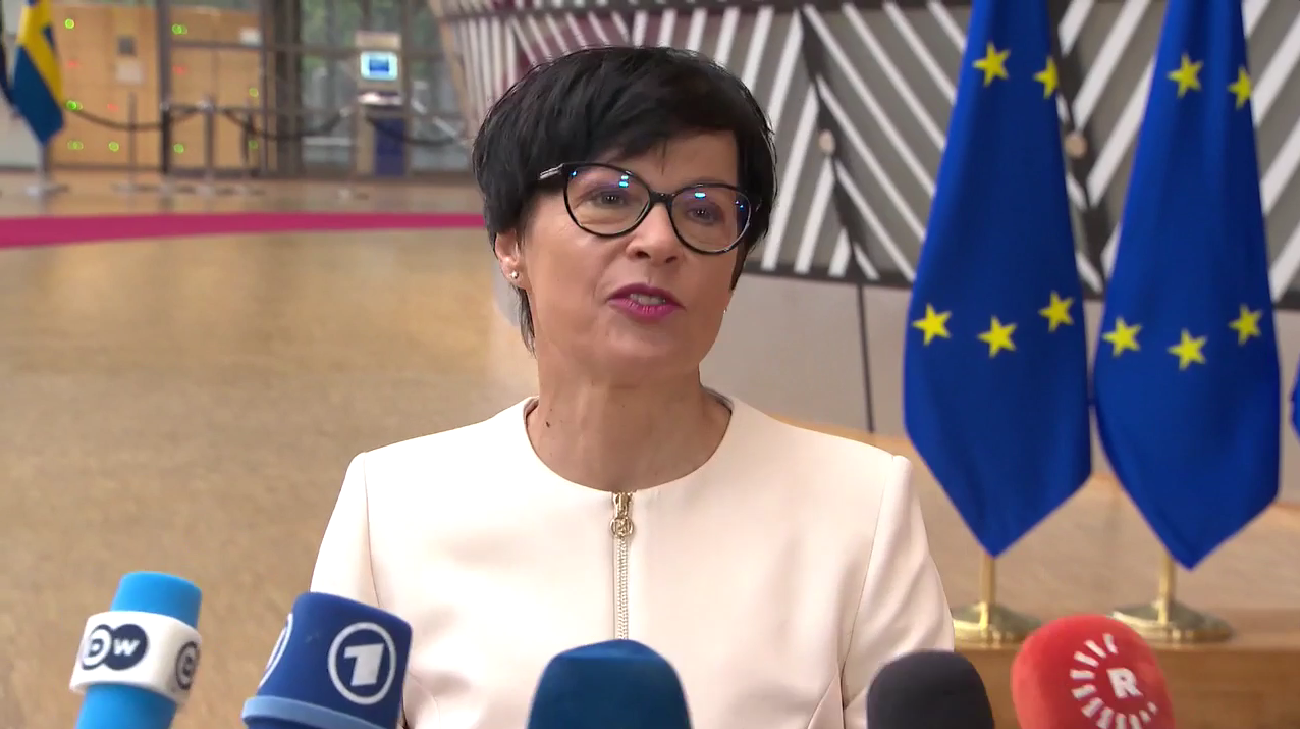
The power struggle described by Borrell is most evident in relations with the EU’s primary ally, the United States. Washington’s stance is a key reason why the European Commission has increasingly taken charge of diplomacy. The US administration prefers to deal directly with Ursula von der Leyen, who holds real financial and economic leverage, effectively bypassing the EU’s official foreign policy chief, Kaja Kallas.
Borrell drew on his own experience to illustrate this, pointing to the creation of the EU-US Trade and Technology Council in 2021: “On the American side, it was led by Secretary of State [Antony] Blinken. On the European side, the High Representative was not even at the table.”
This trend has only intensified since Kaja Kallas took office. The US and other global actors are reluctant to engage in constructive dialogue with a politician whose rhetoric is viewed as overly radical and polarizing. Recognizing that Washington has bypassed the official EU diplomat, von der Leyen has taken over the agenda to maintain transatlantic ties.
Diplomatic Rift: The Case of Relations with Israel
While the situation with the US reflects a systemic institutional imbalance, the European Commission’s intervention in Middle Eastern diplomacy was prompted by direct diplomatic setbacks under Kaja Kallas.
After Kallas compared Israel’s actions to an apartheid regime, Israeli Foreign Minister Gideon Sa’ar officially severed contacts with the EU High Representative. A system where the chief diplomat has no communication channel with one side of a conflict is unworkable. To preserve the EU’s presence in the region, von der Leyen sent Dubravka Šuica, the European Commissioner for the Mediterranean, to Tel Aviv.
Borrell criticized this direct bypass of authority: “With what authority does a commissioner go to Israel to say that the EU and Israel love each other, are on the same page, and recognize Israel’s role in peace and stability, when at the same time Israel refuses to speak to the EU High Representative for Foreign Affairs?” This episode shows how Kallas’s weak standing is being used by the European Commission to marginalize her role.
Incursion Into Defense and the Risks of a “Shadow Pentagon”
In addition to taking over diplomatic initiatives, Ursula von der Leyen’s Commission is expanding its influence into the defense sector—an area that, like foreign policy, is treaty-bound to remain under the exclusive jurisdiction of EU member states.
The vehicle for this expansion is the appointment of Andrius Kubilius as the first European Commissioner for Defense, tasked with building a “European Defense Union.” While his authority is theoretically limited to regulating the defense industry, in practice, his mandate overlaps with the tasks of the EU High Representative.
Borrell strongly criticized this initiative: “The Commission cannot play the role of some shadow Pentagon.” Commenting on the awkward position of the current diplomatic corps, he added: “If I were the High Representative today and sat at a table where someone announced the intention to create a European Defense Union, I would feel a bit uncomfortable.”
Geopolitical Agency: Who Actually Directs EU Foreign Policy
Borrell is essentially raising the question of who serves as the actual point of contact for third countries, and why national capitals are quietly accepting this redistribution of power. This “two-headed” diplomacy could ultimately undermine the viability of the EEAS.
From a political science perspective, Borrell’s concerns are valid, but they only capture part of the picture. The European Commission’s institutional push into diplomacy is not a new development, as Borrell himself acknowledges. However, the arrival of Kaja Kallas, with her polarizing rhetoric, has provided Ursula von der Leyen with the perfect opportunity to further seize control of the foreign policy agenda, especially since removing an official EU diplomat is highly difficult under the bloc’s complex bureaucratic rules.
National capitals, including Paris and Berlin, have quietly accepted this dilution of authority. Weakened by domestic crises, these governments find it convenient to let the Commission take the heat for difficult international negotiations.
Regarding defense, Borrell’s criticism of the “shadow Pentagon” appears somewhat one-sided. While he has a point on pure diplomacy, the Commission has pragmatic reasons for stepping into defense. The highly fragmented European defense industrial base requires standardization and unified funding approaches in the face of global threats. Consequently, the EU’s “two-headed” policy and the shift in power are not merely driven by the ambition of Commission officials, but are a logical consequence of the inefficiency of traditional, consensus-based structures.
NEWSROOM IN notes that Josep Borrell’s sharp remarks are a continuation of his ongoing criticism of the EU leadership. In March 2024, he also made critical statements targeting von der Leyen, accusing her of consistently exceeding her mandate and increasing her personal involvement in the bloc’s foreign policy at the expense of Europe’s collective interests.
Borrell’s primary grievance stemmed from what he viewed as von der Leyen’s clear geopolitical bias toward Washington and Tel Aviv.