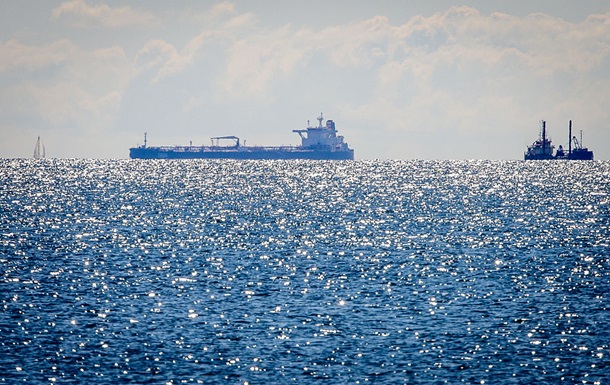
The United States has issued a temporary license easing Russian oil sanctions, valid until April 11, 2026, for third countries purchasing products currently in transit at sea. According to Bloomberg, the waiver primarily facilitates deliveries to India to maintain stable supply lines.
US Position on Russian Oil Sanctions
US Treasury Secretary Scott Bessent explained that the decision aims to stabilize the global energy market, which is experiencing high volatility due to the war in Iran and the closure of the Strait of Hormuz. Bessent argued that the temporary lifting of sanctions would not provide significant financial benefits to the Russian government.
“The President is taking decisive steps to ensure stability in global energy markets and is working to keep prices low while countering the threat and instability posed by the terrorist Iranian regime,” he wrote on the social media platform X.
The move marks a shift in rhetoric; as recently as March 9, 2024, US Secretary of Energy Chris Wright told CNN that Washington would not alter its sanctions policy regarding Russia.
Criticism from European Allies
German Chancellor Friedrich Merz has criticized the US decision to temporarily ease sanctions on the Russian oil sector.
“This morning we learned of the US decision to relax sanctions against Russia. We believe this is wrong. Currently, there is a price issue, but not a supply issue. In this regard, I would like to know what other factors prompted the US government to make this decision,” Merz stated during an official visit to Oslo.
European leaders appear largely united against easing pressure on Moscow. European Commission President Ursula von der Leyen described a potential return to Russian fossil fuels as a “strategic mistake.” European Commissioner for Economy Valdis Dombrovskis emphasized that the EU must maintain “maximum pressure,” warning that any easing of sanctions would only bolster Russia’s military capabilities.
The leaders of France and the United Kingdom, Emmanuel Macron and Keir Starmer, have also called for existing restrictions to remain in place.
NEWSROOM IN notes that the war in Iran has triggered a massive global oil panic. The blockade of the Strait of Hormuz has cut off access to one-fifth of the world’s daily hydrocarbon consumption. To calm traders, the International Energy Agency (IEA) has recommended releasing a record 400 million barrels into the market. This represents the largest intervention in history, far surpassing the previous record of 182 million barrels set in 2022.