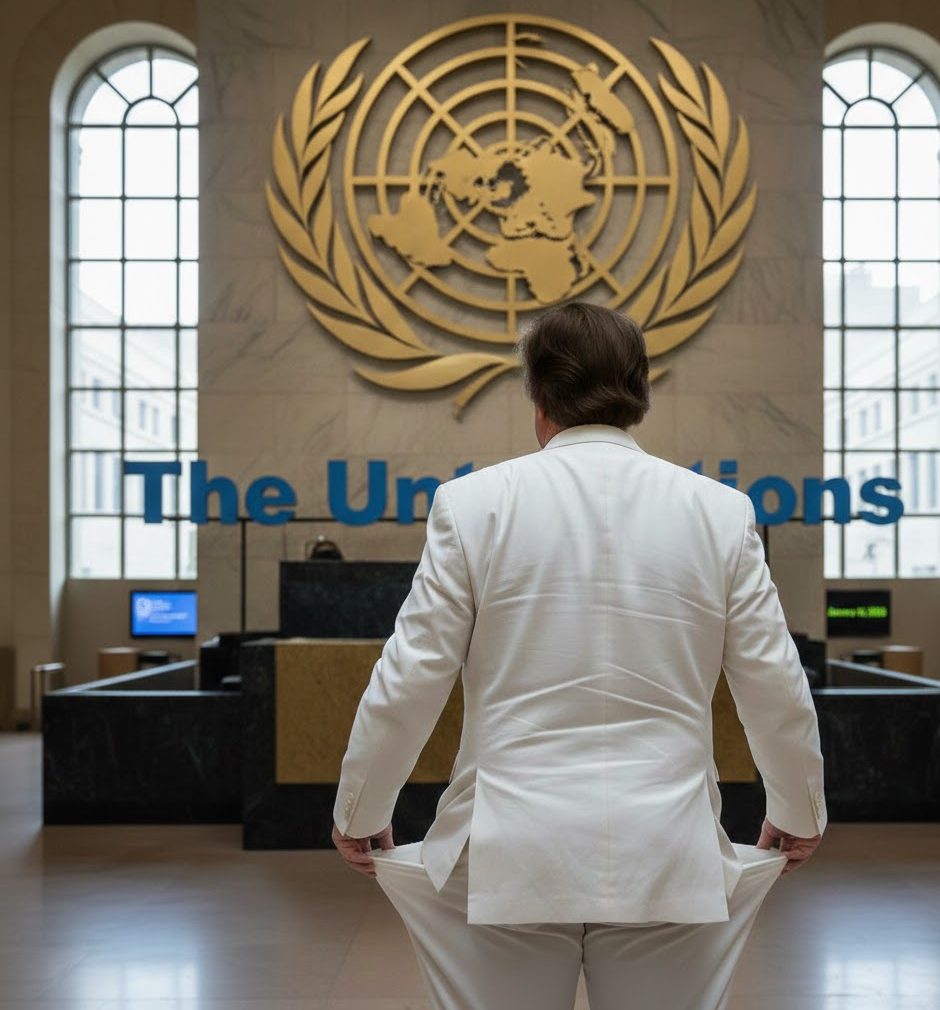
The UN is facing the most severe financial crisis in its 80-year history. Secretary-General António Guterres sent an urgent letter to member states, warning of the risk of an “imminent financial collapse,” Reuters reported. However, beyond the dry deficit figures lies a deeper problem: a global crisis of confidence in the model of international bureaucracy itself.
The “Kafkaesque Cycle” of Absurdity
Guterres describes the situation as a “Kafkaesque cycle”: internal UN regulations require the organization to return “unspent” funds to member states at the end of the year. The absurdity is that the Secretariat must return hundreds of millions of dollars that physically do not exist in its coffers because the largest donors have failed to contribute them.
It is worth noting that António Guterres has led the UN for the ninth year (since January 1, 2017). Throughout this time, the world has heard about the need for organizational reform, but the Secretary-General has yet to successfully overhaul the system. Arguably, the problem lies not only in these “Kafkaesque rules” but also in those who have not dared to change them.
UN Financial Crisis: Who Pays, and Who Doesn’t
Contributions to the regular UN budget are calculated based on the size of each country’s economy. The largest donor and debtor is the US, which accounts for 22% of the budget. Its total debt stands at $4.5 billion. China is the second-largest contributor (its share has grown to ~ 20%), but unlike the US, it fulfilled its obligations for 2025 completely.
Japan, Germany, the UK, France, and Italy (contributing between 6.9% and 10% of the overall budget) strive to maintain their standing and avoid massive arrears. Currently, 36 member states have fully paid their regular budget contributions.
But the crisis materialized when the US stopped paying.
Washington’s Position: Funding in Exchange for Effectiveness
Under President Donald Trump’s administration, the US consistently reduced UN funding. Specifically, in early January 2026, the US withdrew from many UN agencies and subcommittees. The White House argues that these bodies act “contrary to US national interests and security,” are ineffective, and fail to realize their enormous potential. Furthermore, the US highlights the unfairness of a system where a single vote from Luxembourg (0.06% contribution) carries the same weight as the vote of the US (22% contribution).
Is Funding the UN Necessary?
If the UN is viewed as a global “security service, ambulance, and utility provider,” then the answer is yes. It is cheaper than addressing the consequences of crises unilaterally. An epidemic starting in one country quickly becomes a problem for all. A wave of refugees impacts neighboring regions. Refusing to fund the UN amounts to cutting costs on global risk insurance.
But today, the question is not whether we need insurance, but why the premium keeps rising while a huge portion of the money goes toward maintaining the insurer’s office?
The Ecosystem of “Dead Paper”
The main argument of UN critics is the bloated bureaucratic machine running “in idle.” In August 2025, the UN published a shocking report on its own efficiency. It revealed that one in five documents (20%) was never opened by anyone, and only 5% of the most popular reports were downloaded more than 5,500 times (and it’s not guaranteed they were read). Thus, the system itself acknowledges that the Secretariat is overwhelmed by assignments from the General Assembly and the Security Council, churning out mountains of paper that are physically impossible to process.
Furthermore, the political paralysis of the Security Council due to the right of veto often turns the organization into an expensive discussion club, incapable of stopping major conflicts.