Authors: Aivaras Goodman, Tania Dekker

The publication of the 28-point “Trump Plan” for Ukraine, attributed to the administration of US President Donald Trump, will go down in history as an unprecedented case of “Diplomacy by Leak” (DiplomacyLeak). Instead of traditional closed-door negotiations, this critically important international document was unveiled and agreed upon fragmentarily through the media, inflicting systemic damage on the transatlantic alliance and diplomatic norms.
Chronology of Leaks and its Content
The process of unveiling the “Trump Plan” (developed by special envoy Steve Whitkoff with the participation of Russian representative Kirill Dmitriev) was gradual and managed through targeted “leaks” to key American media outlets:
| Date | Source | Essence of the leak and content |
| 18–19 November | Axios, Financial Times | Reported a secretly developed plan. The document’s key toxic conditions were revealed which, according to U.S. senators, constituted a “Russian wish list”: concession of Crimea and part of Donbas; a cap on the size of the Ukrainian Armed Forces (600,000 personnel); and a constitutional renunciation of Ukraine’s NATO membership. |
| Late November | Ukrainian MP Oleksiy Honcharenko, AP/CBS | A full draft of the document entered the public domain and was confirmed as authentic. |
Subsequently, media outlets began literally competing to reveal more points of the plan and alleged reactions from Washington, Kyiv, and Moscow—all, of course, based on information from “high-ranking sources” close to the negotiation process.
The first real official confirmation of the plan’s existence came with Volodymyr Zelensky’s address to the Ukrainian people on November 21, followed by meetings between EU-Ukraine and US-Ukraine delegations to coordinate positions in Geneva on November 23.
Authorship Controversy
Instead of a clear diplomatic initiative, the plan became a tool for political infighting between branches of power within the US itself.
☛ Senate Pushback: A bipartisan group of senators (Angus King, Mark Warner) publicly stated that Secretary of State Marco Rubio had described the document as essentially a list of Russian demands.
☛ State Department’s Response: The immediate denial of the senators’ statements by the State Department and Rubio personally (on social media) only intensified the impression of chaos and unpredictability, undermining the US’s authority as a reliable guarantor.
☛ Kremlin’s Stance: The Russian side confirmed that it knew about the plan through unofficial channels and that it “suited Russia,” which intensified suspicions of its bias.
DiplomacyLeak’s International Damage and Ultimatum
Using leaks as the primary channel of communication with allies created a systemic threat based on blackmail and the erosion of trust.
Undermining the Alliance and Isolating the EU
The fact that European leaders (including EU’s chief diplomat Kaja Kallas) learned about the terms of a critically important peace settlement from media headlines was clear evidence of a deep crisis in transatlantic trust. This exposed a structural problem: the European Union, it seems, lacks effective negotiators at the Kallas–Rubio level capable of conveying the bloc’s interests to the White House. Consequently, Germany, France, and the United Kingdom urgently proposed their own “European plan” (published, notably, also through leaks in The Telegraph and Reuters), which appeared as a belated attempt to prevent decisions from being made by bypassing Europe.
DiplomacyLeak as a Weapon of Uncertainty and Blackmail
The “DiplomacyLeak” strategy transformed the process into a tool for political blackmail:
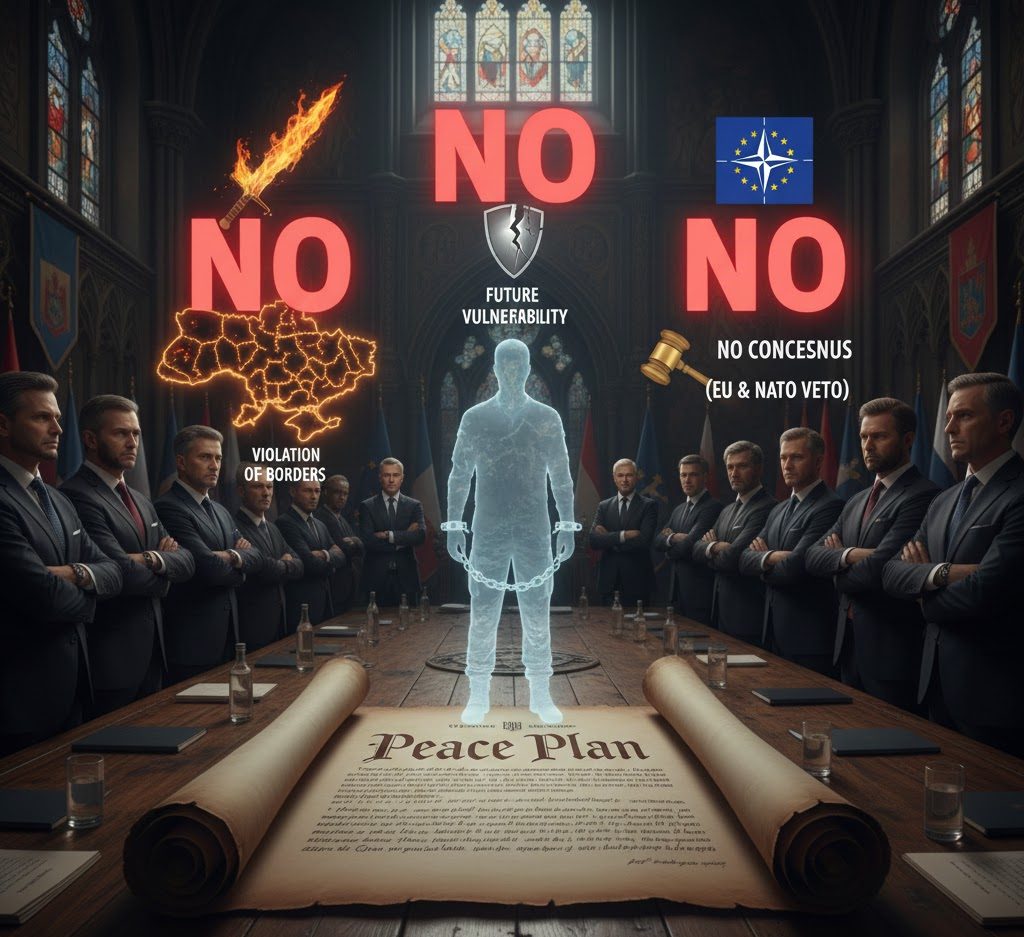
☛ Anonymous leaks of radical demands created an informational anchor, forcing Kyiv to agree to less stringent but still unfavorable terms, and immediately cementing the toughest negotiating position (territorial recognition, restrictions on the Ukrainian Armed Forces) in public consciousness and negotiations. Even if the final document is softer, it will seem like a “victory” compared to this leaked version.
Moreover, the US was able to immediately put unacceptable points for Kyiv on the agenda without taking official responsibility for them (since “it’s just a draft”).
☛ The ultimatum, allegedly delivered by Dan Driscoll to Kyiv, mandating agreement to the terms by Thanksgiving, underscores the use of military and financial aid as leverage to force decisions.
Legitimizing Russian Arguments
The most serious strategic risk is that the inclusion of Kremlin demands in an American document legitimizes Russian aggression on the international stage. This sets a dangerous precedent where a major power can impose its will using a hybrid strategy of pressure and information manipulation, rather than traditional diplomacy.
The Fateful Denouement of the “DiplomacyLeak”
Despite unprecedented diplomatic chaos, the process initiated through media leaks has irreversibly moved into its finalization stage. US President Donald Trump publicly confirmed this shift, stating that his team had made “tremendous progress” and that he was waiting to meet with leaders “ONLY when the agreement… is FINAL.”
He appointed official negotiators, emphasizing the transition from information warfare to direct action. Steve Whitkoff will travel to Moscow for negotiations with Vladimir Putin, and Dan Driscoll (U.S. Secretary of the Army) will meet with Volodymyr Zelensky for final coordination of positions.
Now, for the first time, key decisions on ending the war will be made based on a plan that Washington and Moscow have already recognized as a basis for discussion. All responsibility for transforming these leaked theses into real peace or a political catastrophe now rests on the shoulders of these two American negotiators, who lack significant diplomatic experience.
However this story ends, DiplomacyLeak has already proven that chaotic yet purposeful information dissemination can become a powerful instrument of geopolitical pressure, forever changing the rules for achieving international agreements.