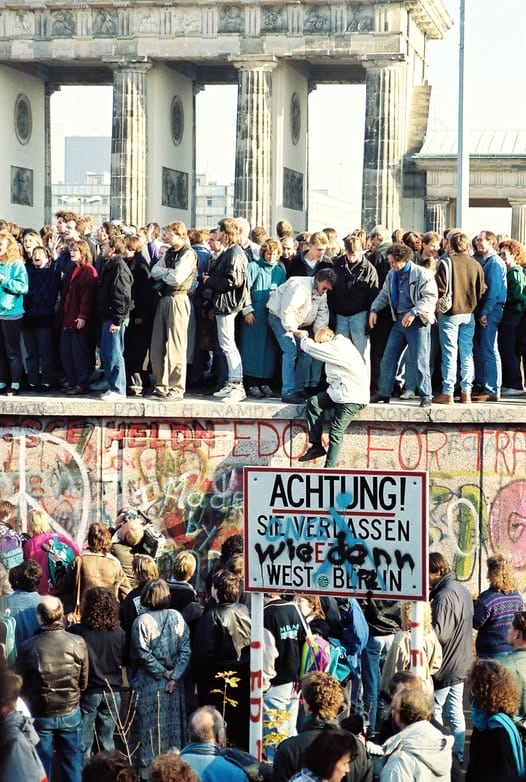

November 9, 1989 is forever etched in world history as the date when the most tangible and ominous symbol of the Cold War—the Berlin Wall—collapsed. This pivotal event, the culmination of peaceful protests and political missteps, not only reunited a city and a nation but also signaled the beginning of the end of the bipolar world order in Europe.
The Wall: 28 Years of Division
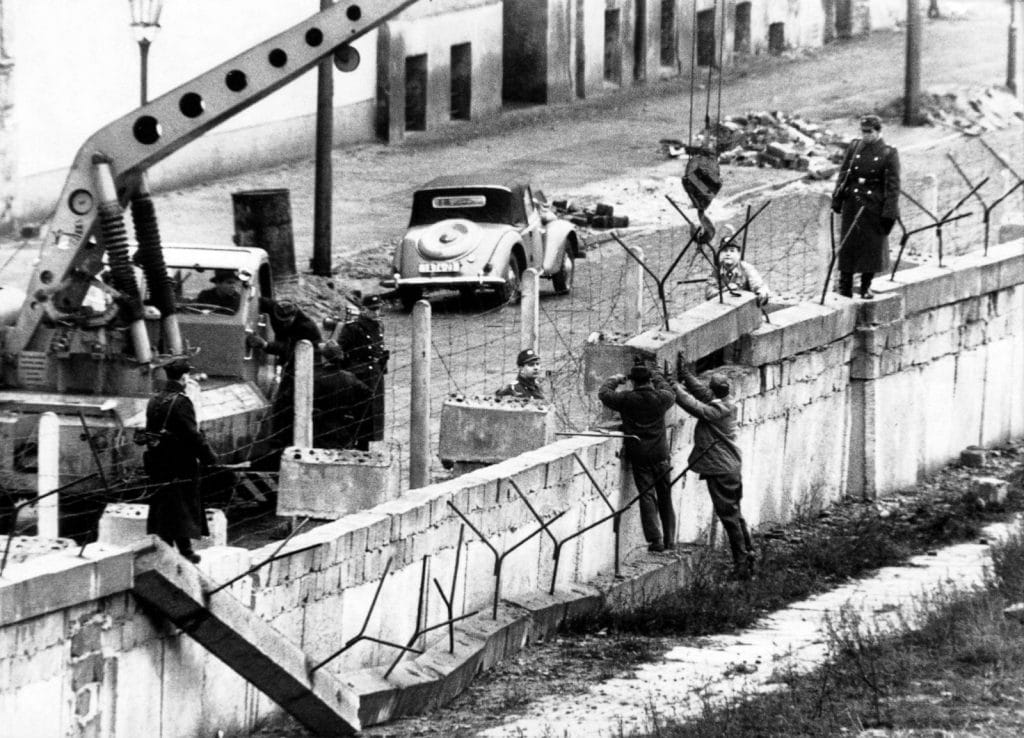
Officially known in the GDR as the “Anti-Fascist Protection Rampart,” the Berlin Wall was erected on August 13, 1961. It was built by order of East German leader Walter Ulbricht, with the approval of Soviet General Secretary Nikita Khrushchev. The primary reason for its construction was the mass exodus of citizens from East Germany to the West. For 28 years, the Wall divided Berlin into two parts, serving as a physical boundary between Western democracy (West Germany) and the Eastern socialist bloc.
By 1989, it was no longer merely a concrete barrier but a complex system stretching approximately 155 km. It comprised concrete slabs up to 3.7 meters high, metal mesh fences, watchtowers, anti-tank obstacles, and a deadly “death strip.”
During the Wall’s existence, over 140 people, by various estimates, died while attempting to escape to West Berlin.
Catalysts for the Fall: From Prague to Leipzig
The Wall’s collapse was not sudden. It was preceded by a year of escalating crisis in the GDR, fueled by perestroika in the USSR and the weakening of Soviet control over Eastern Europe.
In the summer and autumn of 1989, thousands of GDR citizens began fleeing to the West through other socialist countries, such as Hungary and Czechoslovakia, which had relaxed their border controls.
A peaceful protest movement gained momentum in GDR cities, particularly Leipzig and East Berlin. Rallies, including the “Monday Demonstrations” (Leipzig) and a massive demonstration on Alexanderplatz on November 4, demanded freedom and democratic reforms. The pressure on East German authorities intensified when citizens were permitted to travel from Czechoslovakia to West Germany in early November.
The November 9 Press Conference
The spark that ignited the fuse was a mix-up and an error during a SED Politburo press conference on the evening of November 9, 1989. Politburo member Günter Schabowski read out a new, vaguely worded travel law that was supposed to allow citizens to apply for exit visas.
When asked when the law would take effect, Schabowski, who had not fully reviewed the documents, replied: “As far as I know, it takes effect immediately, without delay.” Interpreting this as a complete opening of the borders, Western media outlets immediately reported: “GDR opens border!“
Following this, hundreds of thousands of East Berliners, believing the news, immediately flocked to the border crossings.
The Night’s Euphoria: The Wall Falls
Thousands of people gathered at the checkpoints, particularly at Bornholmer Straße. Border guards, having received no clear instructions and unwilling to use force, found themselves in an impossible situation.
Around 11:30 PM, Colonel Harald Jäger, head of the Bornholmer Straße checkpoint, made a historic decision, defying orders: he ordered the gates to be opened.
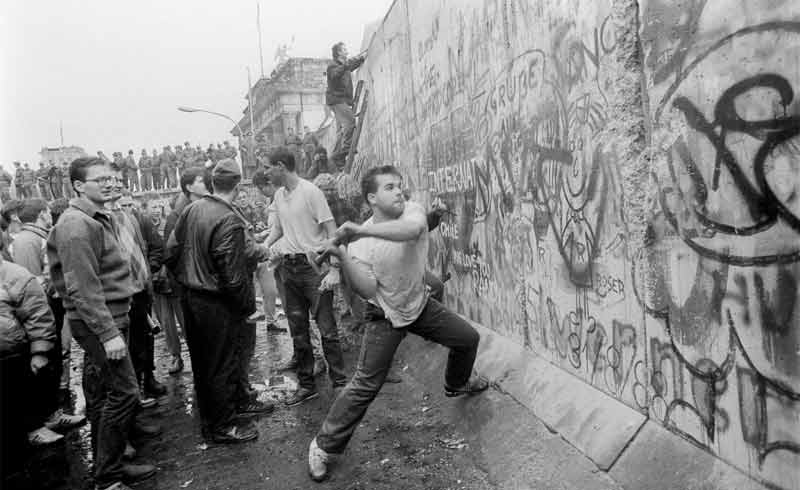
Thousands of East Berliners poured into the West. Residents from both parts of Berlin embraced, sang, and danced. The Wall fell under the weight of joy and the desire for freedom.
The Path to Reunification
The fall of the Berlin Wall marked the first step towards German reunification. Nearly a year later, on October 3, 1990, the GDR officially ceased to exist, and Germany became a single, united nation.
Today, fragments of the Wall are preserved in museums worldwide, serving as a reminder that people’s desire for freedom is stronger than any dictatorship or concrete barrier.
The Berlin Wall in Film and Literature
The Berlin Wall and the Cold War generally have served as an inexhaustible source of inspiration for cinema and literature, particularly in genres like spy thrillers, historical dramas, and satirical comedies.
NEWSROOM IN notes a list of the most famous and significant series, films, and books that feature the Berlin Wall or life in East and West Germany during the period of division.
Films and Series / Books
| Title | Year / Period | Genre | Plot Connection to the Wall |
| The Lives of Others (Das Leben der Anderen) | 2006 | Drama, Thriller | A film about the total control exercised by the Stasi (East German secret police) over the intelligentsia of East Berlin. The Wall serves as an invisible but all-pervasive symbol of lack of freedom. |
| Good Bye Lenin! | 2003 | Tragicomedy | A cult film about the fall of the Wall. A son must create the illusion for his sick mother — a devoted communist — that the GDR still exists after 1989. |
| Bridge of Spies | 2015 | Historical Thriller | The plot concludes with a spy exchange on the Glienicke Bridge (“Bridge of Spies”) between West Berlin and Potsdam, depicting the period of the Berlin Wall’s construction in 1961. |
| Atomic Blonde | 2017 | Spy Action | The story unfolds just before the fall of the Wall. The main heroine, an MI6 agent, tries to smuggle a list of double agents out of East Berlin. |
| Wings of Desire (Der Himmel über Berlin) | 1987 | Philosophical Drama | Angels observe the divided city, its inhabitants, and the Wall — which symbolizes not only political but also spiritual separation. |
| The Tunnel (Der Tunnel) | 2001 | Historical Drama | Based on real events: a group of people from the West dig a tunnel under the Berlin Wall to help friends and relatives escape from East Berlin. |
| Rabbit à la Berlin | 2009 | Documentary, Satire | The story of the Berlin Wall told from the perspective of wild rabbits that lived in the “death strip” between the two barriers. |
| Berlin Station | 2016–2019 | Spy Series | Set in reunified Berlin, but many plots revolve around the legacy of the Cold War, Stasi secrets, and unsolved cases from the Wall era. |
| Balloon (Ballon) | 2018 | Historical Drama | Based on the true story of two GDR families who escaped to the West in 1979 using a homemade hot air balloon. |
| The Spy Who Came in from the Cold | 1965 | Spy Thriller | A classic adaptation of John le Carré’s novel. The climax takes place right at a checkpoint by the Wall. |