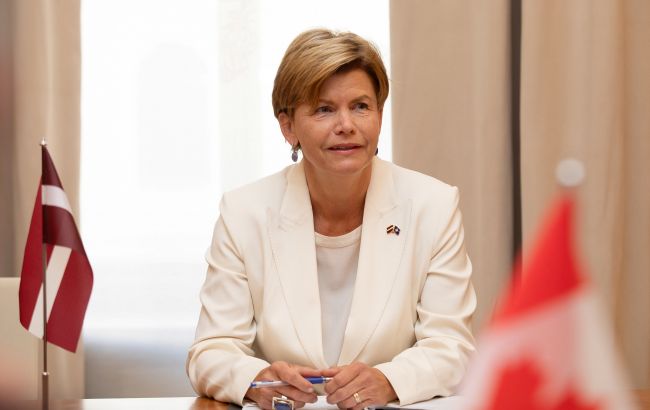
Latvia has officially joined other Eastern European nations seeking to host US troops that the United States plans to withdraw from Germany. Latvian Foreign Minister Baiba Braže stated that Riga is ready for a significant increase in the number of allied soldiers. Donald Trump has already ordered a reduction of the military presence in Germany by more than 5,000 personnel, citing dissatisfaction with European partners’ contributions to collective security.
Latvia’s bid: US troops and the Baltic security shift
Foreign Minister Baiba Braže emphasized that Latvia is holding active consultations with Washington. She expects that Latvia’s status as a reliable partner will help it secure a portion of the departing forces.
“We are in talks with our American allies, and they also say that we are an exemplary ally. We would be happy to see an increase in the number of American soldiers,” Braže said in an interview with Bloomberg.
Poland’s initiative: Financial incentives and 10,000 troops
NEWSROOM IN notes that Poland began its campaign for an increased American presence much earlier, offering specific financial terms to the Pentagon. Polish Foreign Minister Radosław Sikorski noted that while 10,000 U.S. troops are already stationed in the country, this number is insufficient.
“We support their stay by allocating $15,000 for each soldier, so we invite them here, where there is a real threat just 250 km away,” Sikorski emphasized.
Lithuania: Infrastructure readiness and a focus on Europe
Lithuania has also taken the initiative, stating that Vilnius can quickly prepare infrastructure for new units. President Gitanas Nausėda insists that troops leaving Germany must remain on the continent. By 2027, the country expects 5,000 German soldiers but is also ready to host additional U.S. forces.
“European NATO allies must do everything possible to ensure the U.S. does not divert its attention from the continent. Lithuania is ready to quickly receive additional allied forces,” Nausėda confirmed.
German reaction and the reasons for NATO rotation
While its eastern neighbors compete for American influence, Berlin is showing restraint. Chancellor Friedrich Merz called the troop withdrawal “expected,” though experts point to economic risks for German municipalities such as Vilseck.
The Pentagon explained that the redeployment is linked to Donald Trump’s criticism of Europe. The U.S. President is also considering further reductions of the military presence in Italy and Spain.