UPDATE: Statement from Belgium and Withdrawal of Canada’s Invitation

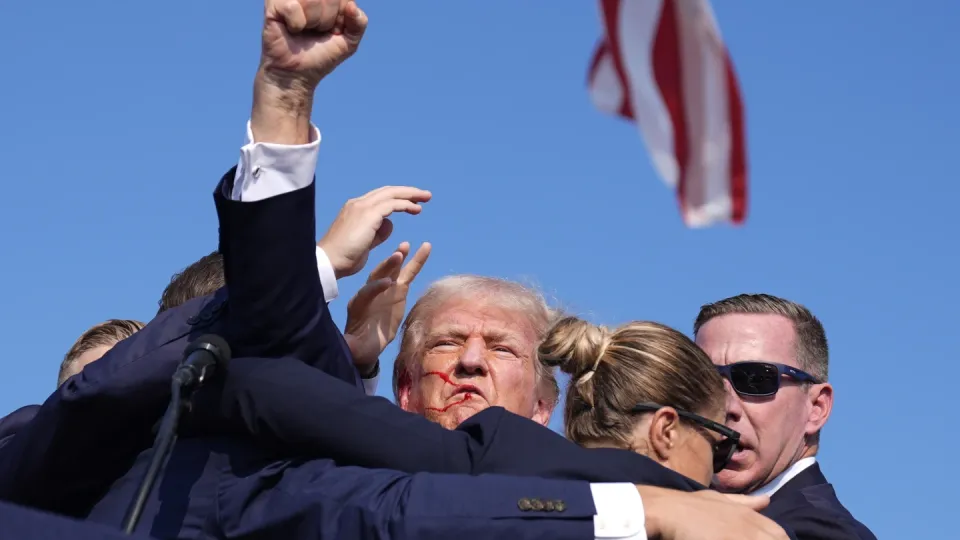
US President Donald Trump officially launched his new global security initiative, the Board of Peace, on January 22, 2026. The organization’s charter was signed on the sidelines of the World Economic Forum in Davos. Although initially conceived to resolve the Gaza crisis, the organization now aims to serve as the global arbitrator of conflicts. Trump expressed confidence that his creation “has every chance of becoming one of the most significant bodies ever created.”
A “More Effective” Alternative to the UN

The primary goal of the Board of Peace is to promote stability and ensure lasting peace in conflict zones worldwide. The organization positions itself as a more flexible and effective alternative to existing international institutions, including the UN, though Trump promises cooperation rather than competition with the latter.
A key feature of the new structure is the unprecedented authority granted to its chairman. Donald Trump holds this position indefinitely and wields expansive power, including the sole right of veto over any decisions, the authority to appoint and remove members, and the ability to unilaterally adopt resolutions on behalf of the entire organization.
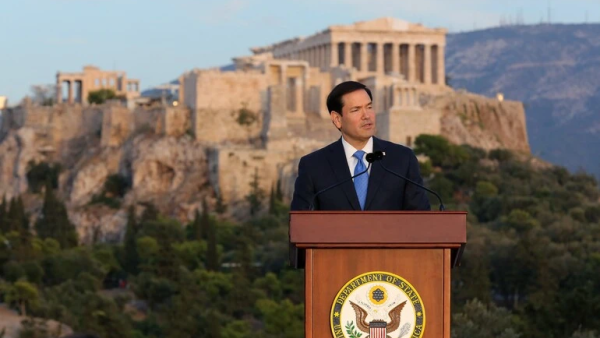
The Executive Council, which will focus on diplomacy and investment, includes influential figures: Trump’s son-in-law Jared Kushner, Secretary of State Marco Rubio, Special Envoy Steve Witkoff, former UK Prime Prime Minister Tony Blair, as well as Apollo Global Management CEO Marc Rowan and World Bank President Ajay Banga.
Membership for a Billion
More than 30 countries have already joined the Board of Peace. Participants span a wide geography, including the USA, Canada, Saudi Arabia, Israel, and Turkey. The list also features European nations (Hungary, Belgium), Central Asian states (Kazakhstan, Uzbekistan), and Asian countries (Pakistan, Indonesia), among others.
Membership in the Board is granted for renewable three-year terms, with the first three years being free of charge. However, attaining the status of a permanent member with voting rights requires paying a substantial contribution of $1 billion.
Many Western countries, including France, Germany, Italy, and the Scandinavian states, have refrained from joining, believing the organization’s charter contradicts international law. The United Kingdom refused due to the potential participation of Russia, which, according to Trump, accepted the invitation but is currently “studying the details.”
Peace for Gaza: The 20-Point Plan
The first and primary test for the Board of Peace will be the settlement in the Gaza Strip, which is being implemented under Trump’s Comprehensive 20-Point Plan, approved by UN Security Council Resolution 2803.
The National Committee for the Administration of the Gaza Strip (NCAG) has been established to manage the region during the transition period. It is headed by technocrat Dr. Ali Shaat, who is tasked with restoring public services and institutions.
Key structures for implementing the plan:
- High Representative for Gaza: Nikolay Mladenov was appointed to this post. He will serve as the liaison between the global Board of Peace and the local NCAG, overseeing all aspects of restoration and coordination between civilian and security structures.
- International Stabilization Force (ISF): Commanded by Major General Jasper Jeffers, these forces will be responsible for ensuring security, demilitarization, and humanitarian aid delivery.
- Gaza Executive Council: An auxiliary body to support the High Representative and the NCAG. Its members include key figures from the global Executive Council (Kushner, Witkoff, Blair, Rowan, Mladenov), as well as regional representatives such as Turkish Foreign Minister Hakan Fidan and Sigrid Kaag.
The US has declared full support for this structure and urged the international community to cooperate for the plan’s rapid implementation. The final compositions of all executive bodies are expected to be announced in the coming weeks.
Update:
☛ Belgium officially denied joining the Board of Peace. On January 22, Belgian Foreign Minister Maxime Prévot stated on X (formerly Twitter): “Belgium did not sign the ‘Board of Peace’ treaty. This announcement is incorrect. We seek a common and coordinated European response. Like many other European countries, we have doubts about this proposal.” The Flemish media company VRT, citing government sources, suggested that the Americans might have confused Belgium with Belarus.
☛ On January 23, 2026, US President Donald Trump withdrew the invitation for Canadian Prime Minister Mark Carney to join the Board of Peace.
“Dear Prime Minister Carney! Let this letter serve as confirmation that the Board of Peace is revoking its invitation to you regarding Canada joining the most prestigious Council of Leaders ever created,” wrote Trump on Truth Social.
Official reasons for the decision were not disclosed, but NEWSROOM IN experts specializing in “diplomatic reading between the lines” link the move to a public controversy that began at the World Economic Forum (WEF) in Davos and culminated with Carney’s speech in Quebec on January 22.
In Davos, the Canadian Prime Minister committed a “daring” act by reiterating that Canada is a separate country and emphasizing the parity nature of the US-Canada partnership in economic and security spheres.
President Trump subsequently disavowed the thesis of parity, stating that the very existence of Canadian statehood is a consequence of United States policy.
A direct warning about the need to filter subsequent statements was issued: “Canada and the United States have created a remarkable partnership in economics, security, and rich cultural exchange. But Canada does not exist because of the United States.”
During his evening address to the nation on January 22, Mark Carney reaffirmed the commitment to national identity, stating: “Canada thrives because we are Canadians.”