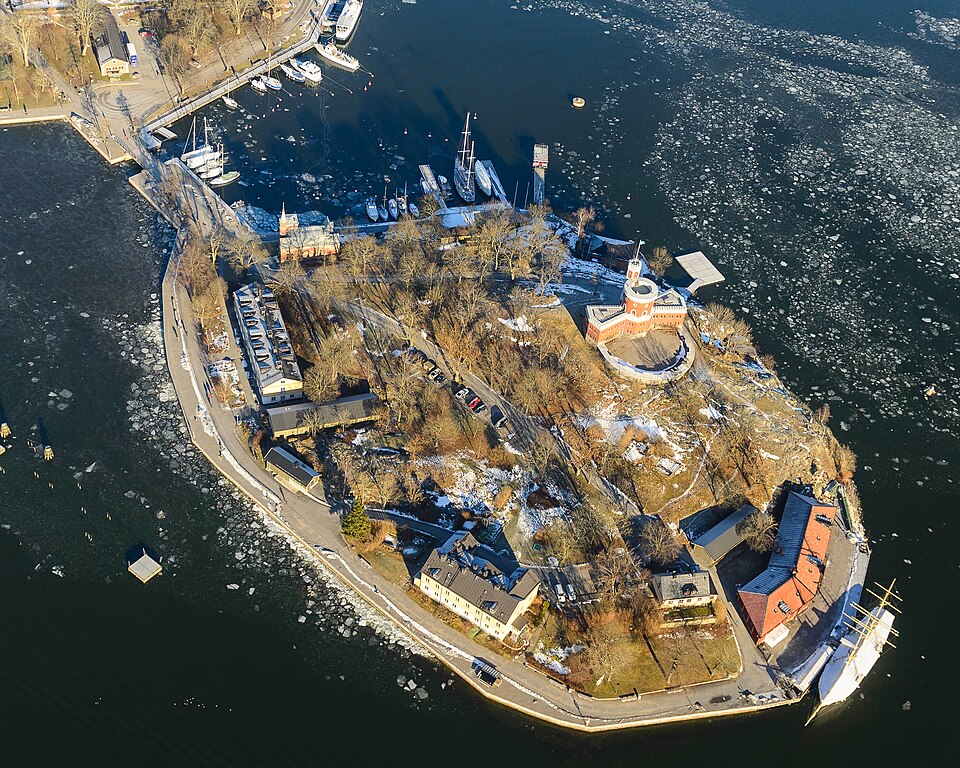
| Kastellholmen Island | Photo: Arild | Photo Source: Wikimedia |
A 17th-century Stockholm shipwreck has been revealed in central Stockholm near the island of Kastellholmen after water levels in the Baltic Sea dropped to record lows. The vessel, which once served as a bridge foundation, became visible as the sea level plummeted by as much as 60 to 72 centimeters.
The Archaeological Mystery of Kastellholmen Island
Swedish broadcaster SVT reports that the ship was discovered in the heart of Stockholm. According to marine archaeologist Jim Hansson, the vessel was intentionally scuttled in the 1640s. During that era, old ships were frequently repurposed as the base for engineering projects. In this instance, the ship formed part of a bridge foundation that has since disappeared.
Scientists have yet to definitively identify the wreck. It was previously thought to be the Grå Ulv (Grey Wolf), a Danish ship captured by the Swedes in battle. However, Hansson dismissed this theory, noting that the Grå Ulv was sunk around 1670, which does not align with the bridge’s construction date. Archaeologists believe there are five other ships resting in the foundation of the crossing.
Causes of the Record Baltic Sea Recession
Experts have recorded a critical drop in water levels across the region. In Stockholm, water levels fell 60 cm below normal. Near the Åland Islands, a historic low not seen since 1924 was recorded, with the level dropping by 72 cm.
Scientists attribute the anomaly primarily to high atmospheric pressure. Sustained anticyclones are essentially “pushing down” on the water’s surface, lowering its level. Additionally, prolonged easterly winds have been driving water masses out of the Baltic toward the west.
Impact on Shipping and New Opportunities
The sudden recession has created significant navigation challenges. Some regular ferry services in the Stockholm archipelago have been canceled, and larger vessels face an increased risk of running aground.
However, the meteorological situation has a silver lining. The combination of low water levels and extreme cold has accelerated the freezing of the sea. This has allowed officials to open ice roads, which are now being used for transport between islands.