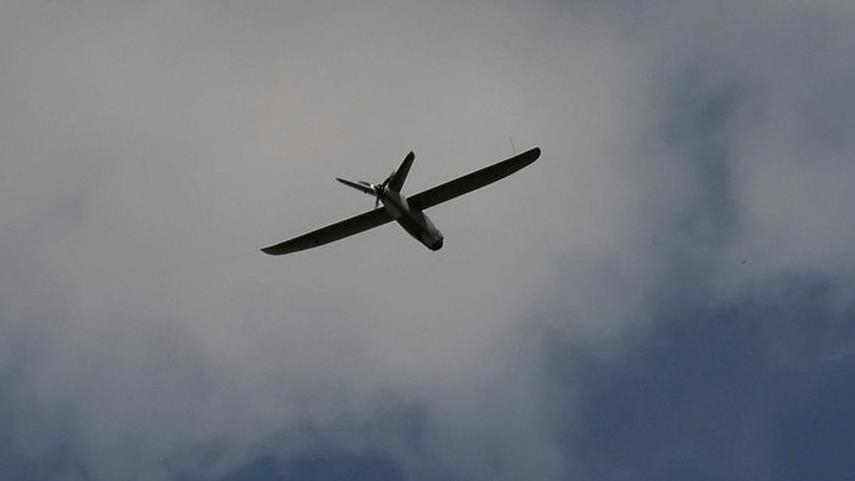
The Lithuanian government has concluded its investigation into the Lithuania drone crash that occurred yesterday in the Varėna district. Prime Minister Inga Ruginiene officially confirmed that the unmanned aerial vehicle belonged to the Armed Forces of Ukraine. The drone was intended for a nighttime strike on a target inside Russia but veered significantly off its designated flight path.
The incident took place Monday morning when the unidentified craft crashed into Lake Lavysas. Witnesses reported hearing an unusual low engine hum followed by a loud splash and a dull impact from the direction of the water. Residents in the Varėna border region are raising concerns about safety, as military radars failed to detect the incoming threat until the moment of impact.
Preliminary data from the Ministry of Defense suggests the navigation failure was likely caused by powerful electronic warfare (EW) interference. The signal suppression caused the drone to lose control and drift into Lithuanian territory.
While air defense systems did not track the target in flight, ground services responded quickly. The crash site was immediately cordoned off for military investigators and explosives experts. The Prime Minister urged the public to avoid speculation regarding the specific type of drone. She stated there is currently no official evidence to support media rumors that the craft was a modified “Shahed” or another specific model.
Residents Alert Military After Lithuania drone crash
The Varėna district incident is not the first such unforeseen situation in Lithuania.
NEWSROOM IN notes that two Russian “Gerbera” drones crossed the Lithuanian border last year on July 10 and July 28. One of those drones carried a combat charge. In those instances, the situation was reversed: the drones were launched to attack Ukrainian cities but lost their way due to Ukrainian electronic warfare. As with the Varėna case, the military was alerted to the intruders by local residents.
The Lithuanian State Border Guard Service (VSAT) also frequently reports the interception of drones used by smugglers to transport cigarettes from Belarus. While many of these are detected visually or by specialized border monitoring systems, they remain invisible to large-scale military radars designed to track aircraft and missiles.
Small, low-flying drones remain undetected partly due to the lack of specialized radar coverage and the dense transborder forest terrain. Varėna is located near the Dainava Forest, the largest forest massif in Lithuania. In Belarus, this same forest is known as the Grodno Forest. It is a single large woodland area spanning the borders of Belarus, Lithuania, and Poland, referred to by different names depending on the administrative context.
In light of these events, the Prime Minister announced that Lithuania will accelerate the procurement of specialized radars for detecting low-flying objects. However, she noted that the timeline for delivery remains difficult to predict.
While many countries, including the US, Germany, the Netherlands, Sweden, China, Israel, Canada, and Russia, manufacture low-altitude drone detection systems, global demand is high. According to Ruginiene, many nations cannot quickly obtain the equipment they need even when funds are available. “As a government, we have provided a record defense budget. This means the money is there, but we are now constrained by global industrial capacity,” she said.