Exclusive

Jared Kushner’s remarks at FII PRIORITY Miami provided a detailed look at the Ukraine peace plan and the current negotiation process. His statements clarify the potential architecture of a future agreement and the logic guiding the team of U.S. President Donald Trump.
Diplomacy Beyond Institutions: The Kushner and Witkoff Partnership
Kushner explicitly defined his role as informal. He acts as a volunteer from the business sector rather than an official administration representative. This approach moves the negotiation process partially outside traditional diplomacy, allowing for greater flexibility and speed while reducing transparency and predictability.
Kushner spoke at length about Steve Witkoff, stating that Witkoff plays a central role in the current negotiation architecture. According to Kushner, Witkoff has taken on a difficult and sacrificial mission involving sensitive international issues. While their initial cooperation focused on the Middle East and Gaza, Kushner became directly involved in the Ukraine track at the request of both Witkoff and the President.
This structure indicates that the negotiation process relies on a narrow circle of trusted individuals using personal connections. In this configuration, Witkoff serves as the operational center, while Kushner acts as the strategist and architect of the negotiation logic.
The “Framework-First” Strategy: Ukraine Peace Plan Architecture
A key element of Kushner’s approach is a “framework-first” strategy: establishing the outline of an agreement before addressing specific details. He claimed that 80% to 90% of the parties’ positions potentially align. This suggests that negotiations may be further along than public statements indicate, with primary disagreements centered on security and territorial settlements.
The potential deal structure rests on three strategic pillars:
- Security guarantees for Ukraine serve as the central element. Kushner acknowledged that Kyiv will not compromise without reliable guarantees. He indicated that under Donald Trump, the U.S. might consider more direct forms of security guarantees than previously offered. This represents a shift, as security guarantees have been a primary obstacle in previous diplomatic efforts.
- The second pillar is a “prosperity plan.” Kushner views peace as an economic project. Under this logic, Ukraine would receive significant investment prospects aimed at massive GDP growth. The involvement of major financial players like BlackRock suggests an attempt to integrate Ukraine into the global investment system as part of a deal. This reflects a business-oriented approach where peace must be profitable for all sides to remain sustainable.
- The third element is the acknowledgment of parallel work with Russia. Kushner stated that communication is ongoing with both sides and introduced the concept of a “peace dividend”—the economic benefit derived from peace. This approach uses incentives to encourage Russian participation in an agreement. While potentially effective for deal-making, it raises political and moral questions regarding the ongoing war.
From Victory to Transaction: Risks of the New Approach
Kushner noted that compromise lacks a natural political audience and is rarely fully supported. This explains the difficulty of the negotiations and the negative reactions to information leaks. He emphasized that the goal is a “win-win” construction rather than a “win-lose” model, signaling a shift from a logic of total victory to a logic of a transaction.
Kushner clarified that final decisions rest with the leaders. Territorial issues, including specific disputed regions, remain unresolved and will be settled at the political level. The current work provides the framework, but not the finalization, of the agreement.
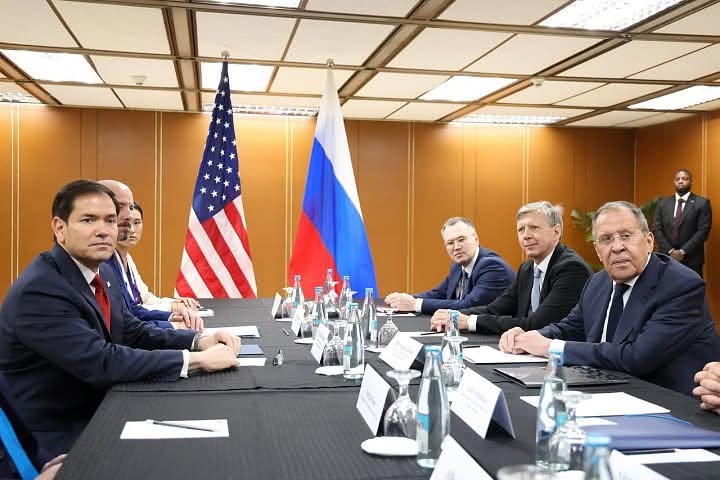
Kushner confirmed the existence of a trilateral negotiation format and the possibility of a ceasefire monitoring mechanism involving the U.S. This points to an effort to build an enforcement system, addressing a major weakness in previous agreements.
Overall, Kushner’s position reflects a transition toward “transactional geopolitics,” where conflict is treated as a complex transaction requiring a balance of interests, guarantees, and economic incentives. This approach may accelerate negotiations but carries the risk of oversimplifying deep political, historical, and moral issues.
The primary conclusion from Kushner’s speech is that the Ukraine negotiation process has reached an active structuring phase where specific deal elements are under discussion. However, the final outcome remains dependent on the political will of leaders and the ability of all parties to accept a complex and difficult compromise.
Some experts and summit participants estimate that the Ukraine negotiation track may enter its most active phase after the broader regional situation—specifically concerning Iran—is addressed. Iran remains a key factor influencing Washington’s strategic priorities.
Article Author: Mykola Volkivskyi, delegate to FII PRIORITY Miami, President of the Geneva Center for Diplomacy and Conflict Resolution