Ukrainian President Volodymyr Zelenskyy has urged European Union leaders to decide who will represent Europe in future negotiations with Russia. Following a phone call with European Council President António Costa, Zelenskyy insisted that the EU must maintain a “strong voice and presence” to prevent decisions about European security from being made behind its back. However, finding a single EU special envoy is proving to be a difficult challenge. No ideal candidate exists. Any figure on the Brussels shortlist is likely to face strong rejection in Kyiv, Moscow, or within the EU itself.
Cynical “Blah-Blah-Blah” Against Reality
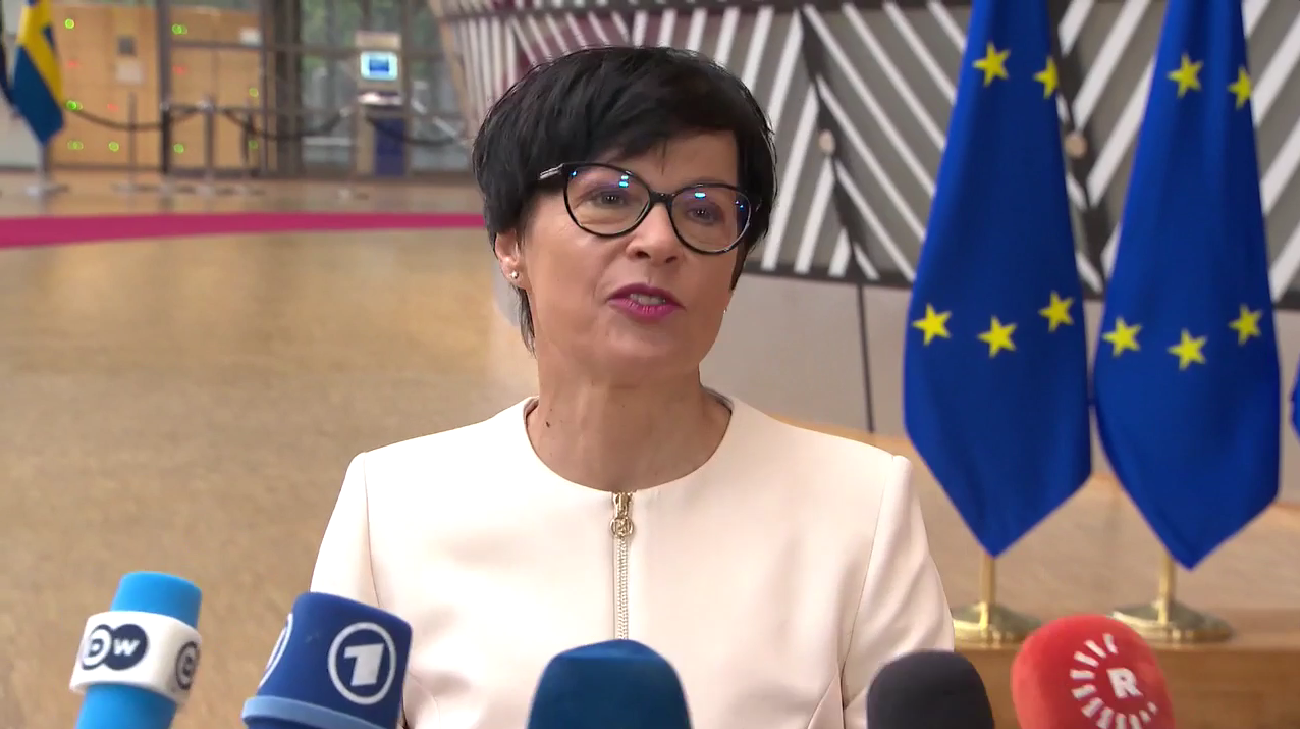
At present, any talk of peace is merely preparing diplomatic ground for an uncertain future. EU Foreign Policy Chief Kaja Kallas admits that the actual peace process is at a complete standstill. While politicians debate who will sit at the negotiating table, the Russian military continues to target Ukrainian civilians and critical infrastructure daily. Under these conditions, the Kremlin’s statements about readiness for compromise are nothing more than cynical “blah-blah-blah” designed to buy time.
With Washington heavily distracted by conflicts in the Middle East, Europeans are forced to act on their own. Russian President Vladimir Putin attempted to promote his long-time friend, former German Chancellor Gerhard Schröder, as a European mediator. This move was rejected by both Brussels and Germany. In response, Kallas drew on her background as a lawyer and proposed herself, stating that she “sees all of Russia’s traps.” However, her initiative met with little enthusiasm in EU circles.
Internal Barriers in Brussels
Kallas’s political weight within the EU was immediately questioned. Former European Commissioner Kadri Simson told ERR in an interview: “I have not seen Kaja Kallas at the negotiating table, but I think she is not at that level. If she were already an authority for everyone, we wouldn’t be looking [for another candidate].”
A recent poll by Norstat, conducted on May 12–13, 2026, for the Institute of Social Studies, dealt another blow to her ambitions. It showed that her international achievements do not impress the public at home. Fifty percent of Estonian residents rated Kallas’s performance as EU foreign policy chief as poor, while only 33% viewed it positively. With such domestic approval ratings and her reputation as a leading hawk, she cannot realistically claim the role of a compromise mediator.
Furthermore, Moscow rejected her candidacy immediately, and the US administration virtually ignores her. But who else could fill the role? A third-party mediator? Brussels will not agree to hand this role to someone from a third country, no matter how friendly. For the EU, this is a matter of agency: European security must be decided within EU structures.
However, the shortlist of candidates proposed in the media appears to lead to a dead end:
- Angela Merkel. The former German Chancellor recently called on EU leaders to maintain direct contact with the Kremlin but ruled herself out, admitting she no longer holds real political power. Her decision not to run is a relief for Ukraine. Kyiv remembers the failed Minsk-2 agreements of 2015. For Ukraine, returning to her policy of accommodating Moscow’s interests is considered dangerous.
- Mario Draghi. The former Italian Prime Minister is considered a favorite among Brussels technocrats. However, a pragmatic financial expert may not satisfy Ukraine. Economists often seek compromise through concessions, whereas Kyiv requires firm security guarantees rather than economic deals.
- Alexander Stubb. The current President of Finland avoids hysterical rhetoric and understands how to coexist with Russia. However, he is rejected by the Kremlin due to Finland’s accession to NATO. Putin’s statements suggest that the Kremlin remains highly sensitive about this issue. Additionally, Stubb is currently in office.
- Giorgia Meloni. A reliable ally of Kyiv, Meloni is currently serving as prime minister. The role of EU special envoy is a demanding, full-time position. Meloni cannot leave her post governing Italy to engage in shuttle diplomacy, much like Stubb cannot leave Finland. The EU needs a political heavyweight without active domestic state responsibilities.
The Costa Factor: An Invisible Diplomat?
Against this challenging backdrop, European Council President António Costa has emerged as a potential candidate. Currently, he is perhaps Brussels’ most viable option.
First, Costa is Portuguese. Geographically, he is far removed from Eastern Europe, and he has no personal history with the Kremlin or radical background. Second, he is diplomatic, cautious, and skilled at maintaining balance. He has already stated that the EU is preparing for potential negotiations but noted that “so far, we see no real signs from Russia.” For Ukraine, Costa is a predictable partner who supports Kyiv’s EU integration and will not make deals with Moscow behind its back. For Russia, he is an institutional official with whom they could theoretically negotiate.
Is There an EU Special Envoy Everyone Can Agree On?
Realistically, Costa is a compromise figure for Brussels, capable of reconciling hawks in Poland and the Baltic states with realists in Germany and France. But does this solve the overall problem?
For Ukraine, the ideal negotiator is someone who will demand a troop withdrawal and a tribunal—a figure the Kremlin would never allow near the process. For Russia, the ideal envoy would help formalize territorial concessions in exchange for the lifting of sanctions. While António Costa could be an effective moderator, he would remain constrained by these deeply opposing positions.
The ultimate outcome of this search remains clear. Until Russian forces are stopped on the battlefield or the Kremlin requests actual negotiations, the identity of the person representing Europe will have no real impact. Until then, Brussels’ peace plans will remain only words.