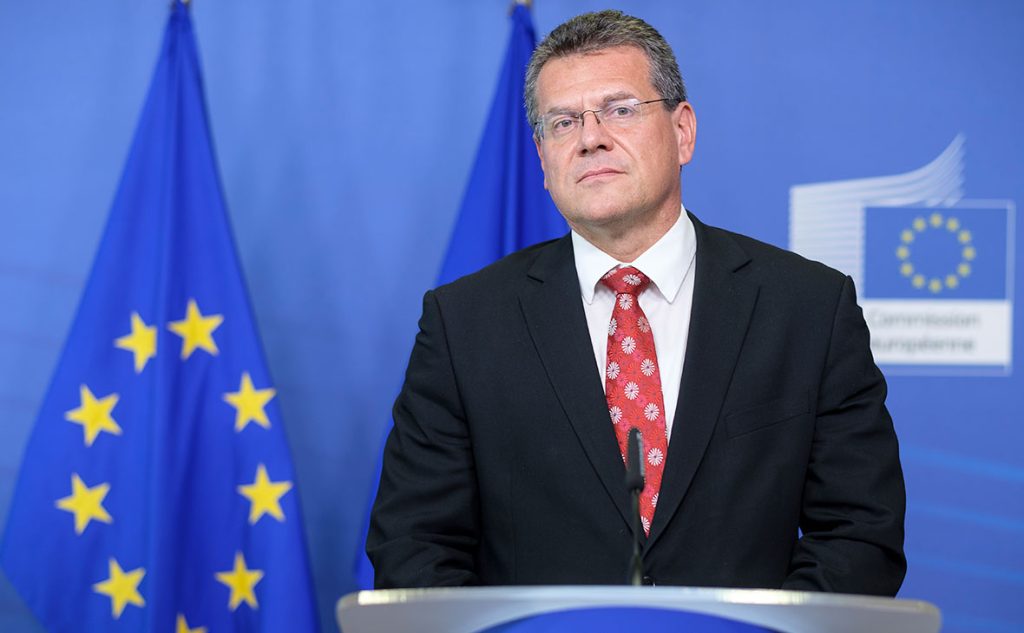
The European Union aims to elevate EU-China relations to a new level of diplomatic engagement. EU Trade Commissioner Maroš Šefčovič announced the move, emphasizing that the primary goal is to address the staggering $1.2 trillion trade surplus and resolve chronic economic friction between the two powers.
This new strategy likely emerged following overtures from He Lifeng, Vice Premier of China’s State Council, during the 2026 World Economic Forum (WEF) in Davos. In his address, he called for a policy of multilateralism, free trade, and the deepening of global economic cooperation.
Communication: Key to Improving EU-China Relations
According to Šefčovič, recent efforts by the European Commission to reduce tensions—including issues surrounding China’s export controls on rare earth metals and legacy microchips—are already beginning to yield results.
“Communication and concrete discussions bring results. I think we just need to make this more structured and conduct them more frequently,” the Commissioner told journalists following a meeting of EU trade ministers in Nicosia, Cyprus.
The next step in this diplomatic rapprochement is expected to be an “in-depth discussion” with Chinese Commerce Minister Wang Wentao. This meeting is scheduled for March in Cameroon, on the sidelines of a World Trade Organization (WTO) ministerial gathering.
China Prefers Its Own Path Over Choosing Sides
Beyond the trade surplus, China’s relationship with Russia following the invasion of Ukraine remains a major point of contention for Europe. European political analysts have frequently argued that Chinese pressure on Putin could significantly accelerate a peace agreement. However, Beijing has shown no desire to take sides, preferring to chart its own course.
European Ambitions and Lithuania’s Stance
Many Western allies, including the UK and Canada, are also attempting to improve engagement with Beijing. A key upcoming event is German Chancellor Friedrich Merz’s visit to China next week. Merz has already stated that the European Union has a “strategic interest” in future cooperation with Beijing.
However, the EU lacks internal consensus on the matter. Lithuania, in particular, maintains a harder line than Germany or the European Commission. While both sides have begun signaling a readiness for dialogue after several years of a “deep freeze” and a trade war, some political forces in Lithuania insist on continuing a “Cold War” policy.
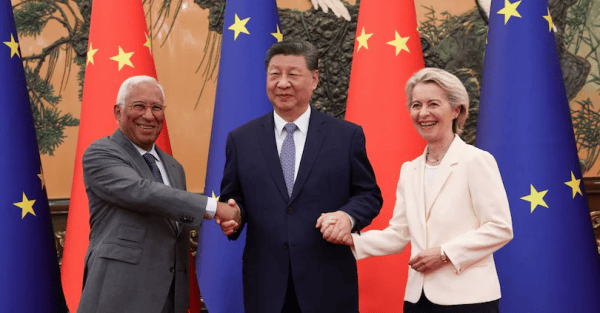
NEWSROOM IN notes that last year, Beijing hosted an EU-China summit to commemorate the 50th anniversary of their diplomatic relations. Originally planned as a two-day event, the meeting was shortened to one day at the request of the Chinese side. Despite the cordial optics, relations between the two remained cool.
Maroš Šefčovič’s proposal for a more structured and regular dialogue may offer the “middle ground” Brussels needs to defend its interests without descending into an all-out trade war.