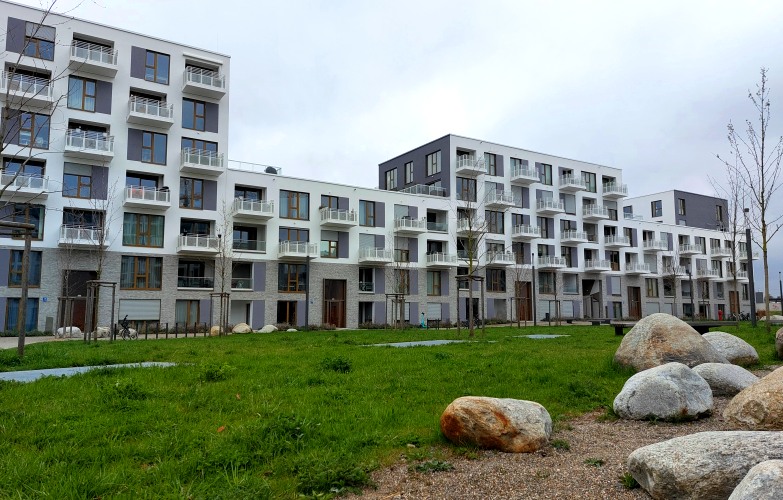
In the German housing market, a shift toward pragmatism is occurring as the average apartment size begins to decline for the first time in 60 years. According to RND, citing research from the German Institute for Economic Research (DIW) and the Free University of Berlin, average living space is expected to drop to 88.5 square meters by 2050—a decrease of six meters from its current peak. The primary drivers are purely economic: exorbitant real estate prices and a sharp rise in the number of single-person households in major cities who simply do not require large apartments.
The End of Expansion
Since 1965, the average apartment size in Germany has grown from 69 to 94 square meters. Because family sizes were simultaneously shrinking, the average living space per person skyrocketed. In cities like Berlin and Munich, every second household now consists of a single person. DIW experts Konstantin Kholodilin and Sebastian Kohl have identified a structural shift: the real estate market has begun to adapt to the actual composition of families rather than the ambitions of developers.
Economics vs. Extra Square Footage
The main factor driving this “shrinkage” is money. Since 2010, the cost per square meter has risen faster than incomes, leading renters and buyers to sacrifice extra space in favor of functionality. For developers, building compact apartments is currently more economically viable, as there is genuine, solvent demand for them.
DIW specialists emphasize that this is not a market degradation but a necessary adaptation. The existing housing stock still contains too many old multi-room apartments that sit empty or are used inefficiently, while demand has shifted toward smaller formats.
Geographic Divide
The 2022 census confirmed this new trend, noting that major cities were the first to transition to space-saving modes. However, more spacious options are still prevalent in rural areas of Southern and Western Germany.
Regional specifics include:
- West and South: Leaders in total area due to the private housing sector.
- East: Traditionally more compact floor plans.
- Metropolises: A focus on energy efficiency and small formats.
Experts note that compact, well-designed apartments are becoming the primary product on the market. This shift helps reduce maintenance costs and addresses the challenge of high energy consumption within the construction sector.