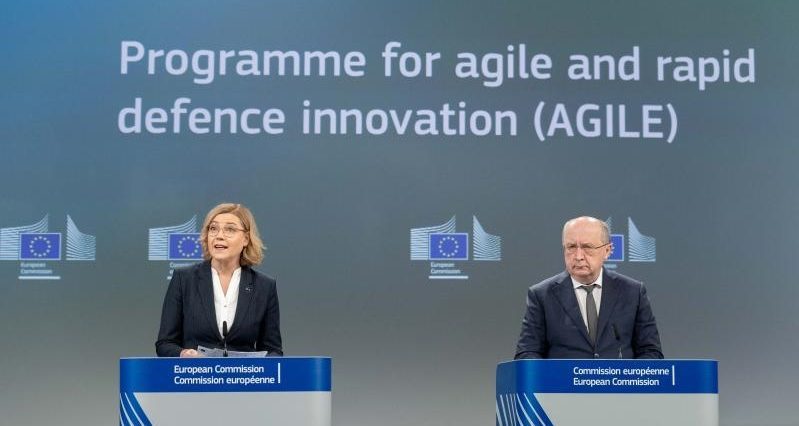
The European Commission has introduced the AGILE defense program (Agile and Rapid Defense Innovation), a new tool designed to modernize the European military-industrial complex. The pilot project has been allocated €115 million. Brussels has officially opened the program to companies and startups from both EU member states and associated third countries.
AGILE Defense Program: From Lab to Battlefield
The initiative seeks to shorten the timeline between the development of advanced technologies and their field deployment. The program focuses on artificial intelligence, quantum technologies, and advanced drones. Rather than funding large state corporations, AGILE prioritizes small and medium-sized enterprises (SMEs) and fast-growing tech startups.
European Commission Executive Vice-President Henna Virkkunen stated that the war in Ukraine demonstrated the need for Europe to act faster to remain competitive. The pilot phase, scheduled for 2027, aims to fund 20 to 30 projects that address the most urgent defense needs of EU member states.
Priority Projects
Which projects are eligible for funding? NEWSROOM IN notes that grants will target SMEs rather than industrial giants. Startups with breakthrough ideas and existing companies looking to scale production for EU defense innovation can apply for a share of the €115 million budget.
To qualify, technologies must provide a battlefield advantage and meet current military requirements. While official priorities include drones, artificial intelligence, and quantum computing, the scope of the program is broader. Funding is available for land and sea robotics, including autonomous boats, reconnaissance robot dogs, and unmanned ammunition carriers. Significant emphasis is placed on electronic warfare and communication systems, such as trench jammers, anti-drone rifles, and encryption systems.
Grants may also be awarded to developers of survival equipment and medical technology. This includes innovative medicine, such as smart tourniquets that regulate pressure and portable ultrasound machines, as well as new materials like thermal ponchos designed to evade enemy thermal imagers.
Budget Constraints and Future Plans
European officials acknowledge that initial funding for the project is limited. EU Commissioner for Defense and Space Andrius Kubilius noted that only €115 million was secured for the 2027 launch. These funds were drawn from the European Defense Fund and space program budgets. Kubilius said the Commission would prefer to invest more, but larger allocations depend on the political will of EU member states.
Despite these constraints, officials view 2027 as a test for the AGILE program. If the pilot demonstrates tangible technological results, the program may receive significantly larger resources for the 2028–2035 period. The Commission also hopes the initiative will encourage national governments to create similar funds for military startups.