The Lithuanian government, led by Prime Minister Inga Ruginienė, officially resigned on June 23, 2026, following the collapse of the ruling coalition. The country’s leading political force, the Social Democratic Party of Lithuania (LSDP), terminated its agreement with the populist Dawn of Nemunas party, which operates on the principle of a “left-wing wallet and a right-wing heart.” Ruginienė’s cabinet served for 272 days after taking office in September 2025 and will step down on June 30, 2026. The Social Democrats have already signed a new coalition agreement with the Union of Democrats “For Lithuania” and the Union of Peasants, Greens, and Christian Families.
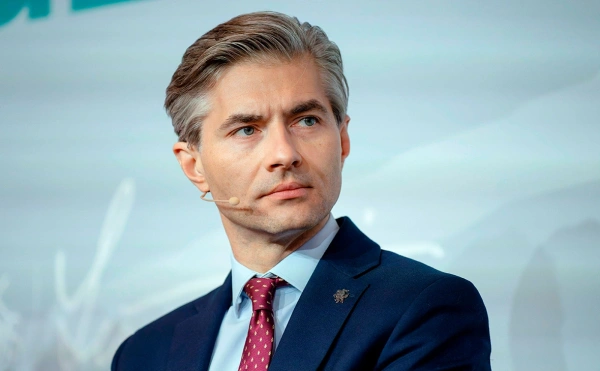
Mindaugas Sinkevičius is expected to become the new prime minister, while Inga Ruginienė will return to her post as Minister of Social Security and Labor. Sinkevičius has led the LSDP since the summer of 2025 and was officially elected party chairman for a four-year term until 2029 at a party congress on May 1, 2026. Holding significant political and administrative weight, the Social Democratic leader is expected to personally stabilize the new coalition following Ruginienė’s period of crisis management.
Legal Necessity of the Lithuanian Government Resignation
Under Article 101 of the Constitution of Lithuania, the exit of parties from a coalition does not automatically dissolve the cabinet. Mandatory resignation is required only in the event of a vote of no confidence, the death of the prime minister, or new parliamentary elections. However, losing a parliamentary majority forces a prime minister to choose between leading an unstable minority government or initiating a political reset. Ruginienė chose the latter. Her voluntary resignation ends the mandate of the current cabinet, allowing the Seimas to officially approve a new prime minister from the updated coalition.
Key Reasons for the Split and Dispute Over Military Grounds
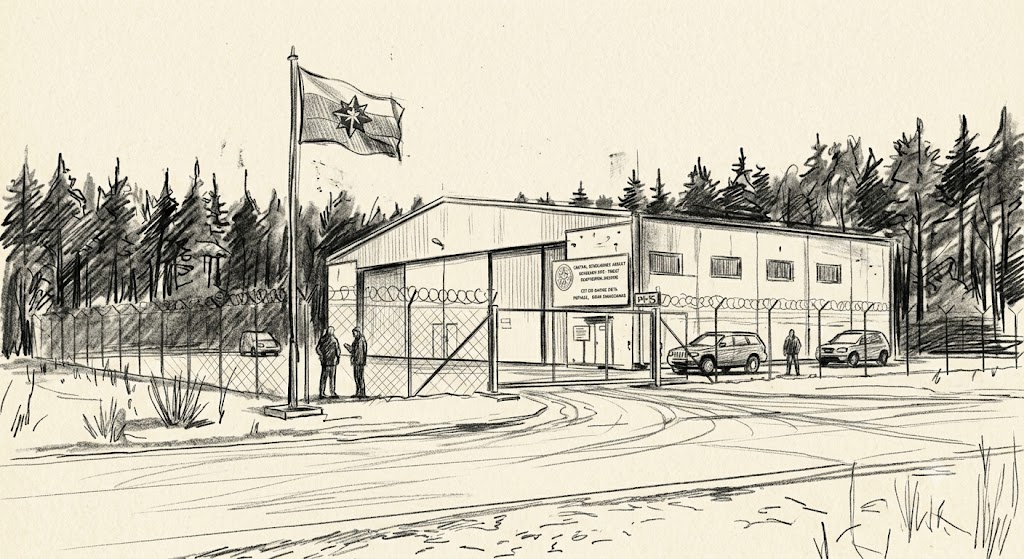
While the rift had been developing for some time, the trigger was a conflict over defense projects. The Dawn of Nemunas party refused to support the construction of a new military training ground near the Belarusian border and the expansion of a facility near the Kaliningrad region. Instead, they demanded that the funds be redirected to purchase anti-drone systems.
While anti-drone defense is a critical component of security, the Social Democrats viewed the move by Dawn of Nemunas leader Remigijus Žemaitaitis as political blackmail. To demonstrate independence from the LSDP, he leveraged the dissatisfaction of local residents protesting land appropriation for training grounds in Lazdijai, near the Suwałki Gap. The Social Democrats considered this a direct threat to national security.
Other deep disagreements further strained relations. In particular, Žemaitaitis frequently commented on minor political issues in a highly toxic manner. This often caused public scandals, pressured the coalition domestically, and stalled key reforms. Additionally, since April 2026, President Gitanas Nausėda had openly urged the LSDP to seek an alternative to the alliance.
Antisemitism as a Political Tool
The reputational damage surrounding Žemaitaitis requires clarification, as his supporters often portray him as a victim of censorship. In 2025, the court found the Dawn of Nemunas leader guilty of making antisemitic statements and inciting hatred in social media posts and public speeches. He had claimed that “Lithuanian Jews, together with Russians” destroyed Lithuanian villages and contributed to the “destruction of the nation.” He also claimed there was a “Holocaust of Lithuanians,” which was legally ruled as a gross minimization of the actual tragedy of the Holocaust. Žemaitaitis denied the charges, arguing his statements were directed solely at criticizing Israeli government actions and calling the trial politically motivated.
Antisemitism remains a highly sensitive topic in Lithuania due to historical memory. During World War II, approximately 95% of the country’s Jewish population was annihilated. Mass executions were carried out by German occupying forces with the active collaboration of local accomplices. Today, Lithuanian officials react strongly to such rhetoric to avoid giving external propaganda grounds to accuse the state of antisemitism. Many in Lithuania believe that Žemaitaitis is not an ideological antisemite but used the issue to mobilize protest voters. For the state, however, such political maneuvering proved too dangerous to tolerate.
Inga Ruginienė: Managing Under Constant Crisis
In terms of governance, Inga Ruginienė proved to be a steady crisis manager. Her government implemented several key initiatives focusing on national security and social resilience:
- Defense: National defense funding reached a record 5.38% of GDP.
- Internal Security: The government cracked down on smuggling, notably targeting the illegal delivery of cigarettes across the border via weather balloons.
- Social Policy and Human Rights: Drawing on her years of experience in the Lithuanian Trade Union Confederation, Ruginienė and her cabinet took an inclusive approach to fighting discrimination. The prime minister publicly opposed xenophobia and homophobia, stating that human differences are not a threat, while the true enemy is hatred.
- Protection of Minorities: Ruginienė consistently defended the rights of ethnic minorities to preserve their culture and native languages. She opposed the closure of Russian-language public schools, which drew sharp criticism from right-wing political factions.
Ruginienė herself noted that the country had developed a political climate devoid of dialogue, where opposing sides failed to listen to one another. Consequently, the cabinet spent much of its time managing unpredictable behavior from its coalition partners and responding to criticism from its primary opponents, the conservatives. This pressure, exerted directly and through allied media and bloggers, sometimes reached extreme levels. For instance, the prime minister was publicly criticized over her Lithuanian language skills, with detractors claiming her speech sounded “too Slavic.” Nevertheless, Ruginienė managed to counter the long-standing conservative narrative that “Lithuania will perish under the Social Democrats,” winning over some opposition voters.
New Lithuanian Government Priorities: Defense and Economy
The new coalition agreement, signed on June 18, 2026, aims to put an end to public disputes. To ensure internal stability, the upcoming cabinet’s program focuses on several key areas where foreign policy intersects with the economy.
In the defense sector, the new administration pledges to keep military spending at a minimum of 5% of GDP. While high, this level aligns with recent decisions from NATO summits urging members to expand military budgets, with Lithuania serving as a frontrunner. To fund these defense expenditures while fulfilling social promises—such as full compensation for childcare benefits and free school meals—the government plans to introduce new defense taxes and reallocate internal resources.
The emphasis on foreign policy pragmatism and the objective to normalize relations with China to a general European level stems from earlier events. Lithuania previously entered a major diplomatic dispute with Beijing by allowing Taiwan to open a representative office in Vilnius under its own name. This move triggered significant economic pressure from China. The current push for normalization represents an effort to mitigate the fallout and restore trade relations. Vilnius’s core foreign policy positions, including support for Ukraine and its Euro-Atlantic commitment, remain unchanged.
Lithuanian Government Context in European Politics
NEWSROOM IN notes that regular cabinet resignations are common in Europe, where governance often relies on complex coalitions:
- Italy remains the record holder, having seen over 65 governments since 1945.
- Belgium regularly breaks records for the longest periods without an active government due to divisions between Wallonia and Flanders.
- In the Netherlands, coalition-building now takes months due to the rise of far-right parties.
- Bulgaria held eight elections between 2021 and 2026, resulting in eight different governments.
- Romania is characterized by frequent cabinet reshuffles, while Slovakia has experienced successive resignations due to societal polarization.