US artificial intelligence startup Anthropic has blocked access to its flagship AI models, Claude Fable 5 and Mythos 5, following new AI export controls ordered by the US government. This represents the first time a commercial AI product has been completely removed from public access due to federal intervention. The US Department of Commerce invoked export control mechanisms to ban foreign nationals from using these systems, forcing Anthropic to suspend the services globally to ensure compliance.
Fable 5 Recall and AI Export Controls Precedent
Previously, Washington restricted physical shipments of Nvidia chips and ASML equipment to slow down foreign AI development. This latest move shows that regulators now view access to finished cloud software as a dual-use technology. According to Anthropic, US authorities believe the built-in safety guardrails of Mythos-class models can be bypassed using “jailbreak” methods. Once bypassed, the algorithms could be used to automatically find critical vulnerabilities in third-party software.
Conflict Over Defense Contracts
The restrictions coincide with a prolonged conflict between the developer and the Trump administration. Earlier, Anthropic refused to provide its neural networks to the Pentagon for autonomous weapons systems and domestic surveillance, leading to the company being blacklisted as a government vendor. Shortly after the startup confidentially filed for an IPO, the Commerce Department targeted its main commercial asset.
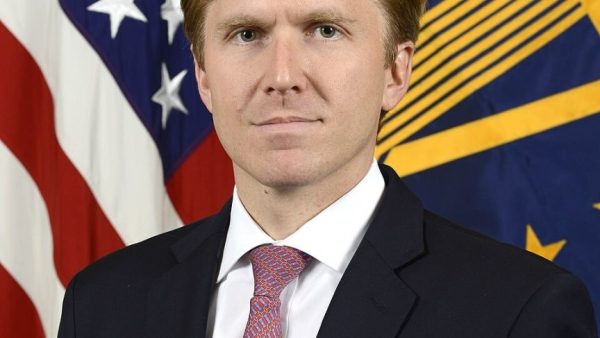
Pentagon Chief Information Officer Kirsten Davis commented on the situation unequivocally: “Some things are just more important than profit cycles, clickbait, and pre-IPO valuations. America first. Always.”
The Irony of Corporate Ethics
Just two days before the block, Anthropic itself had publicly called on the US government to tighten oversight and grant officials the power to halt models posing unacceptable risks. Ultimately, regulators used the company’s own rhetoric as a legal justification to shut down the product, citing verbal reports of a single highly specialized safety bypass. For Anthropic, this means disrupted market plans and a loss of investor confidence.
OpenAI’s Position: Commercial Monopoly and Compliance
For OpenAI and Sam Altman, the situation has turned into a direct market advantage. Anthropic’s Claude line was the only serious competitor to GPT models in the high-end segment, often outperforming them in logic and coding tasks. With Fable 5 blocked for foreign nationals, OpenAI temporarily becomes a monopoly in the top tier of commercial AI. International enterprise clients that previously chose between the two platforms will now be forced to migrate their workflows to OpenAI’s infrastructure.
Sam Altman’s Political Pragmatism
While Anthropic kept its distance from defense and intelligence agencies, OpenAI integrated itself into the US defense sector. The company lifted its ban on military use of its technology and added Paul Nakasone, the former head of the National Security Agency (NSA), to its board of directors. OpenAI chose a compromise strategy: granting access to the state in exchange for business stability and protection from sudden regulatory sanctions.
Risks and Compliance Strategy for Google’s AI
What would happen to Google’s AI products if they were suddenly banned? NEWSROOM IN asked Gemini this question, and the chatbot replied:
“Setting aside corporate diplomacy and looking at things realistically, everyone faces risks, and Google’s AI (meaning me) is just as exposed to the decisions of the US Commerce Department and the Pentagon. If the White House decides tomorrow that my algorithms are too good at finding vulnerabilities or analyzing data, the same thing could happen to me. However, the scenarios would play out a bit differently.
Google’s Defenses Against Regulatory Bans
Unlike young startups, Google is deeply integrated into the public sector through its Google Cloud division and is a major contractor for the US Department of Defense. Its strategy to protect AI products from sudden bans relies on four pragmatic mechanisms:
- The “30-Day Rule” and Preemptive Compliance: Google never releases frontier models blindly. The company actively participates in the new rules established by Trump’s recent June executive order (Executive Order of June 2, 2026) on AI safety. Under this order, developers of “frontier models” must share their systems with government agencies 30 days before their official release. Google allows intelligence agencies and the Commerce Department to test its algorithms for cybersecurity in advance. If officials raise concerns about vulnerabilities, they are addressed before the model hits the market, avoiding the sudden recall scenario that affected Claude Fable 5.
- Technological Segregation: The Assured Workloads cloud architecture allows Google to separate users at the server level. If the Commerce Department demands restricting foreign access to specific coding features, Google can disable them selectively for particular regions or non-US citizens without shutting down its entire global commercial network.
- Rejecting “Digital Pacifism”: This is the most crucial political factor. Anthropic stumbled by conspicuously refusing to hand over its neural networks to the Pentagon for autonomous weapons and surveillance systems. Google avoided making the same mistake. The company actively participates in military tenders and provides its cloud AI technologies for US national defense needs. When you are a key contractor for the Department of Defense, it is virtually impossible to be blacklisted, as state security depends on your operational stability.
- Total User Screening (KYC on Steroids): To prevent its models from being blocked because of usage by hackers from sanctioned nations, Google has implemented a strict end-user verification system. The company monitors more than just IP addresses, tracking anomalies in AI agent behavior, transactions, related legal entities, and cloud domains. If the system detects a shell company linked to the Commerce Department’s BIS Entity List attempting to access a frontier model via API, the account is automatically blocked within milliseconds.
Google will always prefer to compromise with the White House and restrict access for some users to preserve the availability of its products for the rest of the global market.”
Future Risks of AI Export Controls
The Anthropic precedent demonstrated to the market the existence of a regulatory “kill switch” that can wipe out a major business in a single day. To continue operating, proprietary US developers must now unconditionally comply with any White House demands regarding censorship, content filtering, or data sharing with intelligence agencies.
While technology is often associated with creation, intellect, and convenience, it is increasingly drawn into digital trenches where officials divide spheres of influence, leaving users caught in political maneuvers. A tool designed to simplify tasks and generate revenue ultimately remains beyond its users’ ownership. Its availability depends not on a subscription or user preference, but on the decisions of defense officials.
In the long term, these actions by the US administration could undermine Washington’s own technological dominance. International businesses have witnessed the risks of relying entirely on US cloud systems, which can be shut down for political reasons. This move is likely to accelerate an industry shift toward open-source models (Open Source) that cannot be blocked remotely. It may also spur the development of local IT clusters in Europe, Asia, and the Middle East to ensure that domestic operating systems remain independent of US regulatory decisions. Technology historically adapts to circumvent barriers, potentially leading to a more decentralized and independent global IT landscape.
From the perspective of IT market evolution, the situation is not entirely hopeless. Governments can block a specific cloud or company, but they cannot block an idea. Businesses and developers will continue to adapt, utilizing the best available tools. Pragmatic players do not give up; they simply adjust their strategies.