Europe is witnessing a real-time political blockbuster as the Ukraine-Hungary dispute intensifies over a broken oil pipeline and billions in blocked funds. The script includes threats to a prime minister and the seizure of armored vans carrying millions in cash and gold in the heart of a European capital.
NEWSROOM IN takes a closer look at how two neighboring countries moved past diplomatic notes and escalated their relations to the level of a crime thriller.
Scene One: The Ukraine-Hungary Dispute and Oil
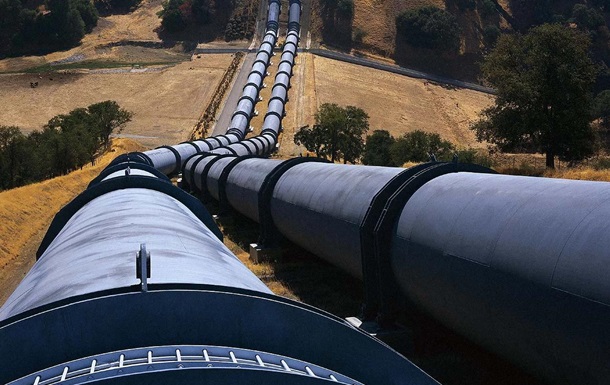
Like any good movie, it starts with a major incident. On January 27, 2026, the southern branch of the Druzhba oil pipeline, which carries Russian crude oil to Hungary and Slovakia, stopped operating near the Ukrainian town of Brody.
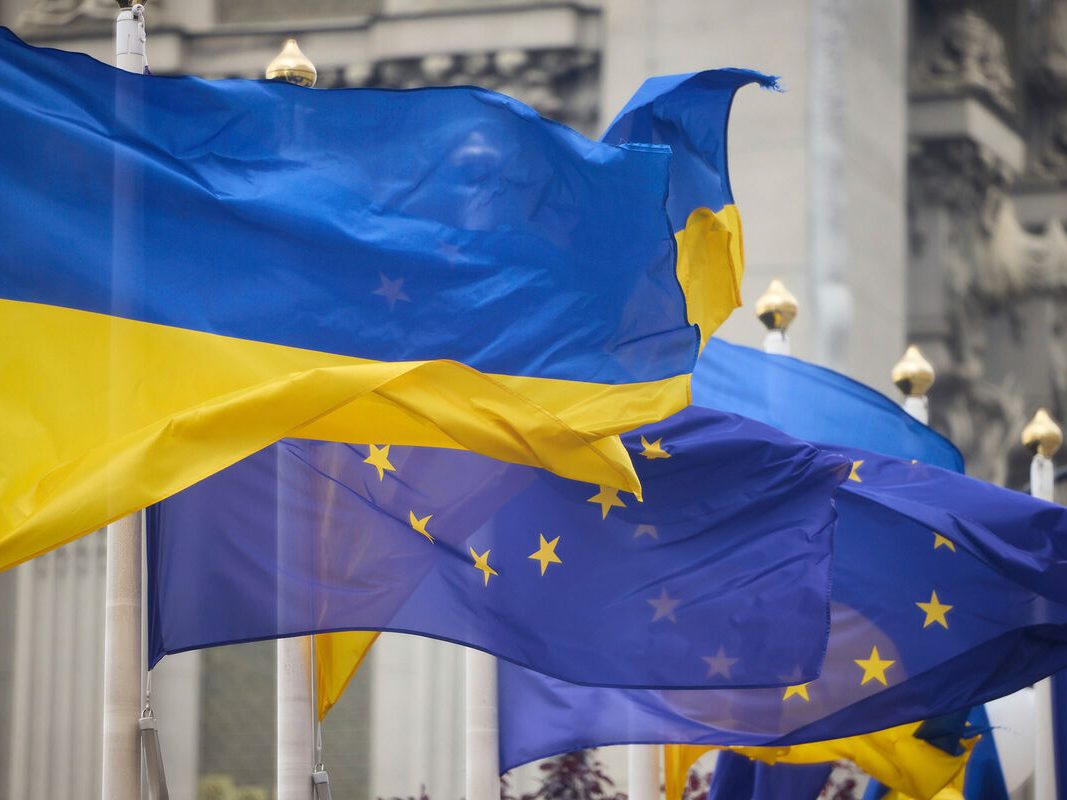
☛ Kyiv’s Version: The outage was caused by Russian drone attacks. There are no immediate plans to repair the pipeline for two reasons. First, President Volodymyr Zelenskyy has stated that cutting off the flow of Russian oil to Europe is a good idea. Second, and most importantly, Kyiv has little motivation to play plumber for Budapest while Hungary continues to block a massive €90 billion EU loan for Ukraine. Essentially, it is a case of “no money, no oil.”
☛ Budapest’s Version: Hungarian Foreign Minister Péter Szijjártó delivered a fiery monologue, claiming the pipeline is intact and the transit halt is nothing more than blackmail by Kyiv. Prime Minister Viktor Orbán has been demanding the oil be turned back on daily, warning of an economic apocalypse in Hungary.
Plot Twist (Croatia is Surprised): European observers are puzzled — there is no sign of an economic apocalypse in Hungary. The country is already actively using an alternative route: the Croatian port of Omišalj and the JANAF Adriatic pipeline. Croatia is happily receiving tankers of non-Russian oil purchased on the global market specifically for Budapest’s needs.
However, Budapest is so attached to Russian oil that it is simultaneously fighting for the right to pump Russian crude through the Croatian pipeline. The Croatian operator JANAF has openly questioned why Hungary wants sanctioned oil when they have already delivered standard supplies. The answer lies in politics: oil on the global market is more expensive. Viktor Orbán’s team faces upcoming elections and believes it is critical to maintain cheap fuel while projecting an image of defiant leaders who take orders from no one — especially not Zelenskyy.
Scene Two: Tarantino-Style Dialogue
As the broken pipeline remains empty and Budapest maintains its veto on the €90 billion EU loan, tensions have reached a breaking point. On March 4, during a meeting regarding the frozen credit, the Ukrainian President made a remark reminiscent of a Quentin Tarantino character:
“We hope that one person in the European Union will not block the 90 billion… Otherwise, we will give that person’s address to our armed forces, to our boys — let them call him and speak to him in their own language.”
While the “one person” was not explicitly named, Orbán immediately accepted the challenge: “Zelenskyy’s threats are not about me. He is threatening Hungary.” Government spokesperson Zoltán Kovács echoed his boss, calling Zelenskyy’s words “open threats and blackmail that have crossed the line of acceptable norms,” rather than diplomacy.
Scene Three: The Snatch


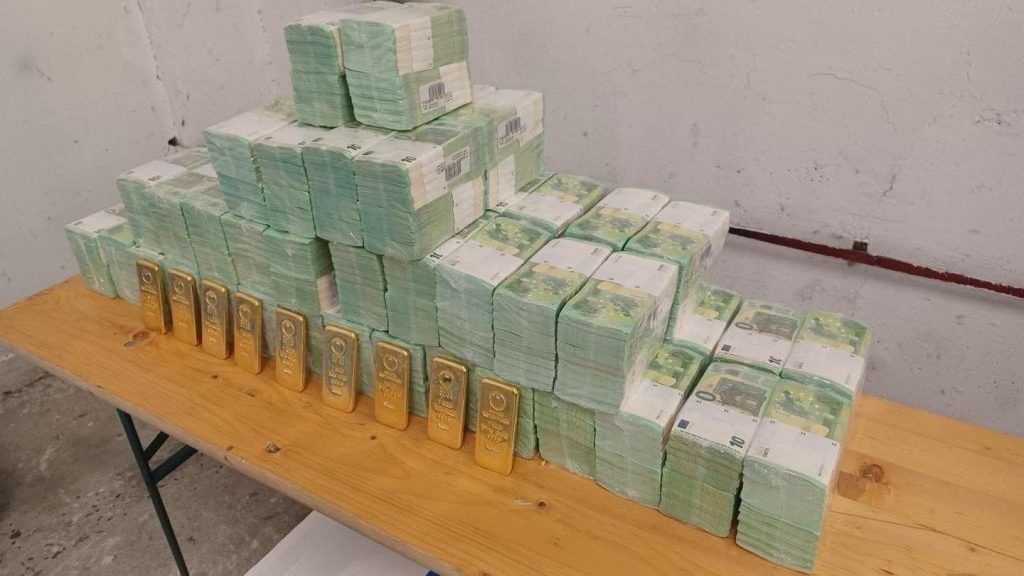
Arguments escalated, and by the next day, March 5, the political thriller turned into a crime action movie. Ukraine’s Foreign Minister made a shocking announcement: Hungarian authorities had taken seven Ukrainian citizens hostage.
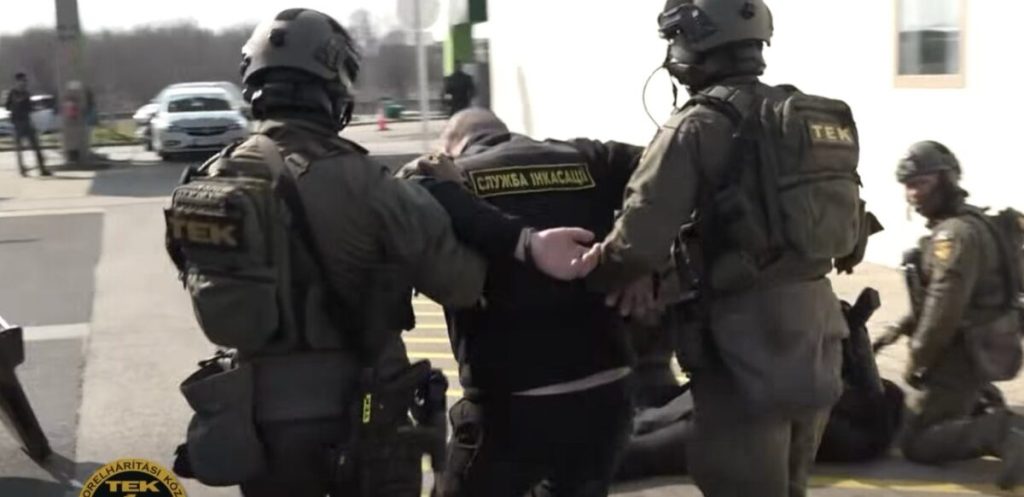
Details soon emerged that stunned even veteran screenwriters. The Hungarian Counter-Terrorism Center intercepted two armored cash-in-transit vans belonging to Ukraine’s Oschadbank as they traveled from Austria. The haul was massive: $40 million, €35 million, and 9 kilograms of gold.
Kyiv’s Review: The bank insists this was a legal, scheduled transport under a contract with Austria’s Raiffeisen Bank. Ukrainian authorities labeled the incident “state banditry in the style of the 1990s” and linked it to the Hungarian minister’s recent visit to Moscow. Police have opened kidnapping cases, and the National Bank has sent a special delegation to Budapest to secure the release of the staff.
Budapest’s Review: The Hungarian Customs Service proudly published photos of the seized gold and cash. According to Péter Szijjártó, the money belongs to a “Ukrainian military mafia,” and the operation was allegedly overseen by a retired SBU general. He argued that interbank transfers of this scale are typically handled electronically, not transported in vans.
Plot Holes (Internal Questions): Interestingly, this episode has raised eyebrows beyond Hungarian customs. Ukrainian media have also turned detective, asking why such a strange scheme was used. Journalists are questioning why tens of millions in cash and gold were being transported by road from a country like Austria and why Ukrainian armored cars were needed for this international financial operation. Questions are mounting, but clear answers from the bankers have yet to emerge.
The Tired Producer Demands a Reshoot
While Ukrainian consuls wait outside Hungarian law enforcement offices (where GPS data shows the gold-filled vans are parked), Brussels has stepped in as the “tired producer.”
The European Commission, clearly fed up with the plot development, is displeased with both sides. Deputy Chief Spokesperson Olof Gill has urged both Orbán and Zelenskyy to “calm down and lower the rhetorical temperature.”
Kyiv was reminded that threatening EU leaders with the military is outside the genre’s norms, and Zelenskyy was advised to “fix Druzhba” in both the literal and figurative sense. Budapest was given a hint that it is time to stop playing gangster and unblock the loan.
Only time will tell how the case of the broken pipe, the loan, and the missing gold will end. But one thing is clear: political life in Europe has ceased to be boring.