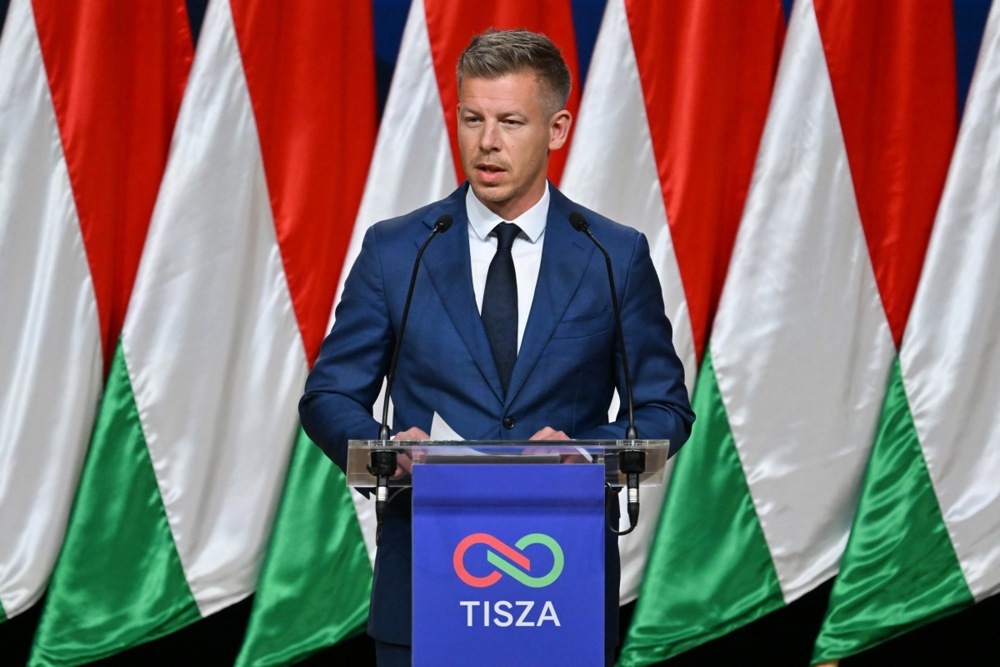
Viktor Orbán’s 20-year rule has ended. The opposition TISZA party won a landslide victory in the Hungary elections held on Sunday. The scale of the defeat was so clear that Fidesz leader Viktor Orbán conceded and congratulated Peter Magyar, the leader of the winning party, before the National Election Office (NVI) released the official results.
The European Union met the news with enthusiasm. European Commission President Ursula von der Leyen posted a message in two languages on social media stating: “The country is returning to its European path. Tonight, the heart of Europe beats stronger in Hungary.”
Hungary elections: An electoral tsunami
Analysis of official NVI data shows a complete dismantling of the old political system. Turnout broke all historical records, reaching 79.5% with more than 5.9 million people voting.
Final distribution of power (Parliament: 199 seats):
| Party | Leader | Votes (lists) | Seats | Status |
| TISZA (“Respect and Freedom”) | Peter Magyar | ~53% | 138 | 🟢 Constitutional majority |
| Fidesz–KDNP | Viktor Orbán | ~38% | 54 | 🔴 Opposition |
The remaining seven seats went to representatives of national minorities and independent candidates.
Key election anomalies:
- District sweep: The TISZA party defeated Orbán’s candidates even in conservative provinces where Fidesz traditionally won through administrative resources.
- End of the old opposition: Voters chose not to split their ballots. Established parties like the Democratic Coalition (DK) and the satirical Two-Tailed Dog Party failed to cross the 5% threshold.
- Absolute power: With 138 seats, Magyar and his party hold more than two-thirds of the votes and do not require a coalition.
The TISZA Phenomenon: “Orbanism without corruption”
The party’s name officially stands for Tisztelet és Szabadság Párt (Respect and Freedom Party), but its symbol is the Tisza River, the longest tributary of the Danube. The slogan “And the Tisza flows” became a metaphor for a flood washing away kleptocracy.
Magyar offered voters centrist pragmatism. He maintained a conservative, patriotic base but promised to eliminate corruption. The four pillars of his program include:
- Immediate entry into the European Public Prosecutor’s Office (EPPO) and the return of illegally privatized assets.
- Term limits: No more than two consecutive terms (8 years) for prime ministers and the establishment of independent media.
- Re-establishing the ministries of health and education with salary increases for staff.
- Unblocking EU funds while maintaining strict control over migration.
The party’s composition is unique. Magyar conducted an open online casting process for candidates, barring established politicians. TISZA’s core now consists of professionals, including former pastor Zoltán Tarr, former Meta lawyer Dóra Dávid, as well as surgeons, farmers, and economists. The primary risk is whether a party built on one leader’s charisma can transform these professionals into effective ministers.
First statements: Pragmatism over idealism
Despite the enthusiasm in Brussels, Peter Magyar’s initial statements indicate that Hungary will remain a tough negotiator that prioritizes its national economy.
The new government is adopting a course of strict pragmatism in its relations with Kyiv and Moscow:
- Russian oil will remain. Budapest will continue purchases from the Russian Federation while attempting to diversify sources. “We cannot change geography. We will always buy oil in the cheapest and safest way,” the incoming prime minister stated.
- Loan to Ukraine (90 billion euros). Hungary will not allocate its own funds for this loan due to its difficult economic situation, but it will not block the EU decision, as Orbán had done.
- No fast-track accession. Magyar emphasized that Ukraine should not be admitted to the EU through an accelerated procedure while the country is at war.
- Sanctions and diplomacy. European sanctions against Russia should be lifted once the war ends. Magyar expressed readiness to meet with Volodymyr Zelenskyy to build ties, but stated he would only speak with Vladimir Putin “if he calls himself” to ask for an end to the war.
- Energy security. The new administration views attacks on the Druzhba pipeline and conflicts in the Middle East as direct threats to Hungary’s energy stability.
Peter Magyar has made it clear that while Hungary is returning to Europe, Budapest does not plan to dance to an outside tune at the expense of its own interests.