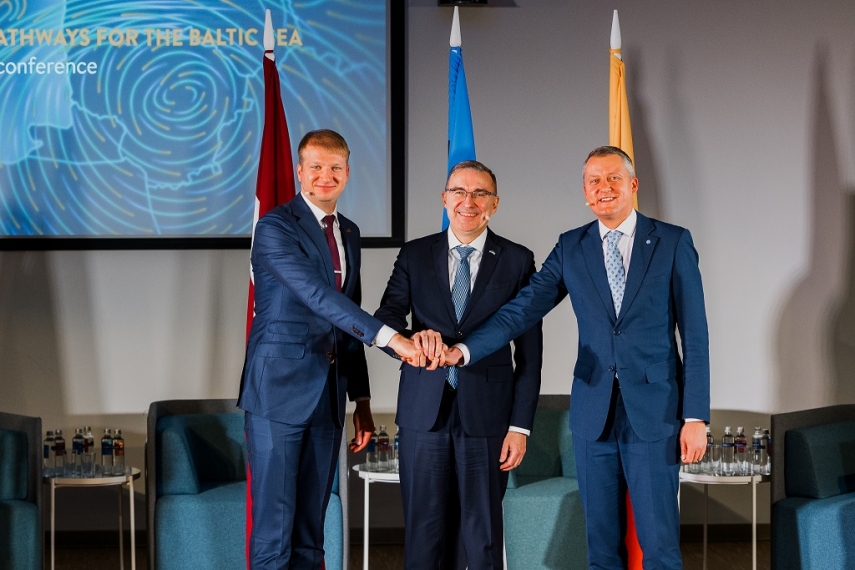
On February 11, the University of Latvia’s House of Science became a global hub for Baltic energy integration expertise. The conference “Energy Development Paths in the Baltic Region,” the largest energy summit of its kind in the Baltics, brought together leading politicians and experts from over 20 countries, including Latvia, Lithuania, Estonia, the United States, France, Denmark, the Netherlands, Germany, the United Kingdom, Poland, Spain, and Saudi Arabia, to discuss the future of the European market.
A featured keynote dialogue included Catherine Jereza, U.S. Assistant Secretary of Energy, and Dr. Michael W. Howard, Chair Emeritus of the World Energy Council.
The gathering in Riga was both strategic and symbolic. It marked exactly one year since the historic event on February 9, 2025, when the Baltic states finally disconnected from the Russian BRELL grid, completing their full synchronization with the continental European power system.
Life After BRELL: When Silence is the Best Result
Organized by WEC Latvia in cooperation with the Ministry of Climate and Energy and the University of Latvia, the event served as a strategic progress report. The most pressing question was how the Baltic states have fared over the past year.
“Energy affordability, sustainability, and competitiveness are prerequisites for national economic growth. However, energy security remains our most critical issue. Following our decoupling from the BRELL network, the Baltic States managed such a balanced grid operation that users noticed neither the moment of disconnection nor the transition to the European grid. It is vital to continue this regional cooperation so that the Baltic States can collectively build an energy supply and production system that is resilient to external factors, providing a foundation for low energy prices and attracting investment to the economy,” emphasized Latvian Minister of Climate and Energy Kaspars Melnis.
However, simply “disconnecting” is not enough. According to Assoc. Prof. Olga Bogdanova, President of WEC Latvia, today’s energy landscape is more complex than ever. The region must solve a dual challenge: ensuring affordable prices now while accelerating the transition to a sustainable future. Accomplishing this alone is impossible, leading to the birth of a new energy alliance.
“No single country or sector can overcome these challenges alone; therefore, mutual communication and support have become a priority. Celebrating the first year since the Baltic energy system’s synchronization with Europe, we see a prime example of how collective action yields real results despite technological and political hurdles,” she highlighted during her opening remarks.
The Three-Way Memorandum: An End to Energy Egoism
The realization that energy issues are no longer isolated led to the signing of a Memorandum of Understanding. The ministers of Latvia, Lithuania, and Estonia (Kaspars Melnis, Andres Sutt, and Žygimantas Vaičiūnas) officially committed to a course of deep strategic synchronization.
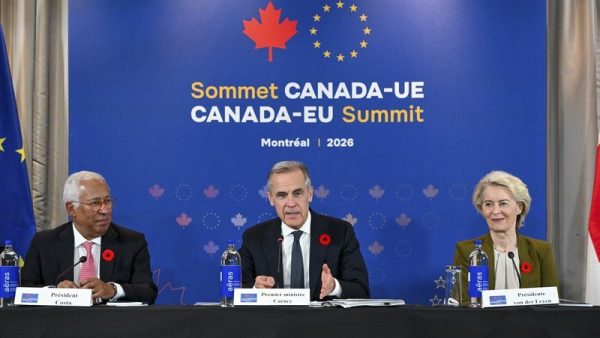
This Memorandum is perhaps the first tangible example of the new EU development strategy, which was discussed in Belgium just a day earlier. While leaders at Alden Biesen Castle were still debating the “28th regime” and the need to abandon national egoism, the Baltic energy sector demonstrated exactly how a “coalition of the willing” works in practice.
As collective security becomes more important than bureaucratic borders, the ministers of Latvia, Lithuania, and Estonia solidified a course for deep synchronization across four key areas:
- Alignment of Energy Strategies: Ensuring national plans complement regional security. This marks the end of redundant construction and overlapping costs; regional resilience now takes precedence over local ambitions.
- Renewable Energy and System Integration: Promoting a joint approach to capacity integration and grid flexibility. The logic is simple: if the wind blows on the Baltic Sea, it blows for everyone. The unified grid must seamlessly accept this energy, regardless of which country’s shelf the turbine is on.
- System Planning and Market Development: Developing a unified understanding of market trends and essential infrastructure investments. This is the “single market” in action, transparent, with honest analysis and shared data.
- Analytical Cooperation: Committing to active data exchange and joint situational analysis. In this new reality, any threat to one partner instantly becomes a priority for all three.
“Social License”: Why Do People Oppose Wind Turbines?
Even the most perfect memorandums can fail if they are not accepted by society. The discussion shifted to a practical level, addressing the “social license to operate“ and the “Not In My Backyard” (NIMBY) problem.
While it sounds technical, it addresses a simple question: why do people often protest against wind turbines or new transmission lines in their immediate vicinity? Conference participants acknowledged that a new energy system cannot be built without learning to negotiate with municipalities and residents. They must see real benefits, from new jobs to improved local infrastructure. Ultimately, energy independence is about the well-being of every family, not just politics.
Baltic Energy Integration: Universities and the View Beyond the Horizon
To ensure these plans succeed, visionary change management is required alongside political action.
“Energy resilience becomes truly visible when we face extreme conditions. Only then do we truly realize its essential role in society’s existence. This is not just a technological shift; it is a systemic change that must be managed with extreme care and foresight. Universities have a responsibility to contribute to long-term energy solutions that will serve future generations,” noted University of Latvia Rector Prof. Gundars Bērziņš.
Agustin Delgado Martin, Chair of WEC Europe, summarized the conference with a broader call for unity and adaptability.
“Energy is no longer merely an economic or technical issue. It is increasingly a strategic, political, and societal priority. In an uncertain world, progress depends on actionable foresight, flexible policies, and sustained collaboration. Resource diversity is not our weakness; it is our greatest strength in shaping the future of energy,” he added.
Conference Resources:
- Conference recording (English): https://youtube.com/live/WrgIJx2gGzo
- Photo gallery from the event: https://failiem.lv/u/cr3bbrvzn4