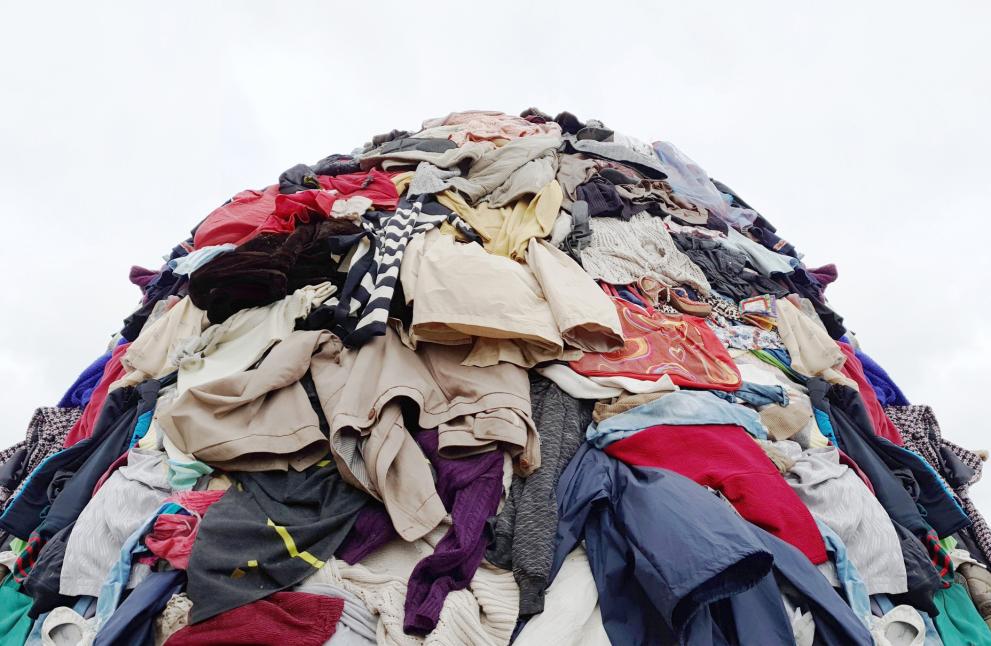
| Image source European Commission |The European Commission has officially adopted a new Fast Fashion Regulation under the Ecodesign for Sustainable Products Regulation (ESPR), prohibiting the destruction of unsold clothing and footwear. France has been the driving force behind this environmental reform, becoming the first country in the world to legally restrict “ultra-fast fashion” giants such as Shein and Temu.
France: A Global Pioneer in Textile Regulation
While the European Union is currently implementing general standards, France has already moved to concrete action. In June 2025, the French Senate almost unanimously passed a law aimed at curbing the production of cheap, disposable clothing. This decision established France as a leader in industry regulation. The law seeks to make ultra-fast production and consumption less attractive and more costly for manufacturers.
The primary measures include:
- Environmental Fines: An “eco-fee” system has been introduced. In 2025, the penalty for each fast-fashion item is set at €5, and it is expected to rise to €10 by 2030.
- Advertising Ban: The promotion of ultra-fast fashion goods is prohibited. These restrictions also extend to influencers, who are now banned from advertising such brands on social media.
- Eco-Labeling: Products must now display an “eco-score” next to the price, informing consumers of the environmental impact of the item’s production.
- Targeted Impact: The law specifically targets companies with massive production volumes and daily inventory updates, while maintaining more lenient conditions for traditional brands.
EU-Wide Disposal Ban
Following France’s example, the European Commission is expanding these measures across the entire EU. The key objective is to stop the disposal of 4–9% of all unsold textiles in Europe—a practice that generates annual CO2 emissions comparable to the total yearly carbon footprint of Sweden.
The measures will be phased in gradually. Starting July 19, 2026, the ban on destroying clothes and shoes becomes mandatory for large companies. From February 2027, businesses will be required to publicly disclose the volume of discarded products using a standardized form. By 2030, these rules will also apply to medium-sized companies.
Key Legislative Changes
NEWSROOM IN notes that the fashion industry is responsible for 20% of industrial water pollution and 10% of global carbon emissions. In France alone, goods worth approximately €630 million are destroyed every year. Lawmakers believe that forcing companies toward a circular economy—focused on resale, repair, and recycling—is the only way to protect the environment and support local manufacturers who cannot compete with the price-dumping of ultra-fast platforms.
Instead of sending leftover collections to incinerators or landfills, companies must now rethink their business models. Key highlights of the new measures include:
- Brands are encouraged to prioritize resale, repair, recycling, or donating items to charity.
- The destruction of goods is permitted only in exceptional cases (e.g., for safety reasons or severe damage) and will be strictly monitored by national authorities.
- Particular attention is being paid to the management of returns.
Fashion Police?
At first glance, this may seem like a bureaucratic nightmare, suggesting inspectors will be counting every button in warehouses. However, authorities do not plan to count items manually. The enforcement system is built on three “digital pillars” that will make the destruction of goods physically and legally disadvantageous.
Here is how the system will work:
☛ Digital Product Passport (DPP)
This is the cornerstone of the reform. Every item will receive a unique digital code (QR or chip) that records its entire journey—from the roll of fabric to the store shelf. If a product disappears from the system without being sold, donated, or recycled, and there is no documentation to explain its fate, it will trigger red flags for tax and customs authorities.
☛ Mandatory Public Reporting
From February 2027, large companies must publish annual reports on their websites. These reports must specify the quantity and weight of written-off goods, the reasons they were not sold, and where they were sent (recycling, charity, or resale).
Companies face substantial fines and reputational damage for missing or falsified reports.
☛ Monitoring “Exceptional Cases”
While the “damage” or “safety” loophole may seem tempting, it must be supported by documentation. If a company claims a batch of clothing is dangerous (e.g., due to toxic dyes), it must provide lab test results. Companies are required to keep all disposal and destruction records for 10 years to allow for government audits at any time.
☛ What About Returns?
Previously, for e-commerce giants like Amazon or Zalando, it was often cheaper to incinerate a returned item than to pay a worker to inspect, repackage, and restock it.
The new law makes disposal more expensive than restoration. Authorities will monitor supply chains through logistics hubs, tracking the percentage of returns that effectively vanish.
☛ Who Will Be the “Fashion Police”?
Enforcement falls to national supervisory bodies, such as environmental ministries or consumer protection services. They will conduct random audits and act on tips from eco-activists and whistleblowers (such as warehouse employees).
According to EU Commissioner for the Environment Jessica Roswall, these measures will help European companies become more competitive by reducing resource dependence and limiting environmental damage.
This publication uses data based on various studies and assessments that consider the entire lifecycle of clothing: from raw material production (cotton cultivation, synthetic fiber production) and fabric manufacturing to sewing, transportation, use, and disposal: United Nations Environment Programme (UNEP), European Parliament Report, David Suzuki Foundation, KASIKORN RESEARCH CENTER, Oxfam GB, Earth.Org