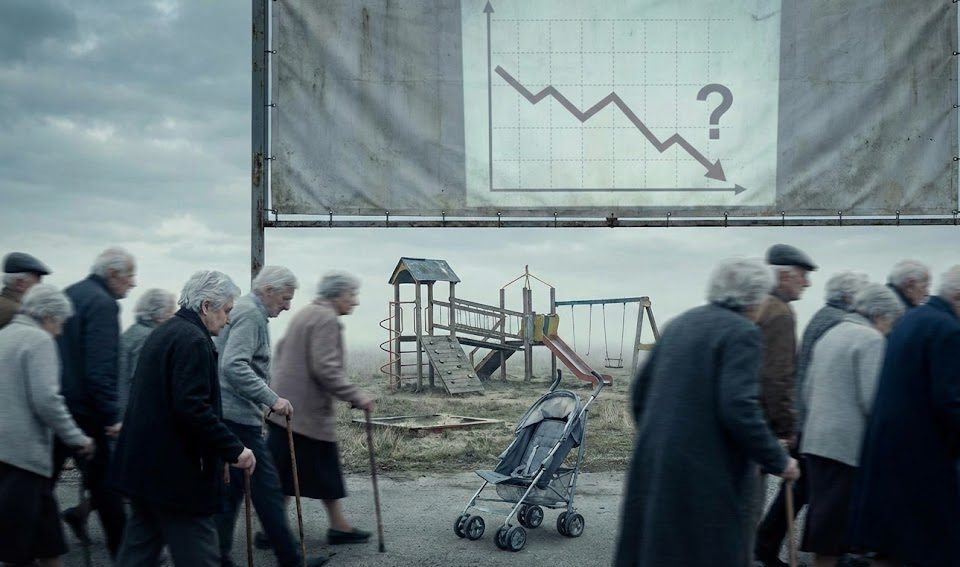
By early 2026, the Baltic birth rate crisis escalated as the Baltic States faced an unprecedented demographic challenge. The chief economist at Luminor Lietuva Bank, Žygimantas Mauricas, defined Lithuania’s record low birth rates as “demographic suicide.”
Lithuania: On the Verge of a “One-Child Policy”
The situation in Lithuania reached a critical point in 2025: the number of newborns fell to the lowest level since 1990, with only 17,500 children born throughout the year, down from 30,000 in 2015.
The Total Fertility Rate (TFR) dropped to 1.0 in 2025. This means the country has essentially reached the parameters of China’s past forced policy, even though the index required for generational replacement is 2.1. For 2023–2024, the TFR stood at 1.18.
Deaths currently exceed births by approximately 20,000 people annually. In some regions, five times more people are dying than are being born. For example, the birth rate in Šiauliai nearly halved over the decade. In the Telšiai and Tauragė counties, the number of births also fell by more than twofold in 10 years.
Vilnius is of particular concern to demographers. Despite having the youngest and most affluent residents, the birth rate here has also fallen to 1.0. Possible reasons include a chronic shortage of kindergartens and schools, rapidly rising housing costs, shifting life priorities, and a general sense of uncertainty.
The only factor maintaining the population level at 2.9 million people remains the positive migration balance.
Latvia: Nine Years of Continuous Decline
By early 2026, Latvia had hit new historic lows—.
- 2025 Results: Approximately 11,400 children were born during the year — 1,170 fewer than in 2024.
- Dynamics: The country’s birth rate has been falling for nine consecutive years. The decline for just the first 10 months of 2025 reached 10.1%.
- Depopulation: Mortality exceeds the birth rate by almost two times, causing the country’s population (1.857 million as of early 2025) to shrink by 1% annually.
- 2050 Forecast: Experts suggest that Latvia’s population could shrink to 1.25 million people.
Estonia: 100-Year Anti-Record
In 2025, Estonia recorded the lowest birth rate since statistics began in 1919. 9,092 births were registered, a 5.7% decrease compared to the previous year. Previously, the average annual number stood at around 13,740 children.
In cities like Narva, mortality exceeded births nearly fourfold in 2025. By January 2026, it became clear that immigration no longer offset the natural population decline.
Future Implications of the Baltic Birth Rate Decline
Common Causes and Global Context
Demographers point to similar causes across all three countries:
- Economics: High inflation, rising prices outpacing salaries, and overall economic instability.
- Geopolitics: A sense of uncertainty and fear about the future.
- Sociology: Delayed parenthood, prioritization of careers, and changing values toward smaller families (1–2 children).
- Structure: A reduction in the number of women of reproductive age due to previous “demographic dips.”
The crisis is not limited to the Baltics. In 2024–2025, the fertility rate also fell to 1.0 in Belarus and China, 1.2 in the Kaliningrad region, and 1.4 in the European Union.