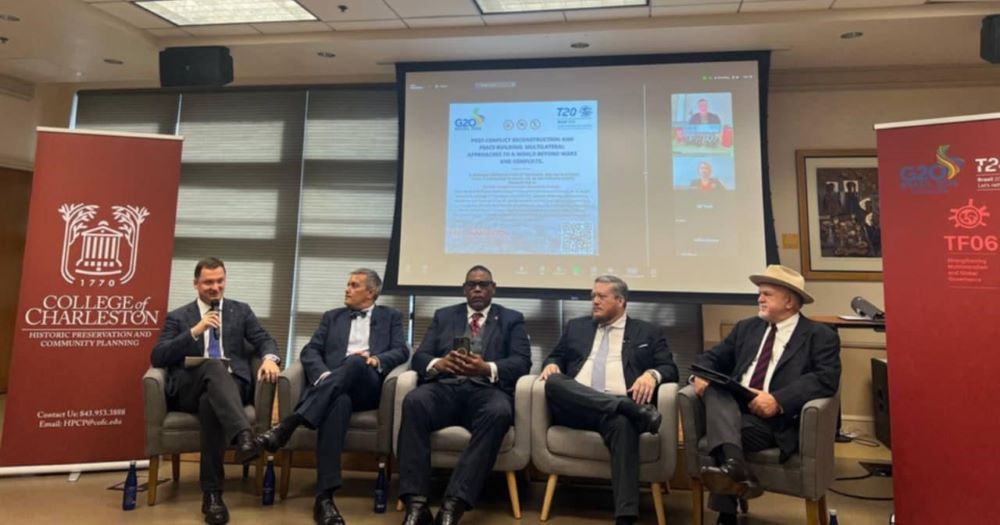
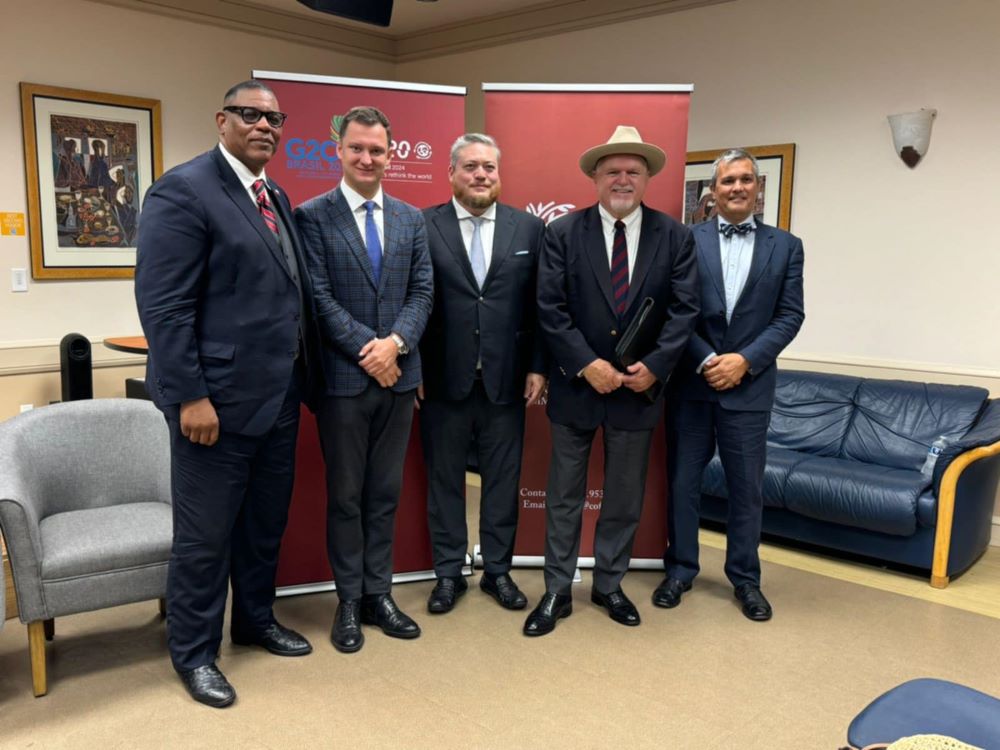
On November 11, the College of Charleston held an panel titled “Post-Conflict Reconstruction and Peace-Building: Multilateral Approaches to a World Beyond Wars and Conflicts,” drawing experts from diverse fields to discuss the complexities of rebuilding societies after conflict. Organized in conjunction with T20 (G20) Brazil 2024, the event underscored multilateral strategies for fostering sustainable peace and was hosted in Room 100 at the College’s Wentworth Street campus.
Speakers on Multilateral Peace-Building
The panel brought together a diverse group of professionals, including Dr. L. Mychal Jefferson of Hamershlag Private and International Finance, Dr. Gilmore himself, and Mykola Volkivskyi, a specialist in parliamentary diplomacy and food security. Other panelists included cybersecurity expert Dr. David Venable, security consultant Karl Wagner, White House protocol expert Timothy Sneed, Sofiia Vlasova from the World Information Transfer at the United Nations, and Prof. Maryna Baydyuk, President of United Help Ukraine.
Moderated by Volkivskyi, a Kosciuszko Foundation scholar, the discussion spanned critical issues related to post-conflict stability.
Cultural Heritage, Resilience, and Health
The panel addressed the critical elements of post-conflict recovery, including cultural heritage, resilience, and environmental health. Dr. Gilmore emphasized the role of cultural heritage in restoring social bonds in post-conflict areas, noting that rebuilding physical and cultural landmarks can offer a foundation for community healing and hope.
Timothy Sneed shared insights from his experience in diplomatic protocol, stressing the importance of international support frameworks in peace-building. His contributions reflected the need for diplomatic engagement and collaboration among global institutions to foster stability.
Resilience and Financial Stability for Lasting Peace
Karl Wagner highlighted resilience as a key to lasting peace, drawing on his background in international security. He advocated for strong economic policies and a vibrant private sector, both essential for empowering communities and preventing the resurgence of conflict. “Economic security and resilience are vital for rebuilding lives and maintaining peace,” Wagner noted.
Sofiia Vlasova from the United Nations focused on the “One Health” approach, linking environmental and human health in post-conflict areas. She emphasized that environmental degradation impacts health outcomes, underscoring the importance of global health initiatives to support enduring peace. “The well-being of our planet and populations are interconnected and essential to lasting peace,” she explained.
Essential Tools for Recovery
Dr. David Venable, a cybersecurity expert and former intelligence operative, highlighted the role of intelligence assessments in understanding local dynamics and mitigating future risks. His insights emphasized the importance of strategic planning rooted in security assessments to prevent renewed conflict.
G20 and Global Peace-Building Initiatives
Panelist Dr. L. Mychal Jefferson spoke about the upcoming G20 Summit in South Africa, emphasizing its potential to shape global peace-building agendas. He advocated for frameworks that support equitable economic systems and sustainable development, linking these goals to broader issues like food security and climate resilience.
Humanitarian Insights from Ukraine
Prof. Maryna Baydyuk, representing United Help Ukraine, discussed the psychological and social toll of conflict, as well as the importance of humanitarian aid in rebuilding war-torn communities. Her organization’s work in Ukraine reflects the ongoing need for efforts that restore not only infrastructure but also the social fabric essential for peace.
A Forum for Collaborative Peace Solutions
The event at the College of Charleston underscored the importance of multilateral collaboration in post-conflict recovery. Bringing together insights from fields such as finance, health, intelligence, and diplomacy, the discussion aligned with the objectives of T20 Brazil 2024, advocating for a shared commitment to peace and resilience.