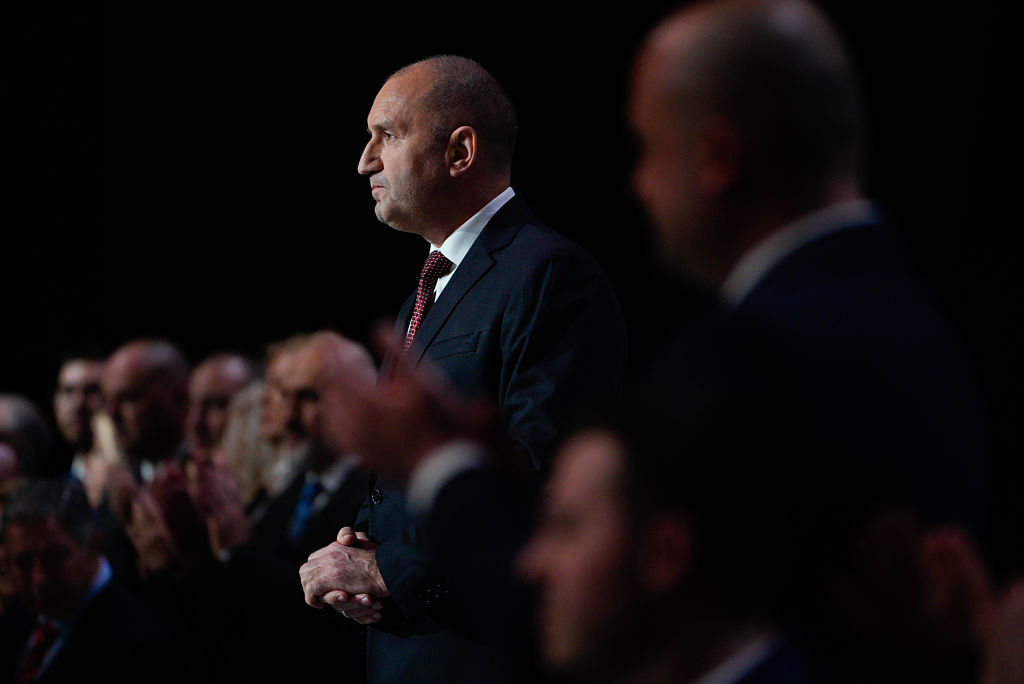
Following the latest Bulgaria elections, the party of former President Rumen Radev won an absolute majority in the country’s parliamentary vote. The result could end a prolonged political crisis that has seen Bulgaria undergo eight election campaigns since 2021, following the collapse of Boyko Borisov’s conservative government amid anti-corruption and economic protests.
Bulgaria Elections: Official Results
With 98% of the ballots processed, Radev’s Progressive Bulgaria political group leads with 44.6% of the vote. This secures 135 seats in the 240-seat parliament. Voter turnout was the highest recorded since 2021.
This outcome marks a historical precedent. It is the first time since 1997 that a single party has secured an absolute parliamentary majority in Bulgaria, allowing it to form a single-party government.
Radev’s main political rivals trailed significantly. The GERB party, led by Boyko Borisov, received 13.3% of the vote. This placed them nearly level with the liberal PP-DB coalition, which took 12.7%. The far-right Vazrazhdane party and the MRF, which represents Turkish and Roma minorities, also secured seats in parliament.
A total of 4,786 candidates ran on lists representing 14 political parties and 10 coalitions, alongside one independent candidate. Women accounted for approximately 30% of the candidates (1,439 people). The preliminary voter list prepared for public inspection on March 9, 2025, included 6,641,768 people, with 121,708 of them being new voters.
Anti-corruption Platform and Pragmatism
Rumen Radev, a 62-year-old former Air Force general who stepped down earlier this year after nine years as president, campaigned on a platform to dismantle the “oligarchic governance model.” Commenting on the preliminary results, he described his victory as a win for “hope over distrust and freedom over fear.”
Radev confirmed that Bulgaria will maintain its European path but criticized the current course of the EU. He said a strong Europe requires critical thinking and pragmatism, stating the region has become a “victim of its own desire to be a moral leader in a world with new rules.”