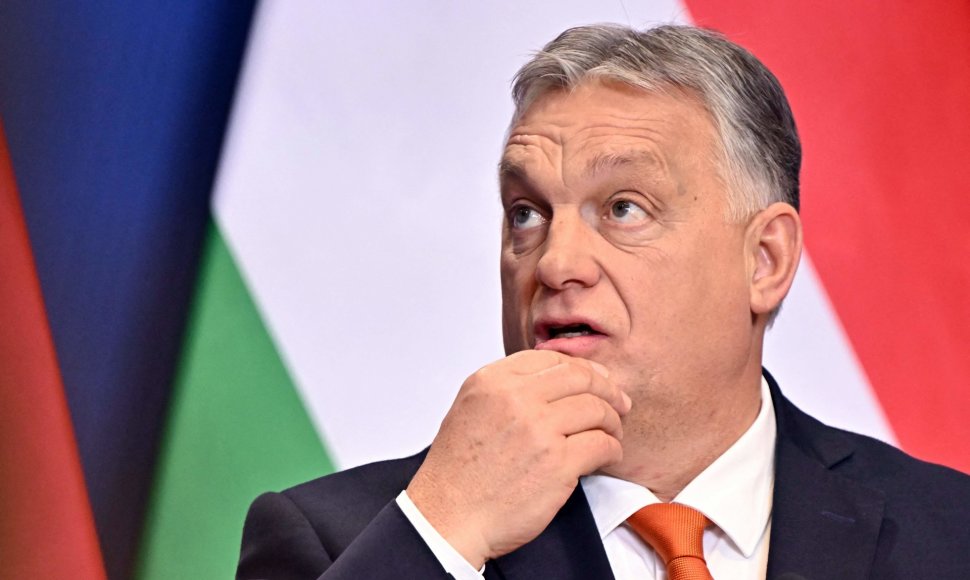
Recent Hungary elections have drawn the attention of the entire European Union. Observers are watching to see if the ruling Fidesz coalition and its long-time leader Viktor Orban, whose policies frequently clash with Brussels, can maintain power.
Viktor Orban’s Monopoly
Viktor Orban is a political heavyweight who has governed Hungary with a parliamentary supermajority for a total of 20 years (from 1998 to 2002 and continuously since 2010).
Since April 2010, when the coalition of Fidesz and the Christian Democratic People’s Party (KDNP) secured two-thirds of the seats in parliament, Orban has not lost a single national campaign, winning decisively in 2014, 2018, and 2022. However, his dominance is now being challenged by a man from his own inner circle.
Who Is Peter Magyar: From Functionary to Opposition Leader
Orban’s main rival in this election is the leader of the opposition TISZA (Respect and Freedom) party, Peter Magyar. His rise reads like a script for a political drama.
Until 2024, Magyar was deeply embedded in the Fidesz system. He joined the party as a student in 2003, worked at the country’s permanent representation to the EU in Brussels, led a government diplomatic group, and headed the legal department of the Hungarian Development Bank. His career mirrored that of his now ex-wife, Judit Varga, who became Hungary’s Minister of Justice in 2019. During their 2023 divorce, Varga accused Magyar of domestic violence, a claim he categorically denied.
The point of no return came in February 2024. Hungary was shaken by a major political scandal when it was revealed that President Katalin Novák had pardoned a former deputy director of an orphanage convicted of covering up a pedophilia case. The scandal led to the immediate resignations of both President Novák and Varga.
In the midst of this crisis, Magyar did the unexpected. He loudly resigned from the Fidesz party and gave a sensational interview to a popular podcast, where he sharply criticized Viktor Orban’s government, stating: “I do not want to be part of a system where truly responsible people hide behind women’s skirts.”
The video went viral, garnering over 1.4 million views and instantly making Magyar the new face of the Hungarian opposition.
Record Voter Turnout in Hungary Elections
The intense rivalry between the former allies drove Hungarians to the polls in unprecedented numbers. The opposition magazine HVG described the turnout as an “absolute record” early in the day.
According to the National Election Office (NVI), 77.8% of voters—nearly 6 million out of 7.5 million eligible citizens—had cast their ballots by 6:30 p.m., just half an hour before polls closed.
For comparison, the final turnout in the April 2022 parliamentary elections was 70.5%. This surge in political activity suggests that Hungarian society is demanding either decisive change or an equally decisive confirmation of the current government’s mandate.
Key Differences Between Orban and Magyar: The Front Lines
Comparing the platforms of Viktor Orban (Fidesz) and Peter Magyar (TISZA) reveals why Magyar poses such a serious threat to the Prime Minister. He does not try to convince Orban’s voters to become liberals; instead, he offers them the same conservative foundation “without the toxic additives.”
NEWSROOM IN analyzed their platforms on key issues: where they clash and where their positions are almost identical.
| Issue | Viktor Orban (Fidesz) | Peter Magyar (TISZA) |
| EU Relations | Confrontation. The EU is viewed as a threat to sovereignty. Orban blocks Brussels initiatives and uses his veto as a tool for leverage. | Pragmatism. The EU is an economic necessity. Goal: unfreeze European funds and end the “eternal war” with Brussels. |
| Corruption and Control | State Capitalism. Creation of a loyal national elite (friends and relatives receive state contracts). Refusal to join the European Public Prosecutor’s Office (EPPO). | De-oligarchization. Key platform point: immediate entry into the EPPO, investigations into Orban’s inner circle, and recovery of illegally privatized assets. |
| Power Structure | Monopoly. Control over all branches of power, public media, and courts. Indefinite leadership. | Institutional Protection. Term limits for the Prime Minister (maximum 8 years), depoliticization of courts, and restoration of independent media. |
| Budget Priorities | Mega-projects, stadiums, acquisition of foreign assets (airports, telecom), and large-scale subsidies for loyal businesses. | Redirecting funds to the social sector: creating separate ministries for education and health, and increasing salaries for teachers and doctors. |
| Foreign Policy Direction | Eastern Opening. Deepening ties with China (factories, loans) and maintaining the energy alliance with Russia. | Western Anchor. Hungary is a reliable member of NATO and the EU. Criticism of dependence on Beijing and Moscow. |
Surprising Similarities: Where They Stand United
The most interesting aspect of Magyar’s program is what he omits from the traditional opposition toolkit. To avoid alienating conservative voters, he has adopted positions nearly identical to Orban’s on three key issues:
- Strict Migration Policy. Magyar fully supports the concept of “Fortress Hungary.” He agrees with Orban that the border fence must remain and that illegal migration is a national security threat. TISZA also opposes refugee distribution quotas mandated by Brussels.
- Conservative Values and LGBTQ+. Unlike the left-wing opposition, Magyar does not promise to repeal laws protecting the traditional definition of family as a union between a man and a woman. He avoids participating in Pride events and does not emphasize minority rights, recognizing these as red lines for rural Hungary.
- Position on the War in Ukraine (Caution). Orban calls himself the “party of peace” and warns voters that the opposition will drag Hungary into a third world war. Magyar avoided this trap. He categorically condemns Russian aggression (which Orban avoids) but agrees not to send Hungarian weapons or soldiers to Ukraine. For the average voter, this sounds like a safe alternative: rhetorical support for Kyiv without the risk of escalation.
In short, Magyar identified Orban’s vulnerability. Hungarians are not tired of conservative values or border protection, but of rampant corruption, inflation, and isolation from European funds. Magyar has offered them “Orban 2.0″—featuring the same core settings, but with clean hands and restored access to EU budgets.