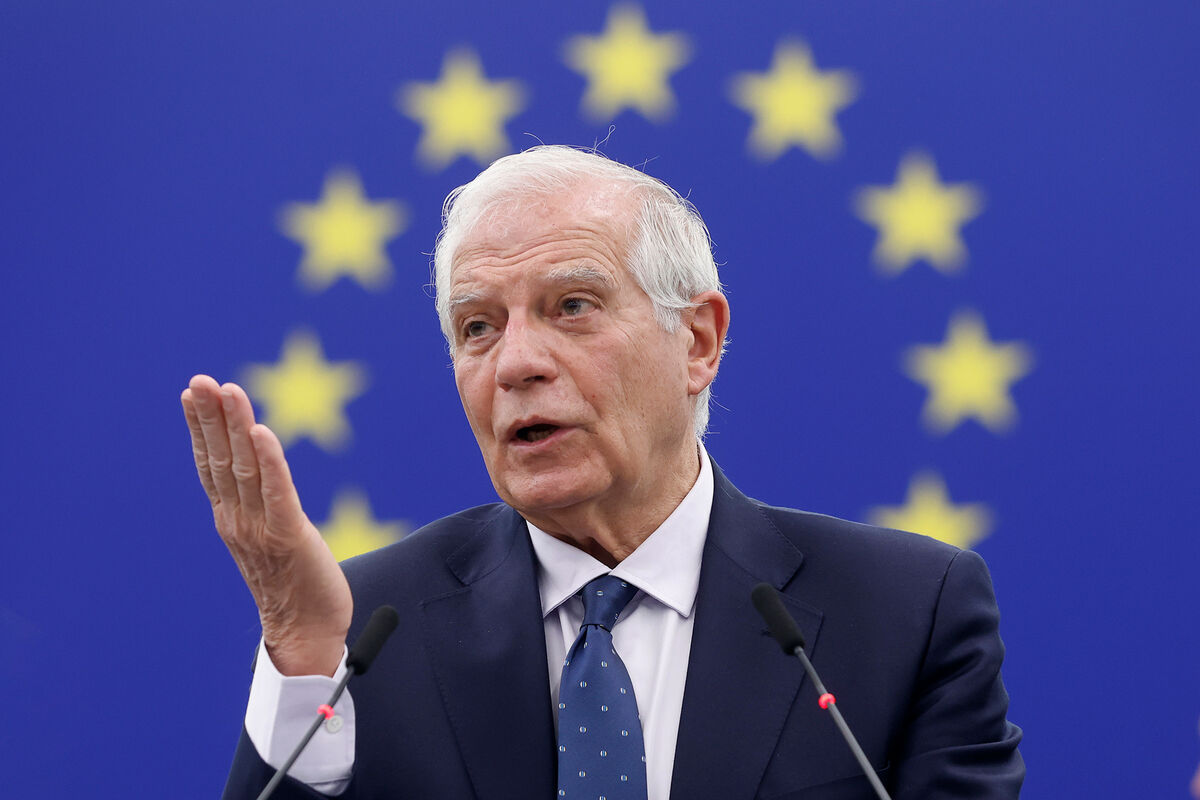
The EU is currently unable to launch large-scale joint EU defense projects due to deep-seated political and corporate friction between member states. At a recent Heinrich Böll Foundation event in Brussels, EU Defense Commissioner Andrius Kubilius openly admitted this uncomfortable truth. As reported by Euractiv, Kubilius cited the FCAS fighter jet project—currently mired in corporate disputes—as a primary example of this failure.
However, from a pragmatic perspective, Europe’s defense industry is far from stagnant. Sovereign states are simply choosing to bypass European Commission bureaucracy, opting instead to sign direct contracts, build factories, and integrate their militaries through bilateral agreements.
FCAS and the Limits of EU Defense Integration
Launched in 2017 by France, Germany, and Spain, the Future Combat Air System (FCAS) project looked promising on paper. It aimed to develop a sixth-generation fighter jet capable of commanding swarms of combat drones. In practice, however, the initiative has stalled against the wall of commercial self-interest.
The lead contractors—France’s Dassault and Germany’s Airbus Defence and Space—have been unable to agree on intellectual property rights and spheres of influence. Paris is reluctant to share its sensitive technology, while Berlin refuses to simply subsidize the development of the French aviation industry. Chancellor Friedrich Merz has already acknowledged that the problem runs deeper than typical political disagreements. Currently, the parties are discussing a watered-down compromise where the aircraft themselves will be built separately, leaving only the supporting artificial intelligence systems as a shared venture.
Kubilius Is Right, But…
Andrius Kubilius deserves credit for the sound logic in his “White Paper on the Future of European Defense.” From a purely economic standpoint, the commissioner is correct. The document proposes a corporate approach: the creation of a single arms market and total standardization. If European armies replaced their dozens of different tank types with unified standards, it would save billions of euros and drastically simplify logistics.
The issue for Kubilius is not a lack of vision, but the harsh reality of political survival. His streamlined business plan is clashing with national protectionism. No government is willing to shut down its own defense plants and outsource jobs to a neighbor for the sake of abstract European unity.
The Pragmatism of Sovereignty
Listening to the European Commission’s complaints, one might assume the European defense sector is at a standstill. In reality, production is ramping up and new alliances are forming—just outside the Commission’s jurisdiction. Faced with immediate military threats, national leaders have realized that the EU’s cumbersome mechanisms, with their lengthy approval processes and “fair share” quotas, are too slow for the current security climate.
Member states are now acting directly. For example, when Lithuania needed to secure artillery shell production, the government did not wait for the European Commission to conduct months of tenders across all member states. Instead, they signed a bilateral contract with the German defense giant Rheinmetall to build a plant in Lithuania. This is a straightforward commercial transaction where EU institutions provide little added value.
France is following a similar path. By updating its nuclear doctrine and offering protection to eight European nations, President Emmanuel Macron is acting as the leader of a sovereign nuclear power, not as an administrator for the European Parliament. Meanwhile, the UK, having left the EU, is successfully moving forward with the Tempest fighter project alongside Italy and Japan. This demonstrates that a pragmatic three-nation alliance can be more effective than a bureaucratic structure of twenty-seven.
The Grant Dispenser
The frustrations of Brussels bureaucrats are easy to understand. During peacetime, European capitals were happy to engage in long-term integration projects for political optics. Now that rapid decisions are required, states have prioritized speed and direct cooperation.
Europe is indeed rearming, but it is doing so fragmentarily through coalitions of interest. In this new landscape, the European Commission may have to settle for the role of a cashier—distributing grants for long-term research—while real security decisions are made in national capitals.