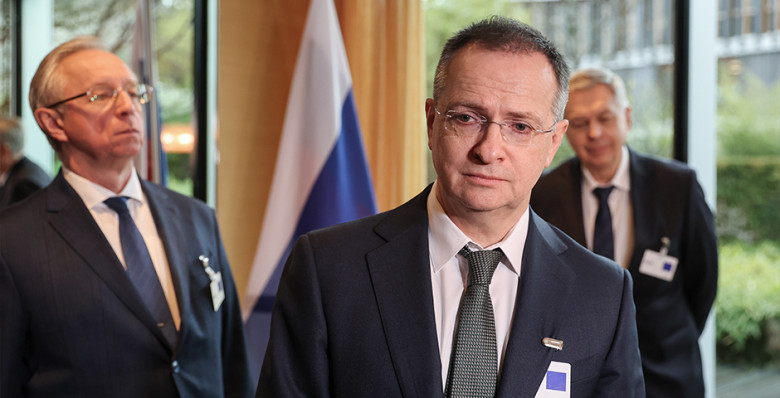
| Vladimir Medinsky — one of Putin’s negotiators in Geneva | Photo source: expert |
Leaders of five European intelligence services warned on February 19, 2026, that the Kremlin is faking peace negotiations to secure the lifting of economic sanctions and the recognition of seized Ukrainian territories, Reuters reports.
While Donald Trump expresses optimism and confidence in reaching a “grand bargain” by June 2026, intelligence agencies view the process as theater for an audience of one. According to their data, Moscow is exploiting the inexperience of American negotiators Steve Witkoff and Jared Kushner to buy time, address budget deficits, and lay the groundwork for Kyiv’s total capitulation.
The Washington Trap: $12 Trillion as Bait
The Russian leadership is playing a complex game, attempting to convince the Trump administration that a swift peace is possible. A key pressure tool has been proposals for massive business projects worth up to $12 trillion, promoted by Russian representative Kirill Dmitriev. This strategy is designed to shift the White House’s focus from security concerns to financial gain. Meanwhile, Moscow’s actual objectives remain unchanged: turning Ukraine into a “neutral zone” and forcing the withdrawal of the AFU from the remaining 20% of the Donetsk region—an area comparable in size to a small European nation.
Trump’s Negotiators Under Criticism
European allies are expressing serious concern that the U.S. side of the negotiations is led by real estate developer Steve Witkoff and the president’s son-in-law Jared Kushner. Their lack of diplomatic experience and deep understanding of the Russia-Ukraine conflict creates a risk of a deal being struck on the aggressor’s terms.
White House spokesperson Anna Kelly dismissed the criticism, claiming Trump’s team has done more to end the war than professional diplomats have in decades. However, intelligence officials are certain that any current concessions from Moscow are merely tactical moves before presenting new, even harsher demands.
The 2026 Financial Trap
Putin desperately needs the illusion of a peace process due to mounting domestic issues. Despite outward stability, Russia’s economy is stagnating with GDP growth at just 1%. To curb inflation, the Central Bank has kept the key interest rate at 15.5%, making business development nearly impossible. The liquid portion of the reserve fund, used to plug budget holes, has more than halved since 2022. This is why the Kremlin urgently needs a breakthrough on lifting sanctions by the end of 2026, even if it requires staging a months-long diplomatic marathon.