Central banks in some of Europe’s most digitally advanced nations are advising citizens to keep cash reserves at home as a vital measure for civil defense and national resilience. After decades of promoting digital payments via smartphones and wearable tech, regulators in Sweden and Estonia now emphasize that physical money is a critical safeguard against geopolitical instability and infrastructure failures.
The Bank of Estonia Urges Keeping Cash Reserves
The Bank of Estonia has officially recommended that citizens keep physical money at home. This call comes even as the country prepares to implement the innovative digital euro. The regulator acknowledges that in the event of a serious crisis—such as a blackout or war—standard digital payment systems could fail, rendering modern technology non-functional.
The Estonian central bank describes a realistic scenario of banking system failures. Without paper currency, individuals could immediately lose access to basic necessities:
- Inability to buy groceries at stores.
- No access to life-saving medications at pharmacies.
- Inability to refuel vehicles.
- ATMs will be inaccessible during power outages.
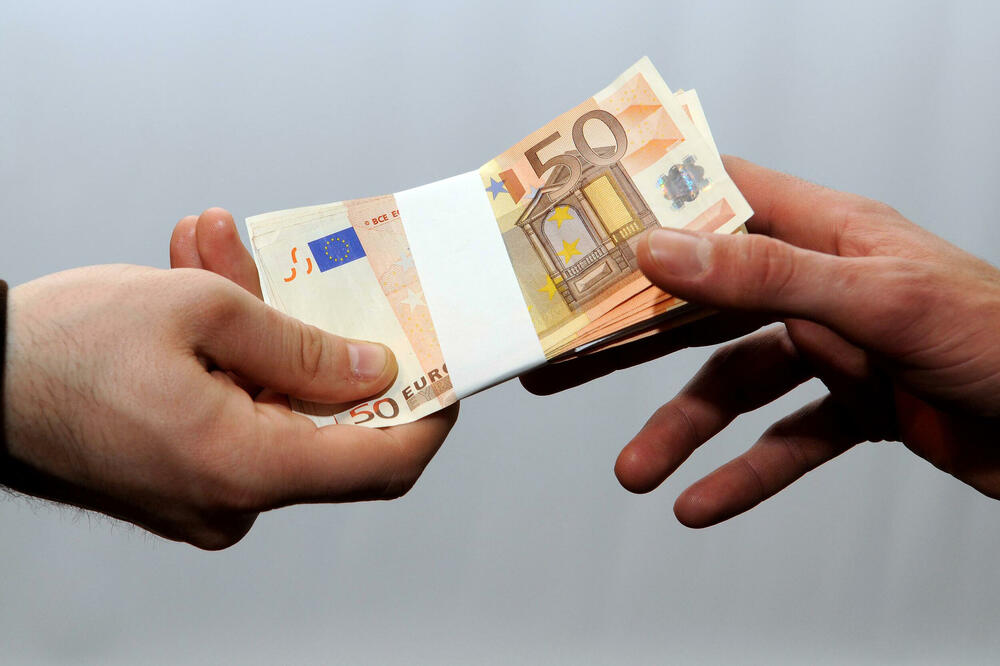
Bankers recommend keeping these reserves in small denominations. In the event of a payment system collapse, retailers may be unable to provide change for large bills like 100-euro notes.
The Swedish Paradox: Cashless Pioneers Return to Basics
Estonia is not alone in its concerns. The Central Bank of Sweden recently issued similar instructions. Sweden has long been considered a global leader in the transition to a cashless society, with only 10% of transactions currently conducted in cash.
The Swedish regulator provided a specific survival standard: every adult citizen should have an “emergency kit” at home with at least 1,000 kronor (approximately 100 euros) for one week. The recommendation again specifies small bills. Swedes are also advised to hold cards from multiple banks and use the local online payment service, Swish.
Contradictory Approaches in Lithuania
While Estonia and Sweden treat cash as an essential supply alongside food and matches, politicians in Lithuania are pursuing a different path. While conservative leaders publicly state the country is in a “front-line zone” and urge citizens to prepare for worst-case scenarios, they are simultaneously working to further restrict the use of cash.
In February 2024, deputies from the opposition Homeland Union – Lithuanian Christian Democrats (Ingrida Šimonytė, Mindaugas Lingė, and Gintarė Skaistė) argued that the shadow economy poses a greater threat to national security than potential power outages.
Lithuania currently enforces a rule limiting cash payments to 5,000 euros. However, conservatives have registered amendments to tighten these restrictions, lowering the limit to 3,000 euros. This ceiling would affect not only large purchases but also dividend payments, damage settlements, and cash withdrawals for small business operations. This creates a situation where politicians warn the public about war while proposing to limit the most reliable means of payment for a crisis.
EU-Wide Regulation on Cash Transactions
The actions of Lithuanian authorities align with broader European Union policy. In 2024, the EU finalized Regulation 2024/1624, aimed at combating money laundering. These new rules introduce several changes:
- Unified Ceiling: Starting July 10, 2027, a strict upper limit of 10,000 euros for any cash settlement will be introduced across the EU.
- Stricter Local Limits: EU member states retain the right to maintain or introduce even lower limits. For instance, France and Spain will continue to enforce a 1,000-euro threshold.
- Identification Requirements (KYC): For cash payments of 3,000 euros or more, sellers will be required to perform full customer identification procedures.
- Private Transaction Exemption: These restrictions currently do not apply to transactions between private individuals, such as the sale of a used car, provided it is not part of a systematic professional activity.
The result is a contrast in European policy: while some institutions urge citizens to store small banknotes for emergencies, others are working to bring the circulation of those same banknotes under total digital control.
Cash Regulations in the United States
Unlike Europe, the United States has no ban on cash payments. U.S. lawmakers have moved to protect the right to pay with physical currency, although large transactions remain under strict tax authority supervision.
NEWSROOM IN notes how the cash system operates in the U.S.:
- Legal Tender Status: Every dollar bill states, “This note is legal tender for all debts, public and private.” While federal law does not force private businesses like cafes or shops to accept cash, some jurisdictions have stepped in to prevent businesses from going entirely “cashless” to avoid discriminating against the unbanked or elderly.
- Local Mandates: States such as Massachusetts, New Jersey, Colorado, and Rhode Island, along with cities like New York, Philadelphia, San Francisco, and Washington, D.C., have passed laws requiring businesses to accept cash. Companies that refuse face significant fines.
- Monitoring Instead of Bans: There is no federal limit on the amount one can pay in cash in the U.S. However, any commercial transaction involving more than $10,000 in cash must be reported using Form 8300 to the IRS and FinCEN. This is designed to combat money laundering. Deliberately breaking a large purchase into smaller payments to avoid this limit, known as structuring, is a federal crime.