At the NATO summit in The Hague, which opened today, a key event took center stage: the NATO Defence Industry Forum (NSDIF). The Dutch government described it as the most significant meeting between NATO and the defense sector, aiming to strengthen practical cooperation.
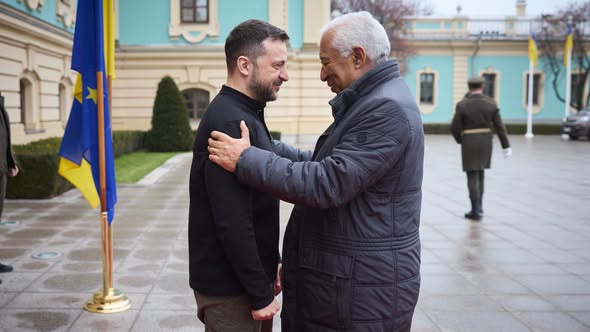
Over 400 participants took part in the forum, including NATO defense ministers, defense industry leaders, European Council President António Costa, European Commission President Ursula von der Leyen, NATO Secretary General Mark Rutte, and Ukrainian President Volodymyr Zelensky.
Exclusive: NATO Summit in The Hague
Exclusive to NEWSROOM IN, Mykola Volkivskyi, President of the Geneva Centre for Diplomacy and Conflict Resolution, shared his insights on the forum’s implications.

“Participating in the NATO summit here in The Hague, I see the Alliance undergoing deep transformation. These changes are not the result of abstract doctrines but of Europe’s stark reality in a time of war. Today’s forum was defined by clarity, urgency, and for the first time perhaps, a shared understanding that we are operating in a geopolitical environment where illusions no longer exist.
Zelensky’s address at the NATO Defence Forum was a turning point. He was direct and firm. He called on member states to commit 5 percent of their GDP to defense, not as an act of solidarity but as a strategic necessity. His warning was clear: without resolute support for Ukraine, Russia could attack a NATO member within five years. This message resonated strongly. Ministers listened not with diplomatic detachment but with the recognition that the threat is real and immediate.

Zelensky’s appeal was echoed by NATO Secretary General Mark Rutte, who emphasized the need for strategic and industrial mobilization across the Alliance. ‘It is unacceptable that Russia outproduces us,’ Rutte said. He proposed that NATO members increase defense spending collectively, allocating 3.5 percent of GDP to core military capabilities and 1.5 percent to resilience, cybersecurity, and civil preparedness. The message was unmistakable: NATO is preparing for a prolonged confrontation, not just deterrence.
European Commission President Ursula von der Leyen supported this position, advocating for flexibility in EU fiscal rules so that countries can invest in defense without being restricted by outdated budget limitations. Her remarks reflected a significant shift in Brussels, recognizing that strategic autonomy requires aligning values with the capacity to defend them.
Ukraine’s voice at the summit was not that of an observer. Zelensky was not merely asking for assistance; he was helping define NATO’s future. From defense procurement and cyber cooperation to post-war reconstruction planning, Ukraine is not waiting to be invited into NATO. It is already helping to shape its direction.
As someone who has observed Ukraine’s diplomatic trajectory over the past years, I can affirm what many of us have long stated: Ukraine is no longer a peripheral partner. It is a cornerstone of Europe’s security architecture.
These developments also take place against the backdrop of internal U.S. politics. With President Trump attending the summit and uncertainties surrounding America’s future commitments, European leaders are preparing for a more autonomous role in defense. This is not about turning away from the United States but about stepping forward with greater maturity and responsibility as a defense partner. At this pivotal moment, Ukraine stands not behind NATO but beside it.
The decisions made at this summit — both official and informal — will have long-lasting implications. NATO is no longer asking whether it should transform. It is already transforming. And Ukraine is not waiting for the door to open; it is reinforcing the structure from within.
I leave today’s meetings with cautious optimism. Not because the threats have diminished, but because, for the first time in many years, the West appears to speak with one voice and act with strategic clarity. History is not watching us. We are shaping it. And Ukraine is at its center.”