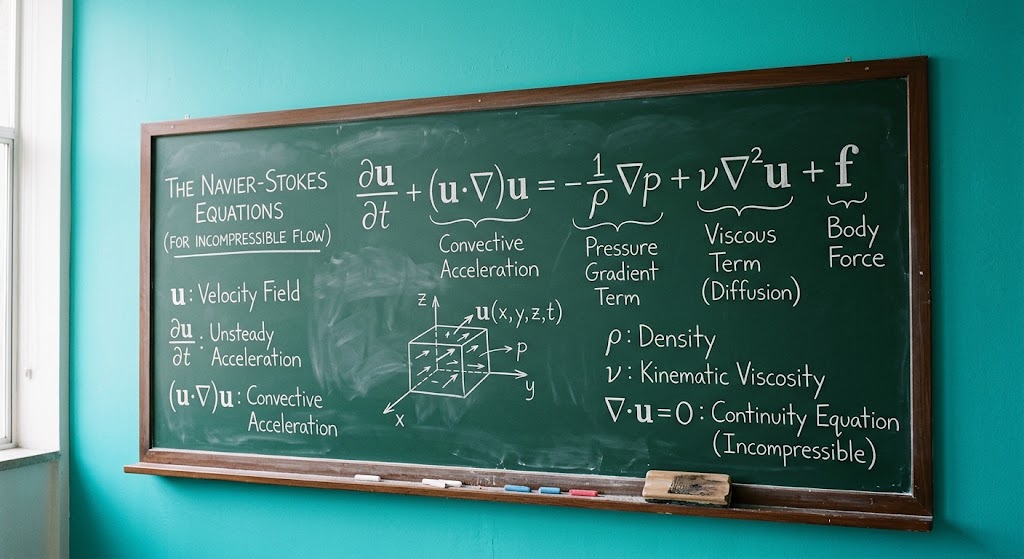
In the 21st century, mathematics is undergoing a profound paradigm shift: the romantic solitary geniuses of the past, epitomized by Grigori Perelman, are being supplanted by thousands of AI agents deployed by leading tech corporations. An announcement by OpenAI claiming to have solved one of the seven renowned Millennium Prize Problems—the singularity problem in the Navier–Stokes equations—has swiftly transformed from a purported scientific triumph into a major scandal.
Two Eras of One Prize: From Perelman’s Solitary Genius to Algorithmic Hordes
In 2000, the Clay Mathematics Institute established the seven Millennium Prize Problems, attaching a one-million-dollar award to each. Until recently, only one had been resolved: the Poincaré conjecture, proven by Grigori Perelman. The Russian mathematician devoted years of solitary work to the achievement before famously declining the million-dollar reward.
With the rise of artificial intelligence, the timeframe required to tackle such monumental challenges has ostensibly plummeted to a matter of days. However, this acceleration has raised serious ethical concerns.
The unfolding controversy dates back to September 2025, when mathematicians Tristan Buckmaster and Levent Alpoge set out to address the Navier–Stokes equations. Navigating toward a solution via simplified fluid dynamics models, they utilized AI assistants Claude and OpenAI’s Codex. On August 15, 2026, they achieved a breakthrough by proving the singularity for the Euler equations—a non-viscous simplification of the Navier–Stokes system.
By September 1, 2026, reports reached OpenAI leadership suggesting that researchers affiliated with its rival Anthropic, leveraging the Claude model, were on the verge of resolving two Millennium Prize Problems simultaneously.
As OpenAI researcher Noam Brown later acknowledged, the company reacted promptly, unleashing a new proprietary internal model simultaneously across all six unresolved problems. Buckmaster, however, maintains that the decisive factor behind OpenAI’s breakthrough in Navier–Stokes was the extensive prompts and proprietary code that he and Alpoge had fed into Codex—OpenAI’s code generation tool—over several months. While OpenAI executives deny unauthorized access to user files, they conceded that anonymized telemetry and data from Codex could have informed their model’s training. Prior to this episode, OpenAI had not publicly pursued the Millennium Prize Problems.
The outcome of the race proved starkly controversial: while the human-led team (Buckmaster, Alpoge, and Claude) spent one year developing the foundational conceptual framework, OpenAI deployed a distributed cluster of 10,000 AI agents that produced a comprehensive proof in just 105 hours, allegedly capitalizing on the external researchers’ trajectory.
The mathematicians subsequently leveled accusations of academic plagiarism. According to Buckmaster, OpenAI representatives went so far as to propose excluding the Anthropic researcher, offering Buckmaster lead authorship and sole claim to the prize money, provided OpenAI secured headline credit for the breakthrough.
The controversy has dealt a notable blow to OpenAI’s scientific standing, bringing to the forefront a critical institutional question: will commercial AI assistants effectively serve as conduits for the expropriation of intellectual property, favoring entities with vast computational monopolies?
Factsheet: The Millennium Prize Problems
NEWSROOM IN provides an overview of the Millennium Prize Problems and their implications.
Status of the Seven Millennium Prize Problems
- Poincaré Conjecture — SOLVED (Grigori Perelman, 2002–2003).
- Navier–Stokes Existence and Smoothness — UNDER PEER REVIEW (Solution claimed by OpenAI, 2026).
- P versus NP Problem — UNSOLVED (A foundational question in theoretical computer science regarding computational complexity).
- Riemann Hypothesis — UNSOLVED (Pertaining to the distribution of prime numbers).
- Hodge Conjecture — UNSOLVED (Concerning the algebraic topology of non-singular complex algebraic varieties).
- Yang–Mills Existence and Mass Gap — UNSOLVED (Mathematical foundation for quantum field theory and particle physics).
- Birch and Swinnerton-Dyer Conjecture — UNSOLVED (Concerning rational solutions to equations defining elliptic curves).
What Did Perelman Prove, and What Does the Navier–Stokes Claim Entail?
- Perelman (Poincaré Conjecture): Established that any simply connected, closed 3-manifold is homeomorphic to the 3-sphere, effectively demonstrating that any hole-free three-dimensional shape can be continuously deformed into a sphere, providing key topological insights into the structure of space.
- The Researchers and AI (Navier–Stokes): Demonstrated that the standard smooth solutions of Navier–Stokes do not hold universally. Under specific extreme boundary conditions, velocity fields can blow up to infinity within finite time, causing a mathematical singularity where the classical equations break down.
Practical Implications of These Discoveries
- Perelman’s proof assists astrophysicists in modeling the topology and expansion of the cosmos, while also informing algorithms in advanced 3D spatial modeling and computational graphics.
- The Navier–Stokes findings delineate the structural limits of classical hydrodynamic equations. In mission-critical applications—including hypersonic aircraft engineering, supercomputer climate simulations, reactor fluidics, and aerospace systems—engineers must account for these failure regimes by deploying non-standard numerical corrections to avert catastrophic calculation errors.