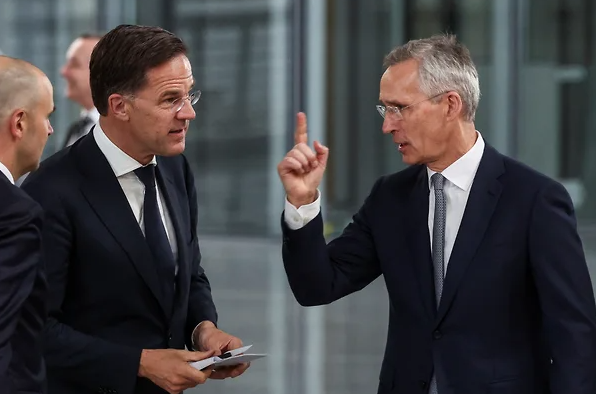
The 2025 Munich Security Conference (MSC) marked a turning point in transatlantic relations, European defense policy, and Ukraine’s war against Russian aggression. Over the course of three days (February 14–16), world leaders, top policymakers, and security experts debated the future of European security, NATO’s role, and the global response to mounting geopolitical tensions.
This year’s conference was shaped by a growing divide between European and American approaches to security, particularly regarding Ukraine. While European Commission President Ursula von der Leyen emphasized a “bold new approach” to defense spending, U.S. Vice President J.D. Vance offered a starkly different perspective, critiquing Europe’s internal challenges rather than providing a clear vision for U.S. support in Ukraine’s fight for sovereignty. Meanwhile, Ukrainian President Volodymyr Zelensky made a historic call for the creation of “Armed Forces of Europe,” a move that underscores Europe’s growing concerns about its reliance on U.S. security guarantees.
Europe’s Strategic Awakening
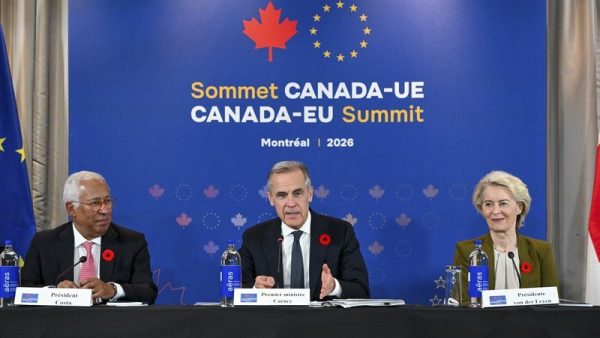
One of the key announcements came from European Commission President Ursula von der Leyen, who proposed activating a special clause to ease fiscal rules for defense investments. This would allow EU member states to increase defense spending significantly without violating EU budgetary constraints.
The plan comes at a time when Europe is facing an urgent need to strengthen its defense capabilities, with estimates suggesting that at least €500 billion will be required over the next decade. Von der Leyen’s statement – “When it comes to European security, Europe must do more” – resonated deeply. The war in Ukraine has fundamentally changed Europe’s security landscape, making it clear that the continent can no longer depend solely on U.S. military assistance. Her proposal signals a shift toward greater European autonomy in defense policy, an idea that has gained traction since the Trump administration’s repeated calls for Europe to take more responsibility for its own security.
A Transatlantic Divide?
Perhaps the most controversial speech came from U.S. Vice President J.D. Vance. Instead of focusing on military aid to Ukraine or clarifying the U.S. stance on NATO, Vance warned that “the threat I am most concerned about with respect to Europe is not Russia, not China, not any other external actor. I am concerned about a threat from within: Europe’s retreat from some of its most fundamental values.” His speech suggested a growing rift between Washington and Brussels.
While European leaders expected a clear commitment from the U.S. on Ukraine, Vance instead criticized European policies on free speech and democratic governance. This omission raised concerns that the Trump administration – already facing internal political struggles – may be deprioritizing Ukraine and European security in favor of domestic issues and strategic competition with China.
At the same time, NATO Secretary General Mark Rutte offered some reassurance, stating that “NATO membership for Ukraine is not out of the question”? despite earlier signals from U.S. officials that Ukraine’s path to NATO could be compromised as part of future peace negotiations. His remarks aimed to clarify that Ukraine’s NATO aspirations would not be sacrificed in any potential settlement with Russia, although skepticism remains about the unity of NATO members on this issue.
Zelensky’s Historic Call for a European Army
One of the most defining moments of the conference was Ukrainian President Volodymyr Zelensky’s speech, in which he called for the creation of the “Armed Forces of Europe.” His argument was clear: Europe must be able to defend itself without depending on the shifting political landscape in Washington.
“Let’s be frank, we can’t rule out the possibility that America will refuse to cooperate with Europe on issues that threaten it”, – Zelensky warned. “Ukraine will never agree to deals behind our back without our participation, and the same rule should apply to all of Europe.”
His message was directed not only at European leaders but also at Washington, which has sent mixed signals about its commitment to Ukrainian victory. With Trump’s recent admission that he held a lengthy call with Vladimir Putin without consulting Kyiv, and with ongoing debates in Washington about continued military aid to Ukraine, Zelensky’s push for European military self-sufficiency was both timely and necessary.
Looking Ahead: Europe at a Crossroads
The Munich Security Conference 2025 laid bare the critical decisions that Europe must make in the coming months. If the U.S. continues to reduce its engagement in European security, the EU will have no choice but to accelerate defense integration and military cooperation. Ursula von der Leyen’s push for increased defense spending, Mark Rutte’s assurances on NATO, and Zelensky’s call for a European army all point to a Europe that is beginning to recognize the urgency of the moment.
However, significant challenges remain. While the idea of a European army has been discussed for years, political and logistical hurdles have prevented meaningful progress. Furthermore, European countries still rely on U.S. military infrastructure, intelligence capabilities, and nuclear deterrence. Any move toward strategic autonomy will require deep structural changes, sustained political will, and unprecedented cooperation among EU member states.
As someone who has closely observed European security policy and Ukraine’s geopolitical struggle, I believe that the next year will determine whether Europe can rise to the challenge or whether internal divisions will continue to weaken its security framework. The stakes could not be higher.
One thing is clear: Munich 2025 was not just another diplomatic gathering – it was a moment of reckoning. The decisions made in its aftermath will shape the future of European and transatlantic security for years to come.