By March 2026, the threat of Polexit has become the central issue in Polish politics as the nation faces a potential break with the European Union. Prime Minister Donald Tusk issued an unprecedentedly sharp statement, calling the danger of a break with the EU “absolutely real.” He directly accused right-wing political forces, including the Law and Justice (PiS) party and the nation’s president, of working systematically to destroy European unity with ideological support from external actors—ranging from Russia to American MAGA supporters and European right-wing leaders like Viktor Orbán.
However, a deep analysis of the situation suggests that beneath this apocalyptic rhetoric lies pragmatic political calculation and a struggle for control over financial flows.
The Catalyst: The SAFE Program
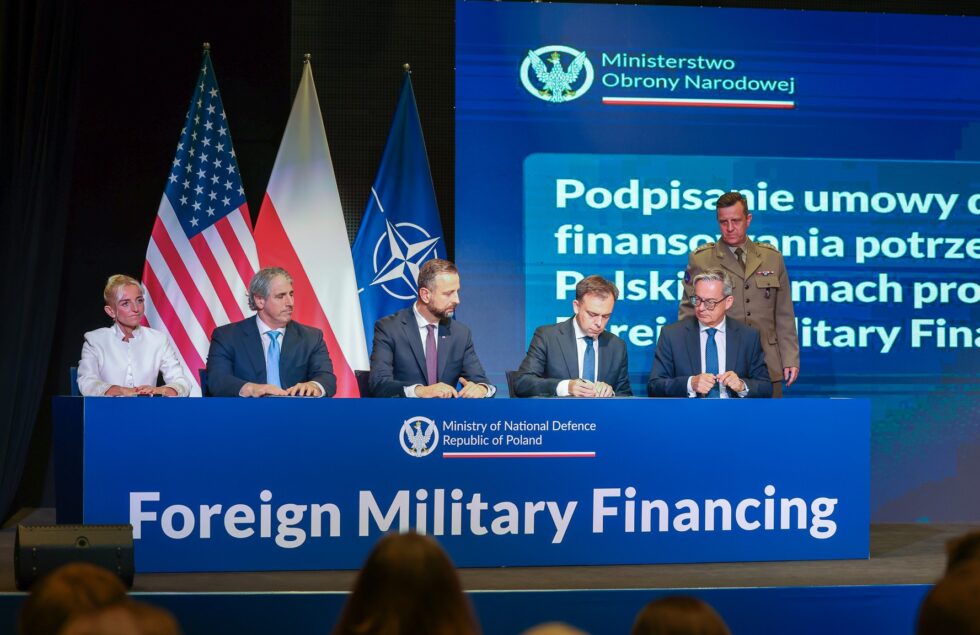
The current crisis was triggered not by abstract ideological disputes, but by specific financial and defense decisions. The acute phase of the conflict began with a direct clash between branches of government over European funding.
President Karol Nawrocki vetoed Poland’s receipt of €4.4 billion from the European Union. These funds, part of the SAFE defense loan program, were earmarked for arms procurement. The head of state and opposition leader Jarosław Kaczyński (PiS), who backed the move, justified the veto as a defense of national independence, asserting that the country’s sovereignty “must not be sold for loans.”
In response, Foreign Minister Radosław Sikorski and Prime Minister Donald Tusk accused the president of sabotaging national security and deliberately “preparing the psychological and political ground” for withdrawing the country from the EU.
The Foundation of the Polexit Debate
The March 2026 conflict falls on ground that has been prepared for years. Tensions between Warsaw (under previous conservative rule) and Brussels have persisted since at least 2021. The primary legal cornerstone for Polexit discussions is the Polish Constitutional Tribunal\’s ruling in October of that year, which established the primacy of the national constitution over EU law.
Brussels viewed this as a direct assault on the fundamental principles of the European Union. In response to judicial reforms that the EU deemed undemocratic, European institutions initiated a policy of financial pressure, regularly blocking billions of euros in subsidies intended for Poland. This fostered a persistent anti-European sentiment among a segment of the Polish establishment.
Following the change of government in Poland, dialogue with the European Commission began to improve in 2024 and 2025, shifting from a freeze to the unblocking of a significant portion of these funds.
The Principle of Primacy: How EU Law Functions
To understand the true nature of this confrontation, it is necessary to examine its legal framework. The European Union is built on the unconditional priority of EU law over national legislation. This ensures that the Union\’s rules are applied uniformly across all 27 member states. This mechanism rests on three core principles:
- Direct Effect. EU laws (such as regulations) automatically become binding in all member states without the need for domestic implementing legislation.
- Conflict Resolution. If a dispute or direct contradiction arises between a local law and EU law, the European norm takes unconditional precedence. National courts are required to apply the EU rule.
- Monopoly on Interpretation. The Court of Justice of the European Union in Luxembourg is the supreme and final authority for resolving legal disputes.
However, the principle of primacy has strict limits: Brussels can only dictate terms in areas that member states have voluntarily delegated to its jurisdiction, such as trade, customs, and environmental protection.
Red Lines: The Sovereignty Warsaw Defends
The root of the Polish standoff lies in the boundaries of intervention by European institutions. Warsaw categorically refuses to hand over control of its national judicial system—specifically the architecture of the Supreme Court and the Constitutional Tribunal—to Brussels.
Warsaw has de jure refused to recognize CJEU rulings that affect the foundations of the Polish state structure. Furthermore, Polish conservatives maintain that the structure of the judiciary, the reform of disciplinary chambers, and the procedures for appointing judges fall under the exclusive competence of a sovereign state. Brussels\’ demands to repeal these judicial reforms are viewed as a direct overreach of EU authority.
Polexit: Real Threat or Political Rhetoric?
Despite Donald Tusk\’s dire warnings of an impending “catastrophe,” NEWSROOM IN views the scenario of an actual Polexit as unlikely.
The current escalation is a classic domestic political move aimed at the 2027 parliamentary elections. The PiS opposition is desperately trying to prevent the pro-European government from being strengthened by the influx of EU funds. In turn, Tusk’s cabinet uses the “EU exit” boogeyman to mobilize its electorate and marginalize political opponents, framing them as radicals and collaborators with external enemies. Furthermore, historically, the vast majority of Poles remain staunch supporters of the country’s EU membership.